• Fri frakt över 249 kr
  • •
  • Snabba leveranser
  • •
  • Billiga böcker
Kundservice

Du är på sajten för privatpersoner.

Företag, bibliotek eller offentlig verksamhet?

Du handlar på classic.bokus.com, där alla dina funktioner finns intakta.
Till classic.bokus.com
Bokus logotyp. Gå till startsidan.
  • Erbjudanden
  • Nyheter
  • Student
  • Topplistor
  • Barn & ungdom
  • Bokus Play
  • E-böcker
  • Pocketböcker
  • Spel & pussel

10% rabatt på allt med kod: NYSTART10 →

Sidfot

Mina sidor

    Hjälp

    • Kundservice
    • Vanliga frågor och svar
    • Frakt och leverans
    • Retur vid ångerrätt
    • Reklamera vara
    • Betalning
    • Köpvillkor
    • Allmänna villkor
    • Information om webbplatsens tillgänglighet

    Om Bokus

    • Om oss
    • Pressrum
    • För studenter
    • För företag
    • För bibliotek och offentlig verksamhet
    • För leverantörer
    • Hållbarhet

    Populärt

    • Aktuella erbjudanden
    • Presentkort
    • Studentlitteratur
    • Nya böcker
    • Topplistor
    • Signerade böcker
    • Engelska böcker

    Inspiration

    • Boktips
    • BookTok
    • Populära bokserier
    • Barnbokskaraktärer
    • Populära författare
    Logotyp för Bokus
    Följ oss på Facebook (extern länk)Följ oss på Instagram (extern länk)Följ oss på YouTube (extern länk)Följ oss på TikTok (extern länk)
    bokus @ CookiesAnpassa cookiesIntegritetspolicyKöpvillkor
    Till Citymail hemsida (extern länk)Till Budbee hemsida (extern länk)Till Postnord hemsida (extern länk)Till Schenker hemsida (extern länk)Till Early Bird hemsida (extern länk)Till Walleys hemsida (extern länk)
    1. Naturvetenskap och teknik
    2. Matematik och naturvetenskap
    3. Naturvetenskap:allmänt
    4. Naturvetenskapens filosofi

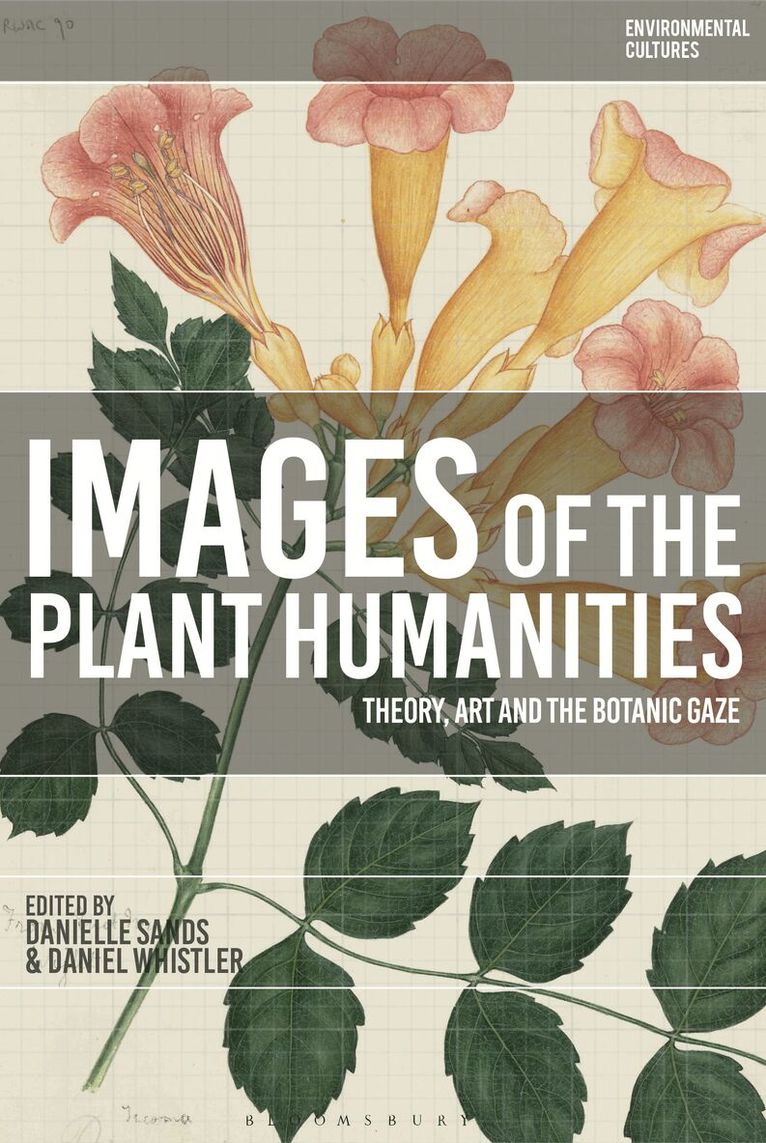
    Images of the Plant Humanities

    Theory, Art and the Botanic Gaze

    AvDanielle Sands,Daniel Whistler

    Inbunden, Engelska, 2026

    Del i serien Environmental Cultures

    1 275 kr

    Slutsåld

    Beskrivning

    Exploring the words and images used to represent plants, this interdisciplinary book examines how vegetal life has been theorised both in the contemporary plant humanities, a developing field of research which aims to rectify the traditional neglect of plants as a model for thinking, and in Western modernity more generally.Focusing on the varied ways that the vegetal has been represented, misrepresented, or even hidden, during modernity, it studies how philosophical, scientific and environmental theories, as well as colonial histories, have determined these representations, as well as how these representations have themselves influenced theory. Bringing aesthetic depictions of plant life into conversation with philosophical, cultural, literary and scientific thinking, it looks to return our attention to vegetal life, and to challenge traditional assumptions regarding plant intelligence, agency and communication.

    Produktinformation

    • Utgivningsdatum:2026-10-01
    • Mått:160 x 236 x 24 mm
    • Vikt:700 g
    • Format:Inbunden
    • Språk:Engelska
    • Serie:Environmental Cultures
    • Antal sidor:352
    • Förlag:Bloomsbury Publishing PLC
    • ISBN:9781350502611

    Utforska kategorier

    • Naturvetenskapens filosofi inom Naturvetenskap och teknik
    • Miljövetenskap och miljöpolitik inom Naturvetenskap och teknik
    • Konsthistoria inom Kultur

    Mer om författaren

    Danielle Sands is Associate Professor of Comparative Literature and Culture at Royal Holloway, University of London, UK.Daniel Whistler is Professor of Philosophy, Royal Holloway, University of London, UK.

    Recensioner i media

    A fascinating collection that explores the myriad different ways in which humans see and represent plants and questions the biases inherent in the Western botanic gaze.

    Innehållsförteckning

    • Part One: Understanding Plant Monsters1. “What a Strange Prodigy”: The Welwitschia mirabilisKatherine Arnold (University of Liverpool, UK)2. No Monsters Here: Vegetable Teratology and Plant HorrorStella Sandford (Manchester Metropolitan University, UK)3. Abnormal Plants and Anomalous Arts: Troubling the Non/Human NormAliya Say (Independent scholar)4. The “Plant Horror” of Turpin’s Urpflanze and Hooker’s Welwitschia: Narratives of Monstrous Proliferation and Grotesque HybridityCaroline Harris (Royal Holloway, University of London, UK)Part Two: Narrating Plant Desires5. Thinking Sex with Plants: The Speculative Sexualities of Enlightenment BotanyNatania Meeker (University of Southern California, USA)6. Fern Tongues: A Pteridomaniac's Imagination of Vegetal Time and DesireSolvejg Nitzke (Ruhr-University Bochum, Germany)7. Dragon Arum: A Phytopoetic Gaze on Vegetal Violence and EroticismJoela Jacobs (University of Arizona, USA)8. The Quest for the Blue Flower: The Legacy of German Romanticism in Three Contemporary NovelsIsabel Kranz (University for Applied Arts, Vienna, Austria)Part Three: Rediscovering Plant Agency9. The Temporality of Titan ArumJohn C. Ryan (University of Notre Dame, Australia)10. Prickly-Pairs: On Humans, Plants, and TechnicityEd Thornton (Independent Researcher)11. Extending the Botanical: Agency, Abstraction and Contemporary Plant DrawingDanielle Sands (Royal Holloway, University of London, UK)Part Four: Resituating Plants Ecologically12. Undoing the Hollow Space of Representation: Margaret Mee’s Plant Portraits in the Kew CollectionYota Batsaki (Dumbarton Oaks, Harvard University USA)13. Papa and Kuka: A Biocultural Exploration of Two Andean CropsNataly Allasi Canales (University of Copenhagen, Denmark/Royal Botanic Gardens, Kew, UK) and Kim Walker (Royal Holloway, University of London, UK/Royal Botanic Gardens, Kew)14. Lacebark and the Interior Décor of the Jamaican Slave CottageSteeve Buckridge (Grand Valley State University, USA)15. Humboldt and Bonpland’s Essay on the Geography of Plants: The Other Side of the Physical Tableau of the AndesQuentin Hiernaux (Université libre de Bruxelles, Belgium)Part Five: Redrawing Plant Boundaries16. “Where Nature stopped half-way”: Waterlilies and the Foliar Theory of the FlowerUlrich Stegmann (University of Aberdeen, UK)17. The Place of Algae in Experimental Natural HistoriesJoan Steigerwald (University of York, UK)18. A “Funeral Oration” for Lichenology?Lydia Azadpour (University of Nottingham, UK)Part Six: Representing Plants Otherwise19. This is not a BrugmansiaGiovanni Aloi (Independent Researcher) 20. Ginkgo and Dark BotanyPrudence Gibson (University of New South Wales, Sydney, Australia) and Maya Martin-Westheimer (University of New South Wales)21. Anna Atkins’ Cyanotypes: Gestures for Hands Driven by SunlightRedell Olsen (Royal Holloway, University of London, UK)22. The Ecology of Plant IconographyLaurence Hill (Independent Artist)Part Seven: Reimagining Plant Forms23. Blue So DeepBen Woodard (Independent Researcher) 24. Containing Nature in the Leaves of a Book: Botany, Bibliography, and the Embodiment of ThoughtThomas Moynihan (University of Cambridge, UK)25. Drawing the Urpflanze: Goethe, Arber, GrothendieckSophie Gerber (University of Bordeaux, France)Afterword: The Library and Archives at the Royal Botanic Gardens, KewJulia Buckley (Royal Botanic Gardens, Kew, UK)