E-bok, Engelska, 2024
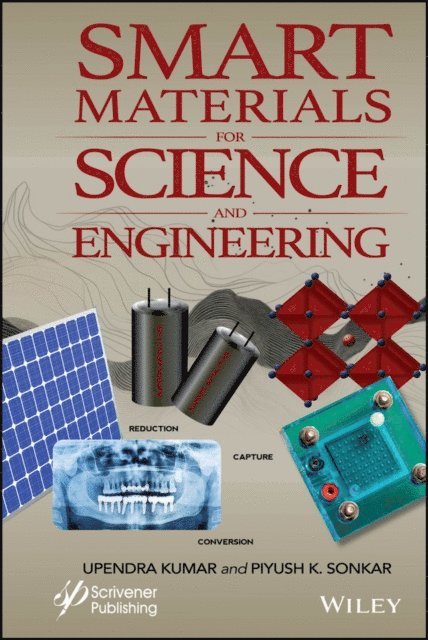
Smart Materials for Science and Engineering
Av Piyush Kumar Sonkar, Upendra Kumar
2614 kr
Skickas tisdag 13/10
Beskrivning
Smart materials, also known as advanced or creative materials, are described as advanced materials that react intuitively to environmental changes or as materials that can return to their original shape in response to certain stimuli. Smart materials are classified as either active or passive based on their characteristics. There are two types of active materials. The first kind cannot change its characteristics when subjected to outside stimuli, for example photochromatic spectacles that only alter their color when exposed to sunlight. The other, which includes piezoelectric materials, can change one sort of energy (thermal, electrical, chemical, mechanical, or optical) into another. When subjected to external pressure, it can generate an electric charge. As an example, optical fibers can transmit electromagnetic waves. In contrast, passive smart materials can transmit a specific sort of energy. They have some amazing qualities that set them apart from other materials, such as transiency, meaning they can react to different kinds of external stimuli immediately, self-actuation or the capacity to change their appearance and shape, selectivity where the response is divided and expected, directness when the response is limited to the activating event, shape-changing where the material can change its shape to external stimuli, their ability to determine their own health, also known as self-diagnosis, and their ability to self-heal.
The ability to synthesize novel materials has substantially progressed thanks to science and technology over the past 20 years. They fall mostly into the following four categories: polymers, ceramics, metals, and smart materials. Among these, smart materials are gaining popularity since they have more uses than conventional materials. Smart materials are unusual substances that have the ability to alter their properties, such as those that can immediately change their phase when placed near a magnet or their shape simply by applying heat. Humanity will be significantly impacted by this new era of smart materials. For instance, some of them can adapt their properties to the environment, some have sensory capabilities, some can repair themselves automatically, and some can degrade themselves. These extraordinary properties of smart materials will have an effect on all facets of civilization. There are many different types of intelligent materials, including magnetorheological materials, electro-rheostat materials, shape memory alloys, piezoelectric materials, and more.
This book describes many forms of smart materials and their possible uses in various fields. A literature survey discusses the different types of smart materials, such as based ceramics, polymers, and organic compounds and their needs, advantages, disadvantages, and applications will be comprehensively discussed. A discussion of well-established smart materials including piezoelectric, magnetostrictive, shape memory alloy, electro-rheological fluid, and magnetorheological fluid materials will be discussed with their present prospects.
Produktinformation
- Utgivningsdatum: 2024-05-07
- Format: E-bok
- Språk: Engelska
- Förlag: Wiley
- ISBN: 9781394186464
Utforska kategorier
Betyg & recensioner
0 recensioner
Inga recensioner tillgängliga.