Upendra Kumar – författare
1 630 kr
Skickas inom 10-15 vardagar
2 302 kr
Läs direkt efter köp
1 390 kr
Skickas inom 10-15 vardagar
740 kr
Skickas inom 10-15 vardagar
2 172 kr
Läs direkt efter köp
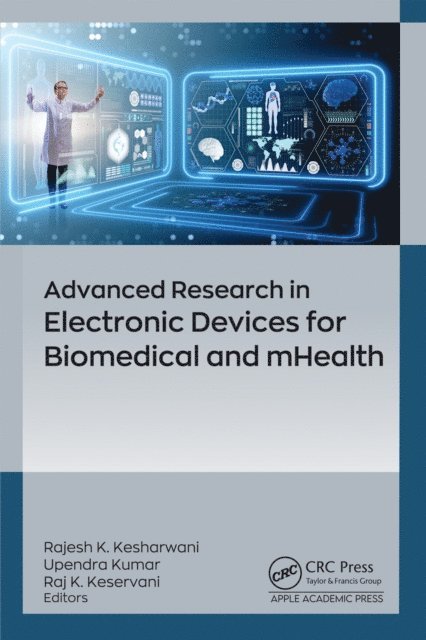
This volume addresses the major design challenges and research potential in electronic device applications in healthcare and biomedical systems, exploring the blending of innovative mobile communications, network technologies, and medical sensor and ubiquitous computing devices with medical and biological applications. The authors explore current and future trends in new communication and network technologies for healthcare delivery and new wireless telemedical and mobile health services. The chapters look at the application of machine learning, convolutional neural networks, smartphone-based devices, IoT sensors, and other smart technologies for health diagnosis and monitoring. The volume also looks at integrated circuit design for healthcare applications. The design of energy harvesting systems for a low power biomedical applications is considered, and another unique chapter illustrates the ability of mHealth technologies by using machine learning to predict which blood groups provide resistance against the COVID-19 Delta variant.
The main driving forces for the transformation of current healthcare systems are the growing aging population, sharp rising healthcare costs, and frequent occurrences of chronic diseases, resulting in the need to deliver healthcare services in more cost-effective and responsive ways. The traditional hospital-centered healthcare systems, which mainly focus on diagnosis and treatment, are now ready to transform into individual-centered based healthcare system, which, in turn, focuses primarily on early detection, early diagnosis, and long-term monitoring. Electronic devices for biomedical and mHealth are facilitating this transformation in innovative ways.
This volume, Advanced Research in Electronic Devices for Biomedical and mHealth, provides a selection of insightful chapters on topics that will be of interest to researchers, faculty, and industry professionals in the fields of biophysics, biomedical engineering, healthcare systems, medical informatics, bioinformatics, and digital electronics devise design.
2 172 kr
Läs direkt efter köp
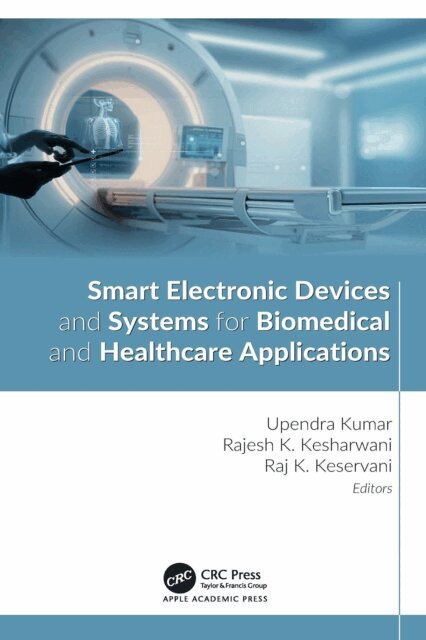
This volume addresses the major design challenges and research potential in electronic device applications in healthcare and biomedical systems, exploring the blending of innovative mobile communications, network technologies, and medical sensor and ubiquitous computing devices with medical and biological applications. The authors explore current and future trends in new communication and network technologies for healthcare delivery and new wireless telemedical and mobile health services. The chapters look at the application of machine learning, convolutional neural networks, smartphone-based devices, IoT sensors, and other smart technologies for health diagnosis and monitoring. The volume also looks at integrated circuit design for healthcare applications. The design of energy harvesting systems for a low power biomedical applications is considered, and another unique chapter illustrates the ability of mHealth technologies by using machine learning to predict which blood groups provide resistance against the COVID-19 Delta variant.
The main driving forces for the transformation of current healthcare systems are the growing aging population, sharp rising healthcare costs, and frequent occurrences of chronic diseases, resulting in the need to deliver healthcare services in more cost-effective and responsive ways. The traditional hospital-centered healthcare systems, which mainly focus on diagnosis and treatment, are now ready to transform into individual-centered based healthcare system, which, in turn, focuses primarily on early detection, early diagnosis, and long-term monitoring. Electronic devices for biomedical and mHealth are facilitating this transformation in innovative ways.
This volume, Advanced Research in Electronic Devices for Biomedical and mHealth, provides a selection of insightful chapters on topics that will be of interest to researchers, faculty, and industry professionals in the fields of biophysics, biomedical engineering, healthcare systems, medical informatics, bioinformatics, and digital electronics devise design.
909 kr
Läs direkt efter köp
909 kr
Läs direkt efter köp
2 840 kr
Läs direkt efter köp
2 840 kr
Läs direkt efter köp
2 092 kr
Skickas inom 5-8 vardagar
2 382 kr
Läs direkt efter köp
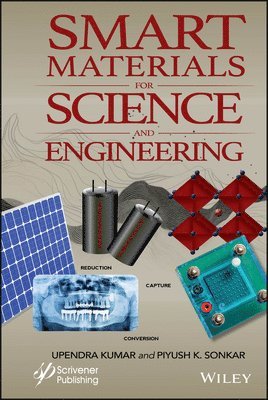
Smart materials, also known as advanced or creative materials, are described as advanced materials that react intuitively to environmental changes or as materials that can return to their original shape in response to certain stimuli. Smart materials are classified as either active or passive based on their characteristics. There are two types of active materials. The first kind cannot change its characteristics when subjected to outside stimuli, for example photochromatic spectacles that only alter their color when exposed to sunlight. The other, which includes piezoelectric materials, can change one sort of energy (thermal, electrical, chemical, mechanical, or optical) into another. When subjected to external pressure, it can generate an electric charge. As an example, optical fibers can transmit electromagnetic waves. In contrast, passive smart materials can transmit a specific sort of energy. They have some amazing qualities that set them apart from other materials, such as transiency, meaning they can react to different kinds of external stimuli immediately, self-actuation or the capacity to change their appearance and shape, selectivity where the response is divided and expected, directness when the response is limited to the activating event, shape-changing where the material can change its shape to external stimuli, their ability to determine their own health, also known as self-diagnosis, and their ability to self-heal.
The ability to synthesize novel materials has substantially progressed thanks to science and technology over the past 20 years. They fall mostly into the following four categories: polymers, ceramics, metals, and smart materials. Among these, smart materials are gaining popularity since they have more uses than conventional materials. Smart materials are unusual substances that have the ability to alter their properties, such as those that can immediately change their phase when placed near a magnet or their shape simply by applying heat. Humanity will be significantly impacted by this new era of smart materials. For instance, some of them can adapt their properties to the environment, some have sensory capabilities, some can repair themselves automatically, and some can degrade themselves. These extraordinary properties of smart materials will have an effect on all facets of civilization. There are many different types of intelligent materials, including magnetorheological materials, electro-rheostat materials, shape memory alloys, piezoelectric materials, and more.
This book describes many forms of smart materials and their possible uses in various fields. A literature survey discusses the different types of smart materials, such as based ceramics, polymers, and organic compounds and their needs, advantages, disadvantages, and applications will be comprehensively discussed. A discussion of well-established smart materials including piezoelectric, magnetostrictive, shape memory alloy, electro-rheological fluid, and magnetorheological fluid materials will be discussed with their present prospects.
2 382 kr
Läs direkt efter köp
Smart materials, also known as advanced or creative materials, are described as advanced materials that react intuitively to environmental changes or as materials that can return to their original shape in response to certain stimuli. Smart materials are classified as either active or passive based on their characteristics. There are two types of active materials. The first kind cannot change its characteristics when subjected to outside stimuli, for example photochromatic spectacles that only alter their color when exposed to sunlight. The other, which includes piezoelectric materials, can change one sort of energy (thermal, electrical, chemical, mechanical, or optical) into another. When subjected to external pressure, it can generate an electric charge. As an example, optical fibers can transmit electromagnetic waves. In contrast, passive smart materials can transmit a specific sort of energy. They have some amazing qualities that set them apart from other materials, such as transiency, meaning they can react to different kinds of external stimuli immediately, self-actuation or the capacity to change their appearance and shape, selectivity where the response is divided and expected, directness when the response is limited to the activating event, shape-changing where the material can change its shape to external stimuli, their ability to determine their own health, also known as self-diagnosis, and their ability to self-heal.
The ability to synthesize novel materials has substantially progressed thanks to science and technology over the past 20 years. They fall mostly into the following four categories: polymers, ceramics, metals, and smart materials. Among these, smart materials are gaining popularity since they have more uses than conventional materials. Smart materials are unusual substances that have the ability to alter their properties, such as those that can immediately change their phase when placed near a magnet or their shape simply by applying heat. Humanity will be significantly impacted by this new era of smart materials. For instance, some of them can adapt their properties to the environment, some have sensory capabilities, some can repair themselves automatically, and some can degrade themselves. These extraordinary properties of smart materials will have an effect on all facets of civilization. There are many different types of intelligent materials, including magnetorheological materials, electro-rheostat materials, shape memory alloys, piezoelectric materials, and more.
This book describes many forms of smart materials and their possible uses in various fields. A literature survey discusses the different types of smart materials, such as based ceramics, polymers, and organic compounds and their needs, advantages, disadvantages, and applications will be comprehensively discussed. A discussion of well-established smart materials including piezoelectric, magnetostrictive, shape memory alloy, electro-rheological fluid, and magnetorheological fluid materials will be discussed with their present prospects.
1 845 kr
Skickas inom 5-8 vardagar
2 030 kr
Läs direkt efter köp
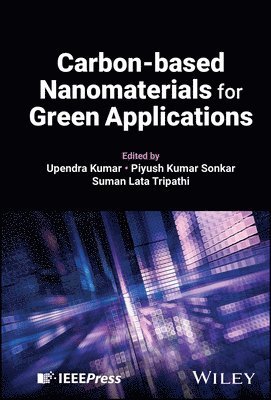
Gain valuable insight into applying carbon-based nanomaterials to the green technologies of the future
The green revolution is the most important technological development of the new century. Carbon-based nanomaterials, with their organic origins and immense range of applications, are increasingly central to this revolution as it unfolds. There is an urgent need for an up-to-date overview of the latest research in this ever-expanding field.
Carbon-Based Nanomaterials for Green Applications meets this need by providing a brief outline of the synthesis and characterization of different carbon-based nanomaterials, including their historical backgrounds. It proceeds to move through each major category, outlining properties and applications for each. The result is an essential contribution to a huge range of sustainable and renewable industries.
With contributions from a global list of distinguished writers, the book includes:
Discussion of nanomaterial applications in fields from drug delivery to biomedical technology to optics Analysis of nanomaterial categories including graphene, fullerene, mesoporous carbon, and many more Separate chapters describing aspects of supercapacitors, solar cells, and fuel cellsCarbon-Based Nanomaterials for Green Applications is ideal for scientists and researchers working in nanotechnology, life sciences, biomedical research, bioengineering, and a range of related fields.
2 030 kr
Läs direkt efter köp
Gain valuable insight into applying carbon-based nanomaterials to the green technologies of the future
The green revolution is the most important technological development of the new century. Carbon-based nanomaterials, with their organic origins and immense range of applications, are increasingly central to this revolution as it unfolds. There is an urgent need for an up-to-date overview of the latest research in this ever-expanding field.
Carbon-Based Nanomaterials for Green Applications meets this need by providing a brief outline of the synthesis and characterization of different carbon-based nanomaterials, including their historical backgrounds. It proceeds to move through each major category, outlining properties and applications for each. The result is an essential contribution to a huge range of sustainable and renewable industries.
With contributions from a global list of distinguished writers, the book includes:
Discussion of nanomaterial applications in fields from drug delivery to biomedical technology to optics Analysis of nanomaterial categories including graphene, fullerene, mesoporous carbon, and many more Separate chapters describing aspects of supercapacitors, solar cells, and fuel cellsCarbon-Based Nanomaterials for Green Applications is ideal for scientists and researchers working in nanotechnology, life sciences, biomedical research, bioengineering, and a range of related fields.
1 859 kr
Skickas inom 10-15 vardagar
2 429 kr
Skickas inom 10-15 vardagar
1 669 kr
Skickas inom 5-8 vardagar
581 kr
Skickas inom 5-8 vardagar
1 605 kr
Skickas inom 10-15 vardagar
1 977 kr
Läs direkt efter köp
This book presents a comprehensive collection of articles illustrating the importance of microbial community structure and function for ecosystem sustainability and environmental reclamation. It addresses a diverse range of topics, including microbial diversity, physiology, genomics, ecosystem function, interaction, metabolism, and the fruitful use of microbial communities for crop productivity and environmental remediation.
In addition, the book explores issues ranging from general concepts on the diversity of microorganisms in soil, and ecosystem function, to the evolution and taxonomy of soil microbiota, with future prospects. It covers cutting-edge methods in soil microbial ecological studies, rhizosphere microflora, the role of organic matter in plant productivity, biological nitrogen fixation and its genetics, microbial transformation of plant nutrients in soil, plant-growth-promoting rhizobacteria, and organic matter transformation.
The book also discusses the application of microbes in biodegradation of xenobiotic contaminants. It covers bio-fertilizers and their role in sustainable agriculture and soil health, biological control of insect pests and plant pathogens, and the latest tools of omics in soil microbiology, i.e. genomics, proteomics, transcriptomics and metabolomics, which offer pioneering approaches to the exploration of microbial structure and function.
1 605 kr
Skickas inom 10-15 vardagar
1 925 kr
Skickas inom 10-15 vardagar
2 465 kr
Läs direkt efter köp
This book highlights the history of electroceramics starting from synthesis using different routes of the solid solution to hybrid nanocomposites and its applications in different renewable energy, thermistor, actuators, thermoelectric, thermo-optic, sensor, and much more applications in electronic industry. In ceramic materials, the properties are controlled by doping and composition, but the grain size and the porosity of the sintered ceramics also play essential roles. The latter features depend on the method of fabrication. The end-user requirements define the optimum physical and chemical properties of ceramic materials. Therefore, the design and fabrication of ceramic components are multidisciplinary, spanning physical chemistry, metallurgy, and chemical engineering. Also included in this book are the various characterizing techniques to study thephysical properties of ceramics.
368 kr
Tillfälligt slut