• Fri frakt över 249 kr
  • •
  • Snabba leveranser
  • •
  • Billiga böcker
Kundservice

Du är på sajten för privatpersoner.

Företag, bibliotek eller offentlig verksamhet?

Du handlar på classic.bokus.com, där alla dina funktioner finns intakta.
Till classic.bokus.com
Bokus logotyp. Gå till startsidan.
  • Erbjudanden
  • Nyheter
  • Student
  • Topplistor
  • Barn & ungdom
  • Bokus Play
  • E-böcker
  • Pocketböcker
  • Spel & pussel

Må bättre, för mindre! Upp till 50% rabatt på hälsoböcker

Sidfot

Mina sidor

    Hjälp

    • Kundservice
    • Vanliga frågor och svar
    • Frakt och leverans
    • Retur vid ångerrätt
    • Reklamera vara
    • Betalning
    • Köpvillkor
    • Allmänna villkor
    • Information om webbplatsens tillgänglighet

    Om Bokus

    • Om oss
    • Pressrum
    • För studenter
    • För företag
    • För bibliotek och offentlig verksamhet
    • För leverantörer
    • Hållbarhet

    Populärt

    • Aktuella erbjudanden
    • Presentkort
    • Studentlitteratur
    • Nya böcker
    • Topplistor
    • Signerade böcker
    • Engelska böcker

    Inspiration

    • Boktips
    • BookTok
    • Populära bokserier
    • Barnbokskaraktärer
    • Populära författare
    Logotyp för Bokus
    Följ oss på Facebook (extern länk)Följ oss på Instagram (extern länk)Följ oss på YouTube (extern länk)Följ oss på TikTok (extern länk)
    bokus @ CookiesAnpassa cookiesIntegritetspolicyKöpvillkor
    Till Citymail hemsida (extern länk)Till Budbee hemsida (extern länk)Till Postnord hemsida (extern länk)Till Schenker hemsida (extern länk)Till Early Bird hemsida (extern länk)Till Walleys hemsida (extern länk)
    1. Kultur
    2. Scenkonst och film
    3. Radio / podcasts

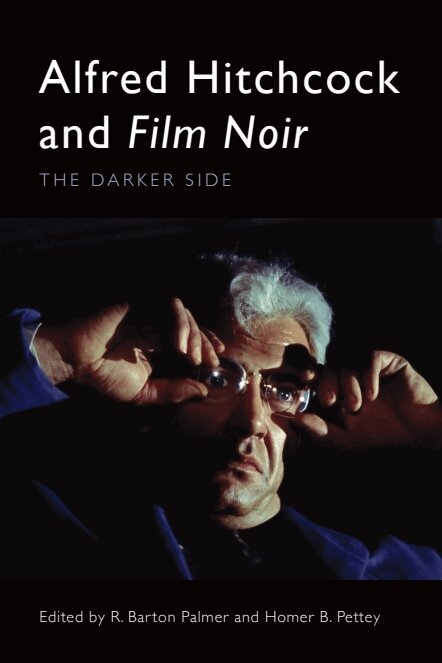
    Alfred Hitchcock and Film Noir

    The Darker Side

    AvR. Barton Palmer,Homer B. Pettey

    Inbunden, Engelska, 2024

    2 012 kr

    Beställningsvara. Skickas inom 3-6 vardagar. Fri frakt över 249 kr.

    Beskrivning

    Alfred Hitchcock was a major figure in the development and flourishing of film noir. His noir films became an inspirational foundation of the neo-noir movement beginning in the 1970s, from Brian de Palma's mash-up homages to Hitchcock originals such as Obsession (1976) and Body Double (1984) to the dark political thrillers of the era that explore the underside of American life, all of which owe a substantial debt to Hitchcock. However, the central role of Hitchcock in the long history of film noir has seldom been acknowledged in work devoted to his career and noir criticism more generally. Instead, there has been a tendency to consider Hitchcock's many dark thrillers and crime melodramas as sui generis, that is, as "Hitchcock films" that are somehow separate and distinct from industry trends. But this is to take a narrow view of the director's accomplishments that underestimates his substantial contributions to film history. Alfred Hitchcock and Film Noir will be the first book-length treatment of the impressive corpus of Hitchcock noir films considered as such, as well as of his connection more generally to the emergence and flourishing of this important cinematic trend.

    Produktinformation

    • Utgivningsdatum:2024-11-30
    • Mått:156 x 234 x 27 mm
    • Vikt:652 g
    • Format:Inbunden
    • Språk:Engelska
    • Antal sidor:344
    • Förlag:Edinburgh University Press
    • ISBN:9781399535175

    Utforska kategorier

    • Radio / podcasts inom Kultur
    • Film inom Kultur

    Mer om författaren

    R. Barton Palmer is Calhoun Lemon Professor of Literature Emeritus at Clemson University. He is the author, editor, or general editor of many books including Hollywood’s Dark Cinema: The American Film Noir (1994), After Hitchcock: Influence, Imitation, and Intertextuality (2006), and A Little Solitaire: John Frankenheimer and American Film (2011). He is the series editor for EUP’s traditions in World Cinema, Traditions in American Cinema and International Film Stars series, and he is co-editor of five recent EUP books: Michael Mann, George Cukor, Film Noir, International Noir and The Other Hollywood Renaissance. Homer B. Pettey is Professor Emeritus of Film and Comparative Literature at the University of Arizona. He serves as the founding and general editor for Global Film Directors (Rutgers U.P.), Global Film Studios (Edinburgh U.P.), and International Stars (Edinburgh U.P.).

    Recensioner i media

    "In film noir evil lurks around every corner, especially in the 1950s and early 1960s features. R. Barton Palmer and Homer B. Pettey have assembled a fine array of film scholars to offer their respect to a pioneer and fellow traveller of noir directors like Siodomak, Wilder and Dmytryk. Here Hitchcock has come out of the shadows of his role as 'Master of suspense.'"

    Innehållsförteckning

    • AcknowledgementsNotes on ContributorsIllustrationsChapter 1. Introduction: The Dark Side and Hitchcock's Early Noirs - R. Barton Palmer and Homer B. PetteyChapter 2. The 39 Steps (1935) and the Hard-Boiled Tradition - Homer B. PetteyChapter 3. Hitchcock's Gothic Noir (Rebecca [1940] and The Birds [1962]): Haunted and Haunting Women and Les Oiselles Fatales - Julie GrossmanChapter 4. The Americanization of Hitchcock: The Precariousness of Democratic Agency in War Noir - Alan WoolfolkChapter 5. Suspicion (1941): A Noir Woman's Film - Florence JacobowitzChapter 6. Unhitched: Joan Harrison's Noir Marriage Plots - Mark OsteenChapter 7. Noir Americana Aesthetics in Shadow of a Doubt (1943) - Elisabeth BronfenChapter 8. What's Love Got to Do with It? Reading Spellbound (1945) Through Marnie (1964) in the Time of #MeToo - Thomas LeitchChapter 9. Designing the Notorious Woman: Costume, Characterisation and Star Persona in the Fabrication of the ‘Femme Fatale’ - Helen HansonChapter 10. The In-Between of Stage and Screen: Rope (1948), Stage Fright (1950), and Dial M for Murder (1954) - Bruce IsaacsChapter 11. Upending Noir in Strangers on a Train (1951) - Lee Clark MitchellChapter 12. I Confess (1953): Hitchcock and the "Great Darkness" - Jim LeachChapter 13. Crossfire of Knowledge: Noir and Tropical Dualism - Murray PomeranceChapter 14. The Wrong Man (1956): Hitchcock's Contribution to the Noir "Film of Fact" Production Cycle - R. Barton PalmerChapter 15. The Midge Ending: Vertigo (1958) and The Role of the Third Woman - Jans B. WagerChapter 16. Territorial Imperative: the Dark Landscape of the Body in Psycho (1960) and Frenzy (1972) - Jennifer L. JenkinsChapter 17. The Weak Link in the Chain: Copenhagen and Cold War Noir in Hitchcock’s Torn Curtain (1966) and Topaz (1969) - Ian ScottChapter 18. Epilogue - Rear Window (1954) and North by Northwest (1959) - Homer B. Pettey and R. Barton PalmerChapter 19. BibliographyIndex