• Fri frakt över 249 kr
  • •
  • Snabba leveranser
  • •
  • Billiga böcker
Kundservice

Du är på sajten för privatpersoner.

Företag, bibliotek eller offentlig verksamhet?

Du handlar på classic.bokus.com, där alla dina funktioner finns intakta.
Till classic.bokus.com
Bokus logotyp. Gå till startsidan.
  • Erbjudanden
  • Nyheter
  • Student
  • Topplistor
  • Barn & ungdom
  • Bokus Play
  • E-böcker
  • Pocketböcker
  • Spel & pussel

10% rabatt på allt med kod: NYSTART10 →

Sidfot

Mina sidor

    Hjälp

    • Kundservice
    • Vanliga frågor och svar
    • Frakt och leverans
    • Retur vid ångerrätt
    • Reklamera vara
    • Betalning
    • Köpvillkor
    • Allmänna villkor
    • Information om webbplatsens tillgänglighet

    Om Bokus

    • Om oss
    • Pressrum
    • För studenter
    • För företag
    • För bibliotek och offentlig verksamhet
    • För leverantörer
    • Hållbarhet

    Populärt

    • Aktuella erbjudanden
    • Presentkort
    • Studentlitteratur
    • Nya böcker
    • Topplistor
    • Signerade böcker
    • Engelska böcker

    Inspiration

    • Boktips
    • BookTok
    • Populära bokserier
    • Barnbokskaraktärer
    • Populära författare
    Logotyp för Bokus
    Följ oss på Facebook (extern länk)Följ oss på Instagram (extern länk)Följ oss på YouTube (extern länk)Följ oss på TikTok (extern länk)
    bokus @ CookiesAnpassa cookiesIntegritetspolicyKöpvillkor
    Till Citymail hemsida (extern länk)Till Budbee hemsida (extern länk)Till Postnord hemsida (extern länk)Till Schenker hemsida (extern länk)Till Early Bird hemsida (extern länk)Till Walleys hemsida (extern länk)
    1. Samhälle och politik
    2. Politik och statsskick
    3. Statsvetenskap och politisk teori

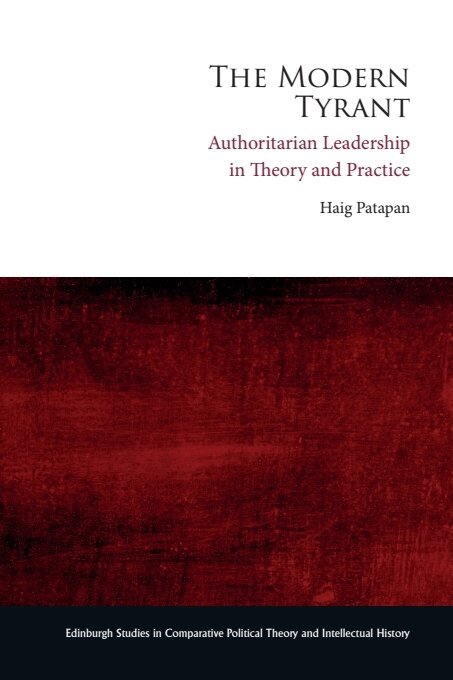
    Modern Tyrant

    Authoritarian Leadership in Theory and Practice

    AvHaig Patapan

    Inbunden, Engelska, 2026

    Del i serien Edinburgh Studies in Comparative Political Theory and Intellectual History

    1 161 kr

    Beställningsvara. Skickas inom 7-10 vardagar. Fri frakt över 249 kr.

    Beskrivning

    The Modern Tyrant argues that modern authoritarian leaders resemble classical tyrants but are distinctive in three ways: their ambitions for wealth and glory are shaped by modernity (especially nationalism, religion and ideology); their techniques are novel, combining authoritarian and democratic forms, and finally, they are much more powerful, able to exploit modern propaganda techniques and technology to enhance their control and dominance.

    Produktinformation

    • Utgivningsdatum:2026-03-31
    • Mått:156 x 234 x 16 mm
    • Vikt:558 g
    • Format:Inbunden
    • Språk:Engelska
    • Serie:Edinburgh Studies in Comparative Political Theory and Intellectual History
    • Antal sidor:272
    • Förlag:Edinburgh University Press
    • ISBN:9781399556200

    Utforska kategorier

    • Statsvetenskap och politisk teori inom Samhälle och politik
    • Politiskt ledarskap inom Samhälle och politik
    • Statsskick: diktatur inom Samhälle och politik

    Mer om författaren

    Haig Patapan is a Professor in the School of Government and International Relations at Griffith University. His research examines the theory and practice of democracy. He is the author of Modern Philosopher Kings (EUP 2023).

    Recensioner i media

    ‘Haig Patapan’s book, The Modern Tyrant, is one of the most significant recent contributions to the leadership literature. It is a must-read for anyone with a serious interest in leadership, especially, though not exclusively, in politics. Patapan’s book is deeply rooted in the classics, but it is, alas, completely contemporary in its application. Buy it. Keep it.’

    Innehållsförteckning

    • Introduction: The Rise of Modern AuthoritarianismPart I: Who is the Modern Tyrant?1. The Authoritarian Leader2. The Soul of the Classical TyrantPart II: Typology of Modern Tyrants3. The Nationalist Tyrant4. The Religious Tyrant5. The Ideological TyrantPart III: Techniques of Modern Tyranny6. The Modern Manual of Tyranny7. Propaganda: The Modern Rhetoric of Tyranny8. Technology and the Modern Tyrant9. Populism, Democracy and TyrannyConclusion: New DangersReferences