• Fri frakt över 249 kr
  • •
  • Snabba leveranser
  • •
  • Billiga böcker
Kundservice

Du är på sajten för privatpersoner.

Företag, bibliotek eller offentlig verksamhet?

Du handlar på classic.bokus.com, där alla dina funktioner finns intakta.
Till classic.bokus.com
Bokus logotyp. Gå till startsidan.
  • Erbjudanden
  • Nyheter
  • Student
  • Topplistor
  • Barn & ungdom
  • Bokus Play
  • E-böcker
  • Pocketböcker
  • Spel & pussel

10% rabatt på allt med kod NYSTART10 →

Sidfot

Mina sidor

    Hjälp

    • Kundservice
    • Vanliga frågor och svar
    • Frakt och leverans
    • Retur vid ångerrätt
    • Reklamera vara
    • Betalning
    • Köpvillkor
    • Allmänna villkor
    • Information om webbplatsens tillgänglighet

    Om Bokus

    • Om oss
    • Pressrum
    • För studenter
    • För företag
    • För bibliotek och offentlig verksamhet
    • För leverantörer
    • Hållbarhet

    Populärt

    • Aktuella erbjudanden
    • Presentkort
    • Studentlitteratur
    • Nya böcker
    • Topplistor
    • Signerade böcker
    • Engelska böcker

    Inspiration

    • Boktips
    • BookTok
    • Populära bokserier
    • Barnbokskaraktärer
    • Populära författare
    Logotyp för Bokus
    Följ oss på Facebook (extern länk)Följ oss på Instagram (extern länk)Följ oss på YouTube (extern länk)Följ oss på TikTok (extern länk)
    bokus @ CookiesAnpassa cookiesIntegritetspolicyKöpvillkor
    Till Citymail hemsida (extern länk)Till Budbee hemsida (extern länk)Till Postnord hemsida (extern länk)Till Schenker hemsida (extern länk)Till Early Bird hemsida (extern länk)Till Walleys hemsida (extern länk)
    1. Naturvetenskap och teknik
    2. Matematik och naturvetenskap
    3. Biologi
    4. Biokemi

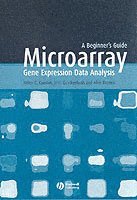
    Microarray Gene Expression Data Analysis

    A Beginner's Guide

    AvHelen Causton,John Quackenbush

    Häftad, Engelska, 2003

    1 146 kr

    Beställningsvara. Skickas inom 5-8 vardagar. Fri frakt över 249 kr.

    Beskrivning

    This guide covers aspects of designing microarray experiments and analysing the data generated, including information on some of the tools that are available from non-commercial sources. Concepts and principles underpinning gene expression analysis are emphasised and wherever possible, the mathematics has been simplified. The guide is intended for use by graduates and researchers in bioinformatics and the life sciences and is also suitable for statisticians who are interested in the approaches currently used to study gene expression. Microarrays are an automated way of carrying out thousands of experiments at once, and allows scientists to obtain huge amounts of information very quicklyShort, concise text on this difficult topic areaClear illustrations throughoutWritten by well-known teachers in the subjectProvides insight into how to analyse the data produced from microarrays

    Produktinformation

    • Utgivningsdatum:2003-03-27
    • Mått:174 x 248 x 15 mm
    • Vikt:336 g
    • Format:Häftad
    • Språk:Engelska
    • Antal sidor:184
    • Förlag:John Wiley and Sons Ltd
    • ISBN:9781405106825

    Utforska kategorier

    • Biokemi inom Naturvetenskap och teknik
    • Biovetenskap inom Naturvetenskap och teknik
    • Naturvetenskap:allmänt inom Naturvetenskap och teknik

    Mer om författaren

    Helen Causton is an experimental biologist who carried out some of the early studies on genome-wide transcriptional regulation in yeast using microarrays. She is Head of the Clinical Sciences Microarray Centre at Imperial College, University of London. John Quackenbush is a principal investigator at The Institute for Genomic Research (TIGR). His research interests include development of software for microarray data analysis, gene indices and comparative genomics. Alvis Brazma is a computer scientist who has been involved in microarray data analysis since 1998. He heads microarray informatics at the European Bioinformatics Institute and is in charge of establishing a public repository for microarray data.

    Recensioner i media

    "Quite a few recently published books discuss analysis of microarray gene expression data for beginners. Microarray Gene Expression Data Analysis ... is arguably the best of its kind in this regard." Terry Speed, The Walter & Eliza Hall Institute of Medical Research, Nature Cell Biology, December 2003 "Overall this is an excellent book, it is well referenced and, to my mind, covers the vast majority of issues an experimenter needs to consider when venturing into the world of microarray data analysis. The book fills a clear gap in the field, providing a rigorous overview of the often confusing .... data analysis issues that most books on microarrays avoid or treat in a cursory way. I would say it is essential reading for any laboratory or researcher active in this rapidly evolving field and is recommended for the mathematician or statisitican who is interested in the field or who has been persuaded by their biologist colleague to help them with their analysis." Steven Russell, University of Cambridge, Genetical Research, February 2003 "Anyone wishing to gain a basic understanding of microarray gene expression studies will come away enriched ... A good and accessible entry point for any biologist who is interested in getting an overview about how to perform microarray gene expression studies." D.C.Jamison, George Mason University, Heredity, June 2004

    Innehållsförteckning

    • Preface. Acknowledgements.Part I: Introduction:.1. What Are Microarrays?.2. Use Of Icroarrays To Monitor Gene Expression.3. Other Uses For Microarrays.4. Challenges Associated With The Generation Of Large Amounts Of Complex Data.5. Future Directions.Part II: Aspects Of Experimental Design:.6. Features Of Microarray Data.7. Designing The Best Experiment.8. Preparation of Target.9. Design of Spotted Arrays.10. Hybridisation.11. Long Term Considerations.12. Verification of Results.Part III: Data Analysis:.13. Preliminary Processing of Data.14. Methods for Data Analysis.15. Graph Models.16. Software In The Public Domain.17. Visualisation of Data.Part IV: Glossary:.Index.Colour plates fall between pp. 84 and 85.