• Fri frakt över 249 kr
  • •
  • Snabba leveranser
  • •
  • Billiga böcker
Kundservice

Du är på sajten för privatpersoner.

Företag, bibliotek eller offentlig verksamhet?

Du handlar på classic.bokus.com, där alla dina funktioner finns intakta.
Till classic.bokus.com
Bokus logotyp. Gå till startsidan.
  • Erbjudanden
  • Nyheter
  • Student
  • Topplistor
  • Barn & ungdom
  • Bokus Play
  • E-böcker
  • Pocketböcker
  • Spel & pussel

10% studentrabatt med kod TERM26

Sidfot

Mina sidor

    Hjälp

    • Kundservice
    • Vanliga frågor och svar
    • Frakt och leverans
    • Retur vid ångerrätt
    • Reklamera vara
    • Betalning
    • Köpvillkor
    • Allmänna villkor
    • Information om webbplatsens tillgänglighet

    Om Bokus

    • Om oss
    • Pressrum
    • För studenter
    • För företag
    • För bibliotek och offentlig verksamhet
    • För leverantörer
    • Hållbarhet

    Populärt

    • Aktuella erbjudanden
    • Presentkort
    • Studentlitteratur
    • Nya böcker
    • Topplistor
    • Signerade böcker
    • Engelska böcker

    Inspiration

    • Boktips
    • BookTok
    • Populära bokserier
    • Barnbokskaraktärer
    • Populära författare
    Logotyp för Bokus
    Följ oss på Facebook (extern länk)Följ oss på Instagram (extern länk)Följ oss på YouTube (extern länk)Följ oss på TikTok (extern länk)
    bokus @ CookiesAnpassa cookiesIntegritetspolicyKöpvillkor
    Till Citymail hemsida (extern länk)Till Budbee hemsida (extern länk)Till Postnord hemsida (extern länk)Till Schenker hemsida (extern länk)Till Early Bird hemsida (extern länk)Till Walleys hemsida (extern länk)
    1. Samhälle och politik
    2. Samhälle och kultur
    3. Kultur och medier
    4. Kulturvetenskap

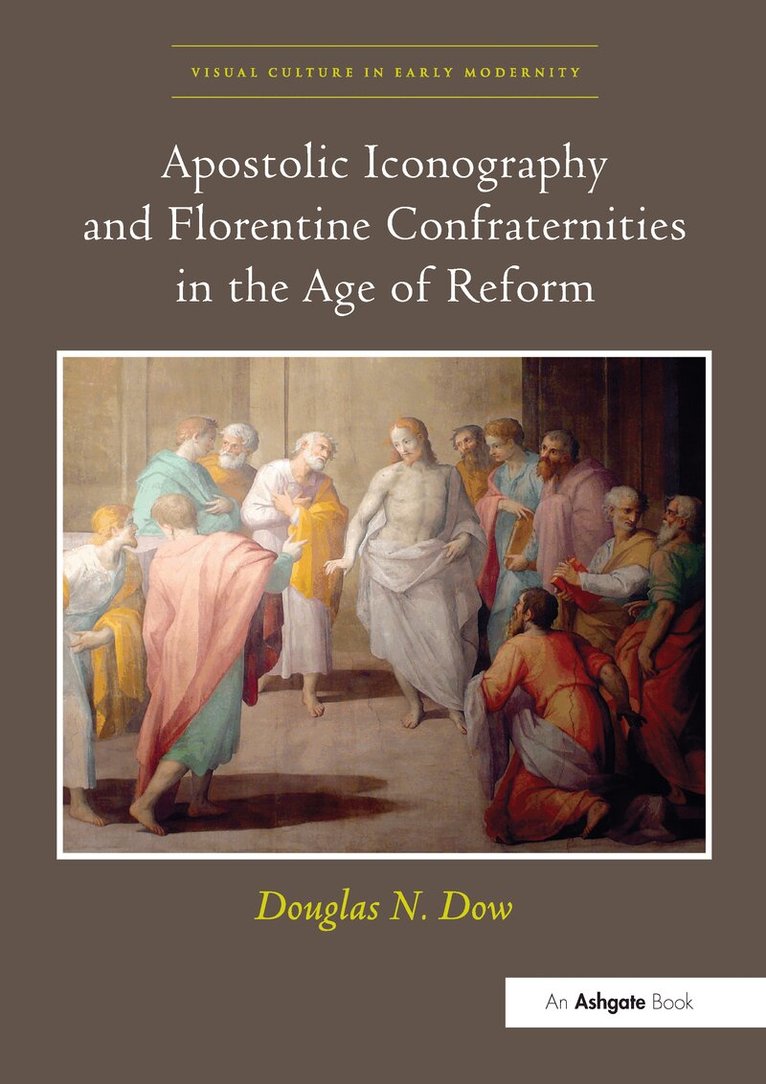
    Apostolic Iconography and Florentine Confraternities in the Age of Reform

    AvDouglas N. Dow

    Inbunden, Engelska, 2014

    Del i serien Visual Culture in Early Modernity

    2 495 kr

    Beställningsvara. Skickas inom 5-8 vardagar. Fri frakt över 249 kr.

    Fler format och utgåvor

    Häftad

    705 kr

    Beskrivning

    Focusing on artists and architectural complexes which until now have eluded scholarly attention in English-language publications, Apostolic Iconography and Florentine Confraternities in the Age of Reform examines through their art programs three different confraternal organizations in Florence at a crucial moment in their histories. Each of the organizations that forms the basis for this study oversaw renovations that included decorative programs centered on the apostles. At the complex of Gesù Pellegrino a fresco cycle represents the apostles in their roles as Christ’s disciples and proselytizers. At the oratory of the company of Santissima Annunziata a series of frescoes shows their martyrdoms, the terrible price the apostles paid for their mission and their faith. At the oratory of San Giovanni Battista detta dello Scalzo a sculptural program of the apostles stood as an example to each confratello of how Christian piety had its roots in collective effort. Douglas Dow shows that the emphasis on the apostles within these corporate groups demonstrates how the organizations adapted existing iconography to their own purposes. He argues that their willful engagement with apostolic themes reveals the complex interaction between these organizations and the church’s program of reform.

    Produktinformation

    • Utgivningsdatum:2014-02-26
    • Mått:174 x 246 x 19 mm
    • Vikt:772 g
    • Format:Inbunden
    • Språk:Engelska
    • Serie:Visual Culture in Early Modernity
    • Antal sidor:240
    • Förlag:Taylor & Francis Ltd
    • ISBN:9781409440543

    Utforska kategorier

    • Kulturvetenskap inom Samhälle och politik
    • Europas historia inom Historia och arkeologi
    • Konsthistoria inom Kultur

    Mer om författaren

    Douglas N. Dow is Associate Professor of Art History at Kansas State University, USA.

    Recensioner i media

    'This impressive volume by Dow ... helps fill a scholarly void in books on religious painting in the last quarter of the 16th century in Florence. ... The text is meticulous and scholarly, supported by copious notes, bibliography, and original illustrations appropriate to such an ambitious and groundbreaking study. ... Highly recommended. Upper-division undergraduates through researchers/faculty.’ Choice 'Dow's book uses a rich quantity of illustrations to make his point, both plans and reproductions of the frescoes and some of the statues ... Dow brings to light much detail regarding the confraternities' organisation and motivation in commissioning new works of art both as embellishment of the oratories and as education material for the confratelli.' Sehepunkte 'More than just a window onto a neglected field, it is a thorough, meticulous study based on archival research and stylistic analysis, in one case including a methodical reconstruction of a long-lost interior. It represents the kind of scholarship that has too often fallen by the wayside in an era when detail (and often accuracy) are neglected in favour of the big, interdisciplinary picture. Contributions such as Dow's are especially needed in places like post-Tridentine Florence, where the literature simply has not yet done the groundwork: we will not be able to see the big picture until we get our facts straight.' Burlington Magazine '... Dow focuses new attention on Florentine confraternal identification with the apostles at a time when the Church was asserting its own claims as a purified paleo- Christian institution. This exemplifies yet another dynamic way in which sodalities responded to and shaped the prevailing religious culture.' Renaissance Quarterly'This important, lucid, and elegantly written book is in part a product of the spatial and sensory turn that has driven much recent research. It will be of interest not only to art historians but also to scholars in other disciplines who are concerned with the process by which traditional forms of devotion, and the desired ends of Church reformers, converged and mingled with the city’s artisan culture and patronage relations. In a wider sense, Dow’s evocation of the resulting mélange, and his explication of how urban culture took visual and spatial form, teaches us more about how citizens, including non-elites, inhabited and negotiated the early modern European city.' CAA Reviews

    Innehållsförteckning

    • Contents: Introduction; Alessandro de’ Medici and the Florentine archdiocese at the end of the cinquecento; ’Maledictus enim homo, qui opus Dei facit negligenter’: Giovanni Balducci’s frescoes of the Risen Christ and the Apostles in the church of Gesù Pellegrino; ’Essere amorevole della casa’: the sculptures of the Apostles in the oratory of San Giovanni Battista detta dello Scalzo; ’Far bene per i vivi, e morti’: the frescoes of the martyrdoms of the Apostles in the atrium of the oratory of Santissima Annunziata; Conclusion; Appendix; Bibliography; Index.