• Fri frakt över 249 kr
  • •
  • Snabba leveranser
  • •
  • Billiga böcker
Kundservice

Du är på sajten för privatpersoner.

Företag, bibliotek eller offentlig verksamhet?

Du handlar på classic.bokus.com, där alla dina funktioner finns intakta.
Till classic.bokus.com
Bokus logotyp. Gå till startsidan.
  • Erbjudanden
  • Nyheter
  • Student
  • Topplistor
  • Barn & ungdom
  • Bokus Play
  • E-böcker
  • Pocketböcker
  • Spel & pussel

10% rabatt på allt med kod: NYSTART10 →

Sidfot

Mina sidor

    Hjälp

    • Kundservice
    • Vanliga frågor och svar
    • Frakt och leverans
    • Retur vid ångerrätt
    • Reklamera vara
    • Betalning
    • Köpvillkor
    • Allmänna villkor
    • Information om webbplatsens tillgänglighet

    Om Bokus

    • Om oss
    • Pressrum
    • För studenter
    • För företag
    • För bibliotek och offentlig verksamhet
    • För leverantörer
    • Hållbarhet

    Populärt

    • Aktuella erbjudanden
    • Presentkort
    • Studentlitteratur
    • Nya böcker
    • Topplistor
    • Signerade böcker
    • Engelska böcker

    Inspiration

    • Boktips
    • BookTok
    • Populära bokserier
    • Barnbokskaraktärer
    • Populära författare
    Logotyp för Bokus
    Följ oss på Facebook (extern länk)Följ oss på Instagram (extern länk)Följ oss på YouTube (extern länk)Följ oss på TikTok (extern länk)
    bokus @ CookiesAnpassa cookiesIntegritetspolicyKöpvillkor
    Till Citymail hemsida (extern länk)Till Budbee hemsida (extern länk)Till Postnord hemsida (extern länk)Till Schenker hemsida (extern länk)Till Early Bird hemsida (extern länk)Till Walleys hemsida (extern länk)
    1. Samhälle och politik
    2. Politik och statsskick
    3. Offentlig förvaltning

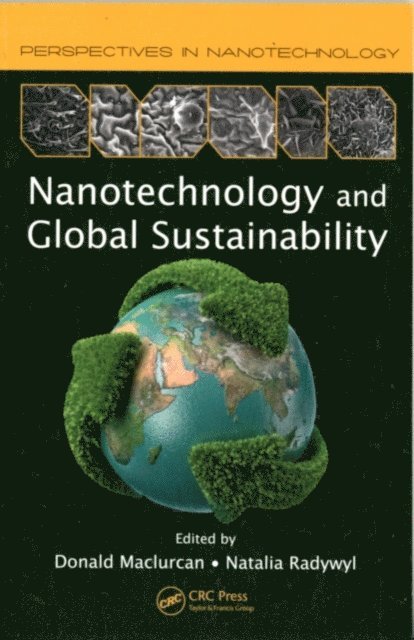
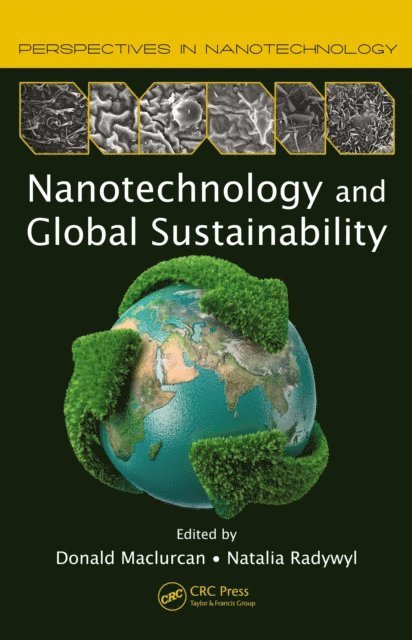
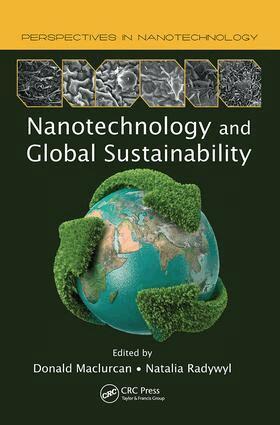
    Nanotechnology and Global Sustainability

    AvDonald Maclurcan

    Häftad, Engelska, 2011

    Del i serien Perspectives in Nanotechnology

    924 kr

    Beställningsvara. Skickas inom 10-15 vardagar. Fri frakt över 249 kr.

    Beskrivning

    The rise of collaborative consumption, peer-to-peer systems, and not-for-profit social enterprise heralds the emergence of a new era of human collectivity. Increasingly, this consolidation stems from an understanding that big-banner issues—such as climate change—are not the root causes of our present global predicament. There is a growing and collective view that issues such as this are actually symptoms of a much more vicious, seemingly insurmountable condition: our addiction to economic, consumption, and population growth in a world of finite resources.Nanotechnology and Global Sustainability uses nanotechnology—the product of applied scientific knowledge to control and utilize matter at atomic and molecular scales—as a lens through which to explore the interrelationship between innovation, politics, economy, and sustainability. This groundbreaking book addresses how stakeholders can actively reshape agendas to create positive and sustainable futures through this latest controversial, cross-sectoral technology. It moves beyond issues of efficiency, productivity, and utility, exploring the insights of 22 contributors from around the world, whose work spans the disciplines of science and the humanities. Their combined knowledge, reinforced with various case studies, introduces an exciting prospect—how we can innovate without economic growth.This new volume in the Perspectives in Nanotechnology series is edited by Dr. Donald Maclurcan and Dr. Natalia Radywyl. Dr. Maclurcan is a social innovator and Honorary Research Fellow with the Institute for Nanoscale Technology at the University of Technology Sydney, Australia. Dr. Radywyl is a social researcher and Honorary Research Fellow in the School of Culture and Communication at the University of Melbourne, Australia. She is also an Adjunct Research Fellow in the Faculty of Life and Social Sciences at Swinburne University of Technology, Melbourne. This book is written for a wide audience and will be of particular interest to activists, scholars, policy makers, scientists, business professionals, and others who seek an understanding of how we might justly transition to sustainable societies.
    Produktinformation

    • Utgivningsdatum:2011-12-12
    • Mått:156 x 234 x 17 mm
    • Vikt:430 g
    • Format:Häftad
    • Språk:Engelska
    • Serie:Perspectives in Nanotechnology
    • Antal sidor:335
    • Förlag:Taylor & Francis Inc
    • ISBN:9781439855768

    Utforska kategorier

    • Offentlig förvaltning inom Samhälle och politik
    • Folkrätt inom Juridik
    • Naturvetenskap:allmänt inom Naturvetenskap och teknik

    Mer om författaren

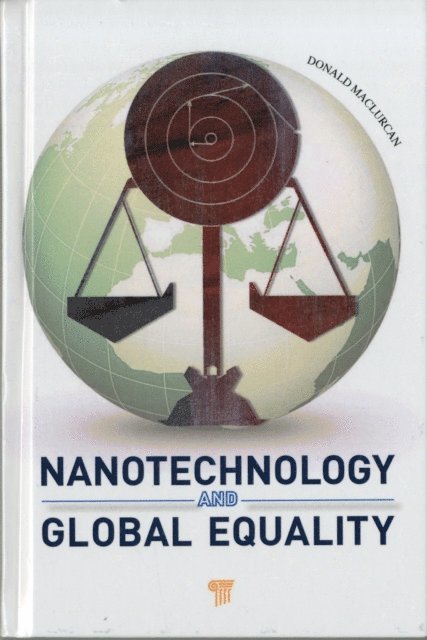
    Dr. Donnie Maclurcan is an Honorary Research Fellow with the Institute for Nanoscale Technology at the University of Technology, Sydney, Distinguished Fellow with the U.K.-based Schumacher Institute for Sustainable Systems, and Co-Founder of the Post Growth Institute – an international network inspiring and equipping people to explore paths to global prosperity that do not rely on economic growth. With fieldwork in Thailand and Australia, his Ph.D. from the University of Technology, Sydney, was an original and comprehensive assessment of nanotechnology’s possible consequences for global inequity. This work developed into the book Nanotechnology and Global Equality (2011) and research that has been translated into more than 20 languages. He is a past member of the Global Nanotechnology Taskforce on Implications and Policy, was Interim Chair of the International Free and Open Source Software Foundation, and was appointed a Fellow of the Royal Society of the Arts in 2010. In 2006 he founded Project Australia – a community organization helping people launch not-for-profit initiatives. He later launched Australia’s first professional speakers’ bureau for social innovators, uThinc.Dr. Natalia Radywyl is a social researcher and Honorary Research Fellow in the School of Culture and Communication at the University of Melbourne, and Adjunct Research Fellow in the Faculty of Life and Social Sciences at Swinburne University of Technology, Melbourne. As someone working across multiple disciplines, sectors and projects, Natalia advocates the role of critically-informed design, and seeking a common language to design for positive change. With interests in spatial and communications design, Natalia specialises in ethnographic approaches to understanding user experience and facilitating public engagement. Recent research includes her Ph.D. Moving Images, the Museum and a Politics of Movement (2008), which employed ethnography, social theory and cultural policy analysis to appraise visitor experience and codify the spatial ecology in the Australian Centre for the Moving Image, Melbourne; visitor engagement with urban screens and public space (2009-10); and viewer engagement with social media in the context of Australian public broadcasting (2011). As a social researcher she also has a strong grounding in policy, and consults to government on public behaviour change and agenda-setting. Natalia’s practice and research approaches are reflected in the interdisciplinary projects she has completed; these span languages, publishing, performance, music, interactive media and installation art. Natalia has also lectured in new media, media policy, theories of consumption and urban culture, and continues to publish about the role public institutions - such as broadcasters, museums and common urban spaces - play in mediating meaningful experiences in everyday life.

    Recensioner i media

    "This is a field dominated by journal articles and popular periodicals. This book is a major step toward correcting that problem. [It exhibits] interdisciplinarity, focus on sustainability, and balanced perspectives. … This volume uses the interdisciplinary lens of sustainability to assess the promises and pitfalls presented by the emergence of nanotechnology…Despite the enormous potential of nanotechnology for good and for harm, there has been woefully little critical analytical attention paid to its social and environmental implications. This volume is an important corrective to that inattention. This book starts a dialogue that is absolutely vital if we are to have hope for democratic participation in determining the role, purpose, and direction of technological innovation." — Kenneth A. Gould, City University of New York—Brooklyn College and the Graduate Center, USA

    Innehållsförteckning

    • Section I: LimitsNanotechnology and Limits to Growth. Nanotechnology and the Environment. Nanotechnology and Traditional Knowledge Systems.Section II: CapacityNanotechnology and Geopolitics: There’s Plenty of Room at the Top. Nanotechnology, Agriculture, and Food. Poor Man’s Nanotechnology—From the Bottom Up (Thailand).Section III: AppropriatenessNanotechnology and Global Health. Toward Pro-Poor Nano-Innovation (Zimbabwe, Peru, Nepal). Open Source Appropriate Nanotechnology.Section IV: GovernanceNanotechnology and Risk. Nanotechnology and State Regulation (India). Nanotechnology and Global Regulation. Nanotechnology without Growth.