• Fri frakt över 249 kr
  • •
  • Snabba leveranser
  • •
  • Billiga böcker
Kundservice

Du är på sajten för privatpersoner.

Företag, bibliotek eller offentlig verksamhet?

Du handlar på classic.bokus.com, där alla dina funktioner finns intakta.
Till classic.bokus.com
Bokus logotyp. Gå till startsidan.
  • Erbjudanden
  • Nyheter
  • Student
  • Topplistor
  • Barn & ungdom
  • Bokus Play
  • E-böcker
  • Pocketböcker
  • Spel & pussel

10% rabatt på allt med kod: NYSTART10 →

Sidfot

Mina sidor

    Hjälp

    • Kundservice
    • Vanliga frågor och svar
    • Frakt och leverans
    • Retur vid ångerrätt
    • Reklamera vara
    • Betalning
    • Köpvillkor
    • Allmänna villkor
    • Information om webbplatsens tillgänglighet

    Om Bokus

    • Om oss
    • Pressrum
    • För studenter
    • För företag
    • För bibliotek och offentlig verksamhet
    • För leverantörer
    • Hållbarhet

    Populärt

    • Aktuella erbjudanden
    • Presentkort
    • Studentlitteratur
    • Nya böcker
    • Topplistor
    • Signerade böcker
    • Engelska böcker

    Inspiration

    • Boktips
    • BookTok
    • Populära bokserier
    • Barnbokskaraktärer
    • Populära författare
    Logotyp för Bokus
    Följ oss på Facebook (extern länk)Följ oss på Instagram (extern länk)Följ oss på YouTube (extern länk)Följ oss på TikTok (extern länk)
    bokus @ CookiesAnpassa cookiesIntegritetspolicyKöpvillkor
    Till Citymail hemsida (extern länk)Till Budbee hemsida (extern länk)Till Postnord hemsida (extern länk)Till Schenker hemsida (extern länk)Till Early Bird hemsida (extern länk)Till Walleys hemsida (extern länk)
    1. Samhälle och politik
    2. Samhälle och kultur
    3. Kultur och medier
    4. Kulturvetenskap

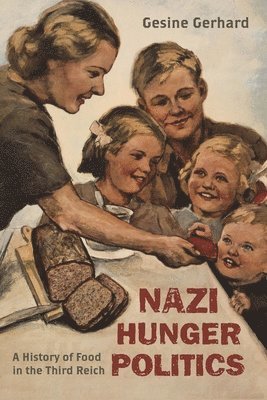
    Nazi Hunger Politics

    A History of Food in the Third Reich

    AvGesine Gerhard

    Inbunden, Engelska, 2015

    Del i serien Bloomsbury Studies in Food and Gastronomy

    650 kr

    Beställningsvara. Skickas inom 10-15 vardagar. Fri frakt över 249 kr.

    Beskrivning

    During World War II, millions of Soviet soldiers in German captivity died of hunger and starvation. Their fate was not the unexpected consequence of a war that took longer than anticipated. It was the calculated strategy of a small group of economic planners around Herbert Backe, the second Reich Minister for Food and Agriculture. The mass murder of Soviet soldiers and civilians by Nazi food policy has not yet received much attention, but this book is about to change that.Food played a central political role for the Nazi regime and served as the foundation of a racial ideology that justified the murder of millions of Jews, prisoners of war, and Slavs. This book is the first to vividly and comprehensively address the topic of food during the Third Reich. It examines the economics of food production and consumption in Nazi Germany, as well as its use as a justification for war and as a tool for genocide. Offering another perspective on the Nazi regime’s desire for domination, Gesine Gerhard sheds light on an often-overlooked part of their scheme and brings into focus the very important role food played in the course of the Second World War.

    Produktinformation

    • Utgivningsdatum:2015-09-01
    • Mått:152 x 231 x 25 mm
    • Vikt:477 g
    • Format:Inbunden
    • Språk:Engelska
    • Serie:Bloomsbury Studies in Food and Gastronomy
    • Antal sidor:196
    • Förlag:Bloomsbury Publishing Plc
    • ISBN:9781442227248

    Utforska kategorier

    • Kulturvetenskap inom Samhälle och politik
    • Europas historia inom Historia och arkeologi

    Mer om författaren

    Gesine Gerhard is professor of History at the University of Pacific in Stockton, California. She has published on agricultural and food policy, the Nazi era, and environmental history in many academic journals.

    Recensioner i media

    Food has been a vital part of war since time immemorial, from early biblical sieges to the Hunger Blockade of November 1918 and the later Soviet and Chinese mass starvation of millions. Decades ago, the noted historian C. Paul Vincent, in Politics of Hunger (CH, May'86), concluded that the withholding or interruption of the availability of foodstuffs had become a basic political weapon of modern warfare, against both foreign enemies and vulnerable internal minorities. By WW II, food policy in Germany was as important as the manufacture of arms and fell to the hard-liner Herbert Backe, a failed academic who ingratiated himself in R. Walther Darré’s Reich Ministry for Food and Agriculture. As a wartime intimate of Hitler and Goering, Backe played a major role in the allocation of food rations to the public, the mass murder of Soviet soldiers and civilians, and the use of food shortages as a justification for genocide. Indeed, in the very capable hands of historian Gerhard, this excellent volume, based on original diaries, interviews, and outstanding research, examines the use and misuse of food, which may indeed have been Nazi Germany’s justification for the war itself.Summing Up: Highly recommended. All academic levels/libraries.

    Innehållsförteckning

    • List of IllustrationsAcknowledgmentsIntroductionChapter 1: Food in Nazi IdeologyChapter 2: Eating at Home: Food Rationing and the Nazi DietChapter 3: Herbert Backe at the Center of Food PoliticsChapter 4: Operation Barbarossa and the Starvation of the Soviet UnionChapter 5: The Science of FoodChapter 6: The Hunger Years after the War (1945-48)Epilogue