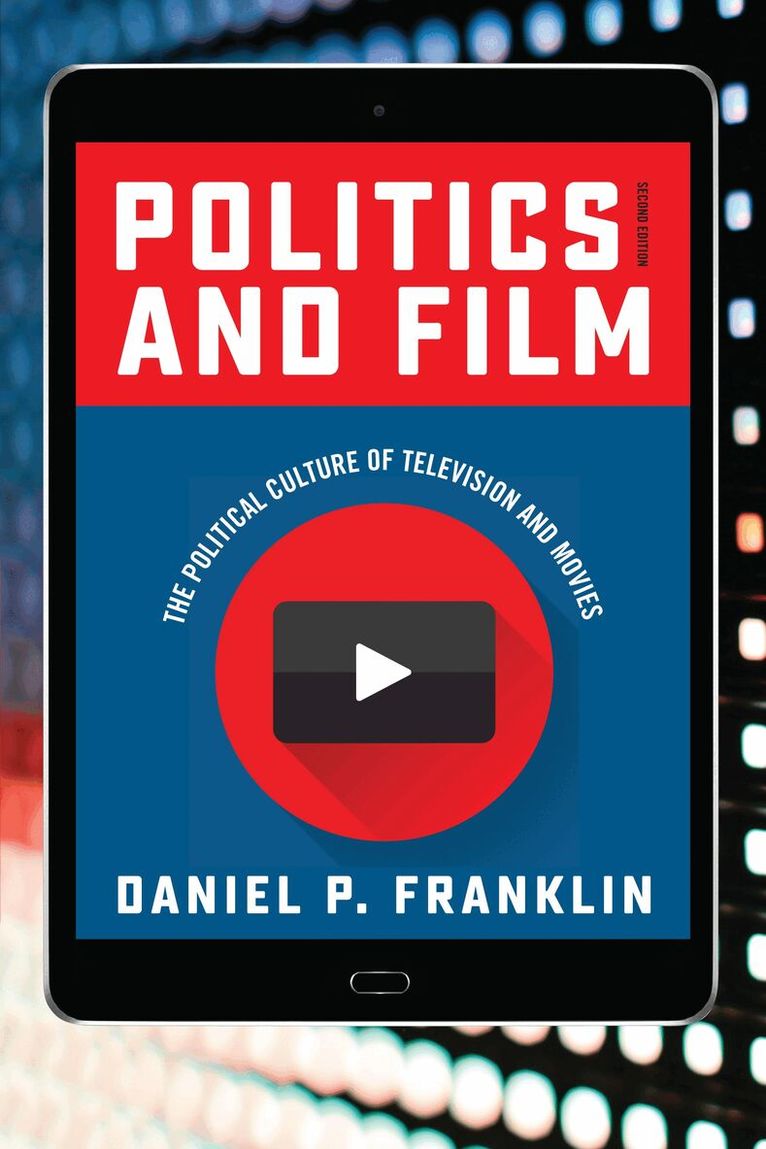
Inbunden, Engelska, 2016
Politics and Film
The Political Culture of Television and Movies
1305 kr
Beställningsvara. Skickas inom 10-15 vardagar. Fri frakt över 249 kr.
Beskrivning
Produktinformation
- Utgivningsdatum: 2016-07-26
- Mått: 163 x 233 x 24 mm
- Vikt: 549 g
- Format: Inbunden
- Språk: Engelska
- Antal sidor: 246
- Upplaga: 2
- Förlag: Bloomsbury Publishing Plc
- ISBN: 9781442262409
Utforska kategorier
Mer om författaren
Daniel P. Franklin is associate professor of political science at Georgia State University. His areas of specialization are American Chief Executives, budgeting and the legislative process. He is currently director of the Georgia Legislative Internship Program and a former Distinguished Honors Professor. He is the author of four books, numerous articles and reviews. His latest book, Pitiful Giants: Presidents in their Final Terms, is on the politics of presidential transitions from the perspective of leaving administrations.
Recensioner i media
In this second edition of a volume first published in 2006, Franklin some examples and sprinkles in discussion…of television as ‘film,’ but he keeps to his central thesis surrounding the interactive relationship between US political culture and the content of US films. Franklin explores cause and effect, looking at how films project the interests and events of the times during which they are made while responding to the economics of what the author projects as the changing audience for films. He argues that filmmaking can be thought of in terms of three eras of ‘monopolies’: the Edison Trust era; the ‘golden era,’ controlled by the studio system; and the modern era, with its disparate markets and responses to them (e.g., the rise of independent productions). In addition to exploring the relationship of political philosophies and movies, Franklin looks at the politics of censorship. Examples appear throughout, and each chapter concludes with a brief case study….Summing Up:Optional. Graduate students, researchers/faculty; general readers.
Betyg & recensioner
0 recensioner
Inga recensioner tillgängliga.