• Fri frakt över 249 kr
  • •
  • Snabba leveranser
  • •
  • Billiga böcker
Kundservice

Du är på sajten för privatpersoner.

Företag, bibliotek eller offentlig verksamhet?

Du handlar på classic.bokus.com, där alla dina funktioner finns intakta.
Till classic.bokus.com
Bokus logotyp. Gå till startsidan.
  • Erbjudanden
  • Nyheter
  • Student
  • Topplistor
  • Barn & ungdom
  • Bokus Play
  • E-böcker
  • Pocketböcker
  • Spel & pussel

10% rabatt på allt med kod: NYSTART10 →

Sidfot

Mina sidor

    Hjälp

    • Kundservice
    • Vanliga frågor och svar
    • Frakt och leverans
    • Retur vid ångerrätt
    • Reklamera vara
    • Betalning
    • Köpvillkor
    • Allmänna villkor
    • Information om webbplatsens tillgänglighet

    Om Bokus

    • Om oss
    • Pressrum
    • För studenter
    • För företag
    • För bibliotek och offentlig verksamhet
    • För leverantörer
    • Hållbarhet

    Populärt

    • Aktuella erbjudanden
    • Presentkort
    • Studentlitteratur
    • Nya böcker
    • Topplistor
    • Signerade böcker
    • Engelska böcker

    Inspiration

    • Boktips
    • BookTok
    • Populära bokserier
    • Barnbokskaraktärer
    • Populära författare
    Logotyp för Bokus
    Följ oss på Facebook (extern länk)Följ oss på Instagram (extern länk)Följ oss på YouTube (extern länk)Följ oss på TikTok (extern länk)
    bokus @ CookiesAnpassa cookiesIntegritetspolicyKöpvillkor
    Till Citymail hemsida (extern länk)Till Budbee hemsida (extern länk)Till Postnord hemsida (extern länk)Till Schenker hemsida (extern länk)Till Early Bird hemsida (extern länk)Till Walleys hemsida (extern länk)
    1. Historia och arkeologi
    2. Historia
    3. Europas historia

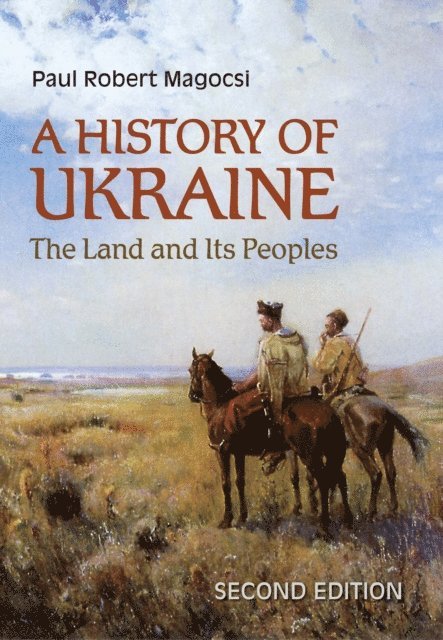
    History of Ukraine

    The Land and Its Peoples, Second Edition

    AvPaul Robert Magocsi

    Häftad, Engelska, 2010

    715 kr

    Beställningsvara. Skickas inom 3-6 vardagar. Fri frakt över 249 kr.

    Fler format och utgåvor

    E-bok

    829 kr

    E-bok

    829 kr

    Beskrivning

    First published in 1996, A History of Ukraine quickly became the authoritative account of the evolution of Europe's second largest country. In this fully revised and expanded second edition, Paul Robert Magocsi examines recent developments in the country's history and uses new scholarship in order to expand our conception of the Ukrainian historical narrative.New chapters deal with the Crimean Khanate in the sixteenth and seventeenth centuries, and new research on the pre-historic Trypillians, the Italians of the Crimea and the Black Death, the Karaites, Ottoman and Crimean slavery, Soviet-era ethnic cleansing, and the Orange Revolution is incorporated. Magocsi has also thoroughly updated the many maps that appear throughout.Maintaining his depiction of the multicultural reality of past and present Ukraine, Magocsi has added new information on Ukraine's peoples and discusses Ukraine's diasporas. Comprehensive, innovative, and geared towards teaching, the second edition of A History of Ukraine is ideal for both teachers and students.

    Produktinformation

    • Utgivningsdatum:2010-06-18
    • Mått:175 x 247 x 50 mm
    • Vikt:1 460 g
    • Format:Häftad
    • Språk:Engelska
    • Antal sidor:896
    • Upplaga:2
    • Förlag:University of Toronto Press
    • ISBN:9781442610217

    Utforska kategorier

    • Europas historia inom Historia och arkeologi
    • Statsvetenskap och politisk teori inom Samhälle och politik
    • Geografi inom Naturvetenskap och teknik

    Mer om författaren

    Paul Robert Magocsi is a professor of history and political science and the John Yaremko Chair of Ukrainian Studies at the University of Toronto.

    Recensioner i media

    'A magisterial history ... of the Ukrainian land and all the peoples who have fought over, thrived in, and suffered upon it, from the ancient Scythians ... to the present day.' - Robert Legvold, Foreign Affairs 'Reminiscent of some of the great works of Russian and Ukrainian history of the nineteenth century ... The book is characterized by wide and deep learning, remarkable objectivity, rational organization, clarity of presentation, and profound awareness of a variety of national sensitivities.' - Dennis R. Papazian, History 'The task of writing a new history of Ukraine is a difficult balancing act ... Not only the end of the Cold War and the gradual reintegration of Eastern Europe into the European community but also the rethinking of the nation-state and nationalism as historical forces challenge the ways in which the teaching and writing of modern history have been structured. Magocsi's History will long serve as a model for those who dare to grapple with these central issues.' - Mark von Hagen, The Journal of Modern History 'Magocsi's mastery of ethnographic material, his skillful inclusion of primary documents, and the valuable annotated bibliography make his work [a] useful and comprehensive tool for the student of Ukraine.' - Paul S. Pirie, The Slavic and East European Journal

    Innehållsförteckning

    • PrefacePreface to the First EditionList of TablesList of MapsPart One: Introduction and Pre-Kievan Times1 Ukraine's Geographic and Ethnolinguistic SettingTerritory and geographyClimateNatural resourcesAdministrative and ethnolinguistic divisions PopulationNomenclature2 Historical PerceptionsThe Russian historical viewpoint What is eastern Europe?The Polish historical viewpoint The Ukrainian historical viewpoint Kostomarov on Ukrainians, Russians, and PolesThe Soviet historical viewpoint3 The Steppe Hinterland and the Black Sea CitiesThe steppe hinterlandTrypillians and Ukrainians Nomadic civilizations on Ukrainian territoryThe nomads of the steppe hinterlandThe Greeks of the coastal regionThe Pax Scythica, the Sarmatians, and the Pax Romana Scythian customsThe Byzantines and the Khazars4 The Slavs and the KhazarsThe origins of the SlavsThe original homeland of the SlavsThe migrations of the SlavsThe AntesArchaeology in UkraineThe Pax ChazaricaThe Slavic tribes in the shadow of the KhazarsPart Two: The Kievan Period5 The Rise of Kievan Rus'The origin of Rus'The great debate: The origin of Rus' Europe in the ninth century The Varangians in the eastThe era of growth and expansion6 Political Consolidation and DisintegrationVolodymyr the GreatThe meaning of Rus'Christianity and the baptism of Rus'Christianity in UkraineIaroslav the WiseThe Kievan system of political successionThe conference of Liubech and Volodymyr Monomakh The era of disintegration7 Socioeconomic and Cultural DevelopmentsDemography and social structure The ruling social strataThe social structure of Kievan Rus' The subordinate social strataOther social strataThe legal systemThe economic orderThe voyage from Kiev to Constantinople Byzantine cultural influencesThe Byzantine Empire and its attitude toward Kievan Rus' Kievan Rus' architectureKievan Rus' language and literature What was the language of Kievan Rus' ? The "Lay of Ihor's Campaign"8 The Mongols and the Transformation of Rus' Political LifeThe rise of the MongolsThe Mongol invasion of Kievan Rus' The Golden HordeThe Pax Mongolica and Italian merchantsItalianate Crimea and the Black Death 9 Galicia-VolhyniaGalicia and Volhynia before their unification The unification of Galicia and Volhynia The metropolitanate of Rus'The demise of Galicia-VolhyniaPart Three: The Lithuanian-Polish-Crimean Period10 Lithuania and the Union with PolandThe consolidation of the Lithuanian state The Polish-Lithuanian connectionMuscovy and the Polish-Lithuanian union11 Socioeconomic DevelopmentsLithuania's social structureSocial estates in Lithuania and Poland Lithuania's administrative structurePoland's social and administrative structurePeasants, nobles, and Jews The manorial estateThe coming of Jews to UkraineThe realignment of international trade patternsPoland's economic and cultural revival12 The Orthodox Cultural RevivalThe Metropolitanate of KievThe Metropolitanate of Kiev and All Rus' The monastic movementThe role of townspeople and magnates Ľviv's Stauropegial Brotherhood13 Reformation, Counter Reformation, and the Union of BrestThe Protestant ReformationThe Counter Reformation and Orthodox Ukraine The Union of BrestThe views of Prince Kostiantyn Ostroz'kyiThe Union of Brest14 The Tatars and the Crimean Khanate The Crimean KhanateCrimean socioeconomic lifeThe Karaites The Nogay Tatars and slaveryWas Ottoman and Crimean slavery all that bad? 15 The Cossacks and UkraineThe steppe The name 'Ukraine'The rise of the CossacksThe Cossacks of ZaporozhiaThe Cossacks in Polish societySocial estates in sixteenth- and early seventeenth-century Ukraine A male-dominated society?The international role of the CossacksThe Cossacks and OrthodoxyOrthodox versus UniateThe calm before the stormPart Four: The Cossack State, 1648-171116 Khmeľnyts'kyi and the Uprising of 1648Khmeľnyts'kyi's early careerThe uprising of 1648Khmeľnyts'kyi and the JewsKhmeľnyts'kyi as a national leader17 Muscovy and the Agreement of PereiaslavThe rise of MuscovyMuscovy, Poland, and UkraineKhmeľnyts'kyi and Pereiaslav The Agreement of Pereiaslav18 The Period of RuinChanging international alliances The Cossack turn toward Poland The Union of HadiachAnarchy, ruin, and the division of Ukraine19 The Structure of the Cossack StateRegistered and unregistered Cossacks Internal administrationWhat to call the Cossack state?The Cossack state administrationInternational status20 Mazepa and the Great Northern WarThe image of MazepaThe rise of MazepaMazepa as hetman: The early phase Mazepa during the Great Northern War Mazepa's defectionMazepa and Ukraine after Poltava21 Socioeconomic and Cultural Developments in the Cossack StateSocial structureSocial estates in the Cossack stateEconomic developmentsChurch and stateCultural developmentsThe transformation of Ukraine after 1648Part Five: Ukrainian Lands in the Eighteenth Century22 Ukraine's Autonomy and the Russian EmpireMuscovy becomes the Russian EmpireSloboda UkraineZaporozhiaThe HetmanateThe Crimean KhanateTransformation under Russian rule 23 Socioeconomic Developments The changing social structure Economic developmentsInternational trade and commerce24 Religious and Cultural DevelopmentsThe integration of the Orthodox church EducationArchitecture and paintingLiterature and history writing25 The Right Bank and Western UkraineThe return of Polish rule in the Right Bank Social protest and the haidamak revolts Uman' as a symbol for Ukrainians, Poles, and Jews The Partitions of PolandPart Six: Ukrainian lands in the Russian Empire26 Administrative and Political Developments in Dnieper UkraineTerritorial divisionsAdministrative structureAdministrative structure in Dnieper Ukraine before the 1860s Administrative structure in Dnieper Ukraine after the 1860s The evolution of the Russian Empire, 1814-191427 Socioeconomic Developments in Dnieper UkraineSocial estates before the 1860s Social estates in Dnieper Ukraine The reforms of the 1860s Economic developments28 The Peoples of Dnieper UkraineThe RussiansThe PolesWhat Ukraine means for Poland The JewsMemories of the 'shtetľPogromsThe Germans and Mennonites The Crimean TatarsThe RomaniansOther peoples29 The Ukrainian National Awakening in Dnieper Ukraine before the 1860sThe idea of nationalismWhat is a nationality?The phenomenon of multiple loyalties The early histories of UkraineThe belief in mutually exclusive identities30 The Ukrainian National Movement in Dnieper Ukraine after the Era of ReformsThe Right Bank and the 'khlopomany' movementUkrainianism in St Petersburg and the renewal of the organizational stageRussian reaction to the Ukrainian movementThe Valuev decreeSchools in Dnieper UkraineThe Ems UkaseThe church in Dnieper UkraineThe return to the heritage-gathering stage The beginnings of the political stagePart Seven: Ukrainian lands in the Austrian Empire31 The Administrative and Social Structure of Ukrainian Lands in the Austrian Empire before 1848Austria acquires Ukrainian landsThe structure of the Austrian EmpireThe demographic and administrative status of Galicia and Bukovina The economic status of Galicia before 1848Other peoples in eastern Galicia32 The Ukrainian National Awakening in the Austrian Empire before 1848The Austrian government and the Ukrainian national awakening The heritage-gathering stage in GaliciaBukovina and Transcarpathia before 184833 The Revolution of 1848The revolution in AustriaThe revolution in Galicia and the UkrainiansThe Supreme Ruthenian CouncilThe national movement in Galicia and the beginning of the organizational stage The revolution of 1848 in Bukovina and Transcarpathia34 The Administrative and Socioeconomic Structure of Ukrainian Lands in the Austrian Empire, 1849- 1914Administrative structureInternational developments and Austria's internal politics Austria's parliamentary structureSocial structure and economic developmentsThe problem of statisticsThe Ukrainian diasporaOther peoples in eastern Galicia and BukovinaUkraine's other diasporas35 The Ukrainian National Movement in Austria-Hungary, 1849-1914In search of a national identityOld Ruthenians, Russophiles, and UkrainophilesLanguage as the symbol of identityThe national movement in Galicia: The organizational stageThe national movement in Galicia: The political stage Independence for UkraineAt the bottom of the pecking orderThe national movement in BukovinaThe national movement in TranscarpathiaPart Eight: World War I and the Struggle for Independence36 World War I and Western UkraineThe outbreak of World War IThe Russians in Galicia and Bukovina Ukrainian political activity in Vienna37 Revolutions in the Russian EmpireRussia's first revolution of 1917 Revolution in Dnieper Ukraine The Central RadaFirst Universal of the Ukrainian Central RadaThe Bolshevik RevolutionThird Universal of the Ukrainian Central Rada (Preamble)The Ukrainian National Republic The Treaty of Brest-Litovsk38 The Period of the HetmanateThe establishment of the HetmanateAuthoritarian in form, Ukrainian in content The fall of the Hetmanate39 The Directory, Civil War, and the BolsheviksThe Directory of the Ukrainian National RepublicThe BolsheviksThe peasant revolutionThe White RussiansThe Allied Powers The West Ukrainian National Republic and Dnieper Ukraine Poland and Dnieper Ukraine 40 The revolutionary era and Dnieper Ukraine's other peoplesThe Jews Petliura and the pogromsThe RussiansThe Poles The Germans and MennonitesMennonites caught in the revolutionThe CzechsThe Crimean Tatars41 The West Ukrainian National RepublicAustria's Ukrainians prepare for their postwar future West Ukrainian independence and warThe West Ukrainian government-in-exileBukovina and TranscarpathiaThe Ukrainian revolution: Success or failure?Part Nine: The Interwar Years42 The Postwar Treaties and the Reconfiguration of Ukrainian LandsThe Paris Peace ConferenceSoviet Ukraine and the Soviet UnionTreaty of Union between the Russian SFSR and the Ukrainian SSR43 Soviet Ukraine: The Struggle for AutonomyThe government of Soviet UkraineThe Communist party (Bolshevik) of UkraineThe policy of UkrainianizationCommunism and the nationality questionUkrainianization, the governing elite, and demographic change UkrainianizationUkrainianization and the return of the émigrés Ukrainianization in educationUkrainianization in the artsReligionUkrainianization in the era of transition44 Soviet Ukraine: Economic, Political, and Cultural Integration War communism and the New Economic Policy-NEP NEP in Soviet UkraineThe end of NEPCentral planning and industrializationThe collectivization of agricultureDekulakization and the Great FamineUkraine's Holocaust: The Great Famine of 1933The apogee and the decline of Ukrainianization The end of UkrainianizationPurges and integrationThe purges45 Other Peoples in Soviet UkraineThe Moldavian S.S.R. and the Moldovans in Soviet UkraineNationality administration in the Soviet Union The RussiansThe JewsThe PolesThe GermansThe Crimean TatarsThe GreeksThe Bulgarians46 Ukrainian Lands in Interwar PolandThe administrative status of Ukrainian-inhabited lands The economic status of Ukrainian-inhabited lands Poland's initial policies and Ukrainian reactions The cooperative movementWomen and the Ukrainian national ethosUkrainian political parties, schools, and churches Armed resistance and pacification47 Ukrainian Lands in Interwar Romania and CzechoslovakiaUkrainians in RomaniaThe Rusyns/Ukrainians of CzechoslovakiaPart Ten: World War II and the Postwar Years48 The Coming of World War IIGermany and the 'new order' in Europe Autonomy for Carpatho-UkraineThe fall of PolandThe "reunification" of western Ukraine The Generalgouvernement49 World War II and Nazi German RuleThe German and Romanian invasions of Ukraine Nazi rule in UkraineNazi racial policies and the HolocaustThou shalt not killNazi policies toward UkrainiansResistance to Nazi rule50 Postwar Soviet Ukraine until the Death of StalinWartime destruction and territorial expansion Voluntary reunification, Ѕoviеt styleThe minority question Ethnic cleansing, Ѕoviеt styleIndustrial and agricultural reconstruction The nationality questionWestern Ukraine51 Post-Stalinist Soviet UkraineUkraine under Khrushchev The sixties phenomenonEconomic developmentsThe Brezhnev era-stability and st