• Fri frakt över 249 kr
  • •
  • Snabba leveranser
  • •
  • Billiga böcker
Kundservice

Du är på sajten för privatpersoner.

Företag, bibliotek eller offentlig verksamhet?

Du handlar på classic.bokus.com, där alla dina funktioner finns intakta.
Till classic.bokus.com
Bokus logotyp. Gå till startsidan.
  • Erbjudanden
  • Nyheter
  • Student
  • Topplistor
  • Barn & ungdom
  • Bokus Play
  • E-böcker
  • Pocketböcker
  • Spel & pussel

10% rabatt på allt med kod: NYSTART10 →

Sidfot

Mina sidor

    Hjälp

    • Kundservice
    • Vanliga frågor och svar
    • Frakt och leverans
    • Retur vid ångerrätt
    • Reklamera vara
    • Betalning
    • Köpvillkor
    • Allmänna villkor
    • Information om webbplatsens tillgänglighet

    Om Bokus

    • Om oss
    • Pressrum
    • För studenter
    • För företag
    • För bibliotek och offentlig verksamhet
    • För leverantörer
    • Hållbarhet

    Populärt

    • Aktuella erbjudanden
    • Presentkort
    • Studentlitteratur
    • Nya böcker
    • Topplistor
    • Signerade böcker
    • Engelska böcker

    Inspiration

    • Boktips
    • BookTok
    • Populära bokserier
    • Barnbokskaraktärer
    • Populära författare
    Logotyp för Bokus
    Följ oss på Facebook (extern länk)Följ oss på Instagram (extern länk)Följ oss på YouTube (extern länk)Följ oss på TikTok (extern länk)
    bokus @ CookiesAnpassa cookiesIntegritetspolicyKöpvillkor
    Till Citymail hemsida (extern länk)Till Budbee hemsida (extern länk)Till Postnord hemsida (extern länk)Till Schenker hemsida (extern länk)Till Early Bird hemsida (extern länk)Till Walleys hemsida (extern länk)
    1. Naturvetenskap och teknik
    2. Matematik och naturvetenskap
    3. Biologi
    4. Biokemi

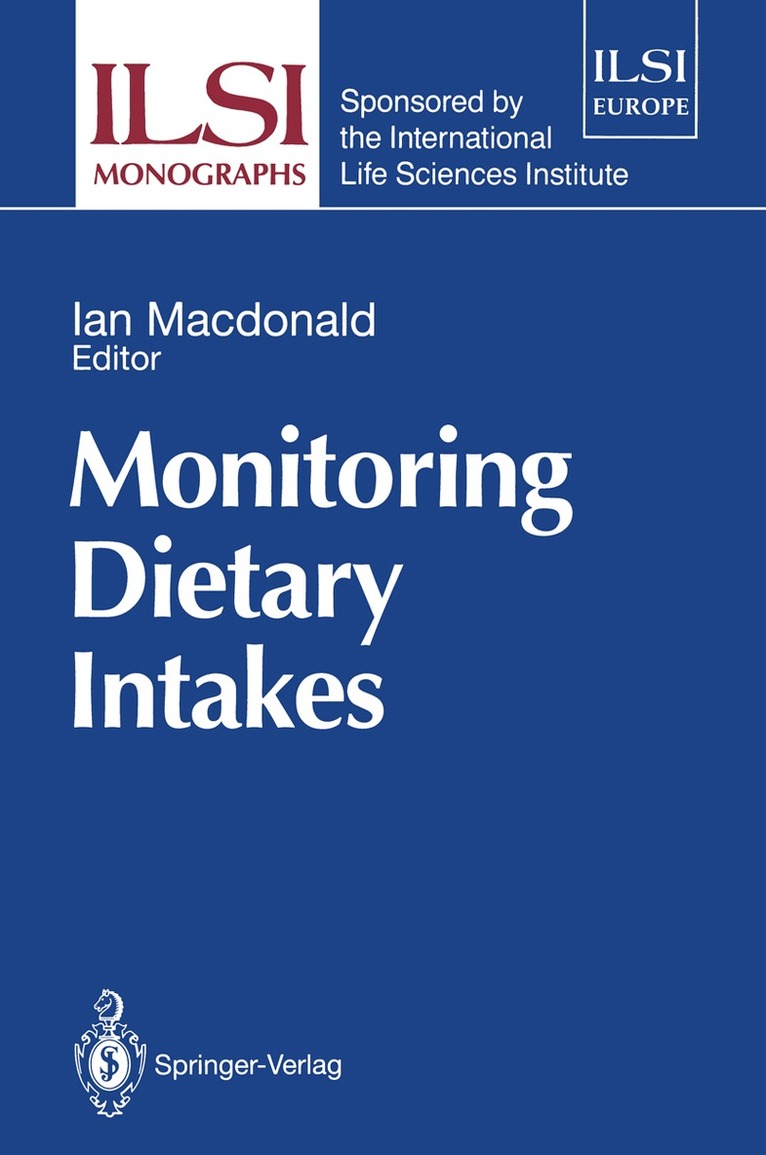
    Monitoring Dietary Intakes

    AvIan Macdonald

    Häftad, Engelska, 2011

    Del i serien ILSI Monographs

    563 kr

    Beställningsvara. Skickas inom 10-15 vardagar. Fri frakt över 249 kr.

    Beskrivning

    The International Life Sciences Institute (ILSI), a nonprofit, public foundation, was established in 1978 to advance the sciences of nutrition, toxicology, and food safety. ILSI promotes the resolution of health and safety issues in these areas by sponsoring research, conferences, publications, and educational programs. Through ILSI's programs, scientists from government, academia, and industry unite their efforts to resolve issues of critical importance to the public. As part of its commitment to understanding and resolving health and safety issues, ILSI is pleased to sponsor this series of monographs that consolidates new scientific knowledge, defines research needs, and provides a background for the effective application of scientific advances in toxicology and food safety. Alex Malaspina President International Life Sciences Institute Preface We live in a changing world. The everyday, ongoing changes in people's habits and the availability of foods in the market lead to continuous changes in food con­ sumption patterns, changes we need to understand since they play an important role in nutrition as well as toxicology. In nutrition, food intake data provide us with the information needed to exam­ ine whether, on the one hand, these modifications are still within the limits of nutritional safety and, on the other, whether they offer the possibility of monitor­ ing the evolution of dietary habits. In toxicology, food intake data are used to calculate the potential intake of sub­ stances used as additives or substances that enter food as contaminants, such as pesticide residues, packaging materials, and radionuclides.

    Produktinformation

    • Utgivningsdatum:2011-12-08
    • Mått:155 x 235 x 16 mm
    • Vikt:423 g
    • Format:Häftad
    • Språk:Engelska
    • Serie:ILSI Monographs
    • Antal sidor:259
    • Förlag:Springer London Ltd
    • ISBN:9781447118305

    Utforska kategorier

    • Biokemi inom Naturvetenskap och teknik
    • Farmakologi inom Medicin
    • Folkhälsa och hälsopedagogik inom Medicin

    Innehållsförteckning

    • I. Methodologies of Dietary Survey: Its Pitfalls.- 1. Methods for Obtaining Food Consumption Information.- 2. The Validity of Total Diet Studies for Assessing Nutrient Intake.- 3. Household Food Intake (Market Basket).- 4. A National Food Survey. Food Balance Sheets and Other Methodologies: A Critical Overview.- 5. Estimating Human Exposure to Food Constituents.- II. Application.- 6. Intake of Heavy Metals: Comparison of Methods.- 7. Risks of Dietary Exposure to Pesticides in Infants and Children.- 8. Use of Intake Data in Risk Assessments by JECFA/JMPR and in Codex Decisions.- 9. The Importance of Within-Person Variability in Estimating Prevalence.- 10. Use of Food Composition Data Banks in Nutrient Intake Studies.- 11. National Surveillance of Food and Contaminant Intake: The Danish Experience.- 12. Experience of GEMS/Food in Co-ordinating Dietary Intake Studies.- III. Actual Intake Versus Potential Intake in Relation to Nutritional and Safety Standards.- 13. Macronutrient Intake in Relation to Nutritional Standards.- 14. The Purchasing Method for the Estimation of Vitamins and Minerals Intake of the Adult.- 15. Food Additive Intake: Estimated Versus Actual.- 16. Pesticide Residues in the United States Diet.- 17. Monitoring Dietary Radiocesium Intake in Sweden After the Chernobyl Accident.- 18. Estimating the Dietary Intake of Veterinary Drug Residues.- 19. Do Actual Intakes Ever Equal Potential Intakes?.- 20. Packaging Materials.- IV. Needs and Prospects of Intake Studies.- 21. WHO International Co-operation in Exposure Studies.- 22. Means of Improving the Comparability of Intake Studies.- 23. Future Trends and Co-operation Concerning Intake Studies.- 24. Dietary Intakes: Summary and Perspectives.