• Fri frakt över 249 kr
  • •
  • Snabba leveranser
  • •
  • Billiga böcker
Kundservice

Du är på sajten för privatpersoner.

Företag, bibliotek eller offentlig verksamhet?

Du handlar på classic.bokus.com, där alla dina funktioner finns intakta.
Till classic.bokus.com
Bokus logotyp. Gå till startsidan.
  • Erbjudanden
  • Nyheter
  • Student
  • Topplistor
  • Barn & ungdom
  • Bokus Play
  • E-böcker
  • Pocketböcker
  • Spel & pussel

10% rabatt på allt med kod: NYSTART10 →

Sidfot

Mina sidor

    Hjälp

    • Kundservice
    • Vanliga frågor och svar
    • Frakt och leverans
    • Retur vid ångerrätt
    • Reklamera vara
    • Betalning
    • Köpvillkor
    • Allmänna villkor
    • Information om webbplatsens tillgänglighet

    Om Bokus

    • Om oss
    • Pressrum
    • För studenter
    • För företag
    • För bibliotek och offentlig verksamhet
    • För leverantörer
    • Hållbarhet

    Populärt

    • Aktuella erbjudanden
    • Presentkort
    • Studentlitteratur
    • Nya böcker
    • Topplistor
    • Signerade böcker
    • Engelska böcker

    Inspiration

    • Boktips
    • BookTok
    • Populära bokserier
    • Barnbokskaraktärer
    • Populära författare
    Logotyp för Bokus
    Följ oss på Facebook (extern länk)Följ oss på Instagram (extern länk)Följ oss på YouTube (extern länk)Följ oss på TikTok (extern länk)
    bokus @ CookiesAnpassa cookiesIntegritetspolicyKöpvillkor
    Till Citymail hemsida (extern länk)Till Budbee hemsida (extern länk)Till Postnord hemsida (extern länk)Till Schenker hemsida (extern länk)Till Early Bird hemsida (extern länk)Till Walleys hemsida (extern länk)
    1. Naturvetenskap och teknik
    2. Matematik och naturvetenskap
    3. Biologi
    4. Biovetenskap

    Rumen Protozoa

    AvAlan G. Williams,Geoffrey S. Coleman

    Häftad, Engelska, 2011

    Del i serien Brock Springer Series in Contemporary Bioscience

    1 518 kr

    Beställningsvara. Skickas inom 10-15 vardagar. Fri frakt över 249 kr.

    Beskrivning

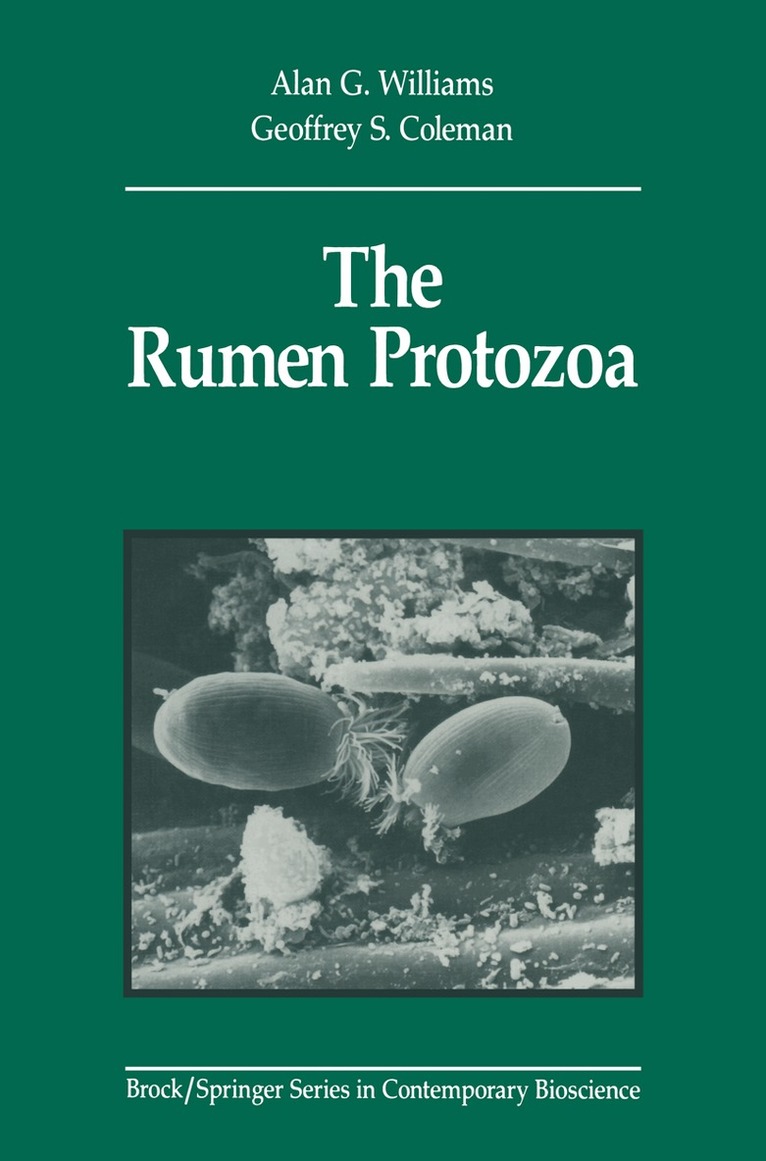
    All ruminants are dependent on the microorganisms that live in their forestomach - the rumen - to break down ingested feed constituents into a form that the host animal can utilize. Protozoa are part of this complex ruminal population and are essential for the nutritional well-being and productivity of the host ruminant. Over 30 different genera (nearly 300 species) of protozoa from the rumen ecosystem have been described since their initial discovery nearly 150 years ago. This book brings together, for the first time, the available information on these protozoa. It comprehensively describes the characteristic anatomical features of value for their identification and includes detailed sections on techniques and methodologies for the isolation and cultivation of these fastidious, oxygen-sensitive microorganisms. Their occurrence, biochemistry, physiology, and role in the ruminal ecosystem are fully reviewed. Particular emphasis is given to potential improvement of the nutrition and productivity of the host ruminant through manipulation of the protozoal population and its activities.

    Produktinformation

    • Utgivningsdatum:2011-09-19
    • Mått:155 x 235 x 25 mm
    • Vikt:692 g
    • Format:Häftad
    • Språk:Engelska
    • Serie:Brock Springer Series in Contemporary Bioscience
    • Antal sidor:441
    • Förlag:Springer-Verlag New York Inc.
    • ISBN:9781461276647

    Utforska kategorier

    • Biovetenskap inom Naturvetenskap och teknik
    • Zoologi inom Naturvetenskap och teknik
    • Djurböcker inom Djur och Natur

    Innehållsförteckning

    • Preface.- 1 Introduction.- 2 Identification and Classification of Entodiniomorphid Protozoa.- 2.1 Taxonomy of Entodiniomorphid Protozoa.- 2.2 The Genus Entodinium.- 2.3 The Genus Eodinium.- 2.4 The Genus Diplodinium.- 2.5 The Genus Eremoplastron.- 2.6 The Genus Eudiplodinium.- 2.7 The Genus Ostracodinium.- 2.8 The Genus Polyplastron.- 2.9 The Genus Metadinium.- 2.10 The Genus Epidinium.- 2.11 The Genus Enoploplastron.- 2.12 The Genus Ophryoscolex.- 2.13 The Genus Diploplastron.- 2.14 The Genus Elytroplastron.- 2.15 The Genus Epiplastron.- 2.16 The Genus Opisthotricum.- 2.17 The Genus Caloscolex.- 2.18 The Genus Rhinozeta.- 2.19 The Genus Parentodinium.- 2.20 Evolution of Entodiniomorphid Protozoa.- 3 The Holotrich Ciliates.- 3.1 Classification of the Rumen Holotrich Ciliates.- 3.2 Distribution of Holotrich Ciliates.- 3.3 Population Determinants.- 3.4 Species Description.- 3.5 Evolution of the Holotrich Ciliates.- 4 Methods Used for the Separation and Cultivation of Protozoa.- 4.1 Techniques for the Isolation of Ciliates from Rumen Contents.- 4.2 In situ Culture of Selected Protozoa.- 4.3 Cultivation of Entodiniomorphid Protozoa In vitro.- 4.4 Cultivation of Holotrich Ciliates In vitro.- 4.5 Continuous Culture Techniques.- 5 Association of Bacteria and Fungi with Rumen Ciliates.- 5.1 Intracellular Bacteria.- 5.2 Bacteria Attached to the Pellicle.- 5.3 Intracellular “Parasites” of Rumen Ciliates.- 6 Metabolism of Entodiniomorphid Protozoa.- 6.1 Metabolism of Starch.- 6.2 Metabolism of Cellulose and Cellobiose.- 6.3 Metabolism of Pectin, Hemicelluloses, and Related Compounds.- 6.4 Engulfment and Utilization of Bacteria.- 6.5 Engulfment and Utilization of Ovals and Fungi.- 6.6 Metabolism of Free Amino Acids.- 6.7 Metabolism of Protein.- 6.8 Sources of Amino Acids forProtozoal Growth.- 6.9 Metabolism of Free Constituents of Nucleic Acids.- 6.10 Metabolism of Lipids.- 6.11 Metabolism of Phospholipids.- 6.12 Metabolism of Lactic Acid.- 6.13 Uptake and Metabolism of Other Entodiniomorphid Protozoa.- Appendix: Techniques Used in Experiments on the Metabolism of Entodiniomorphid Protozoa.- 7 Structure of Entodiniomorphid Protozoa and Its Relationship to Function.- 7.1 General Description of Structure.- 7.2 Structure of Vestibular and Cytopharyngeal Regions.- 7.3 The Cilia and Infraciliature.- 7.4 The Paralabial Organelle.- 7.5 The Contractile Vacuoles.- 7.6 The Cytoproct (Rectum).- 7.7 The Pellicle (Cortex).- 7.8 The Boundary Between Ectoplasm and Endoplasm.- 7.9 Division of Entodiniomorphid Protozoa.- 7.10 Conjugation.- 7.11 Protozoal Chemotaxis and Feeding.- 7.12 Protozoal Metabolic Compartments.- 7.13 Rate of Clearance of Soluble and Particulate Materials.- 8 Metabolism of Holotrich Protozoa.- 8.1 Carbohydrate Metabolism.- 8.2 Oxygen Utilization.- 8.3 Nitrogen Metabolism.- 8.4 Lipid Metabolism.- 8.5 Metabolism of Nucleic Acids.- 9 Factors Affecting Protozoal Populations In vivo.- 9.1 Infection of Young Ruminants.- 9.2 Interrelationships Between Protozoal Species.- 9.3 Host Specificity.- 9.4 Geographical Distribution.- 9.5 Effect of Feed Composition.- 9.6 Diurnal Variation in Densities of Entodiniomorphid Protozoa.- 9.7 Seasonal Variation.- 10 Role of Protozoa in the Rumen.- 10.1 Metabolism of Cellulose and Hemicellulose.- 10.2 Metabolism of Starch.- 10.3 Metabolism of Bacteria.- 10.4 Metabolism of Protein.- 10.5 Effect of Protozoa on Rumen Metabolites.- 11 Effect of Ciliate Protozoa on the Productivity of the Host Ruminant.- 11.1 Post-Ruminal Digestion of Protozoa.- 11.2 Effect of Protozoa on Blood Metabolite Concentrations.- 11.3 Effect of Protozoa on Animal Growth.- 12 Protozoa and the Health of the Host Animal.- 12.1 Appearance of Animal.- 12.2 Detoxification.- 12.3 Lactic Acid Acidosis.- 12.4 Copper Toxicity.- 12.5 Bloat.- 13 The Flagellate Protozoa in the Rumen.- 13.1 Description and Classification.- 13.2 Infection of the Host and Population Density In vivo.- 13.3 Cultivation.- References.