• Fri frakt över 249 kr
  • •
  • Snabba leveranser
  • •
  • Billiga böcker
Kundservice

Du är på sajten för privatpersoner.

Företag, bibliotek eller offentlig verksamhet?

Du handlar på classic.bokus.com, där alla dina funktioner finns intakta.
Till classic.bokus.com
Bokus logotyp. Gå till startsidan.
  • Erbjudanden
  • Nyheter
  • Student
  • Topplistor
  • Barn & ungdom
  • Bokus Play
  • E-böcker
  • Pocketböcker
  • Spel & pussel

10% rabatt på allt med kod: NYSTART10 →

Sidfot

Mina sidor

    Hjälp

    • Kundservice
    • Vanliga frågor och svar
    • Frakt och leverans
    • Retur vid ångerrätt
    • Reklamera vara
    • Betalning
    • Köpvillkor
    • Allmänna villkor
    • Information om webbplatsens tillgänglighet

    Om Bokus

    • Om oss
    • Pressrum
    • För studenter
    • För företag
    • För bibliotek och offentlig verksamhet
    • För leverantörer
    • Hållbarhet

    Populärt

    • Aktuella erbjudanden
    • Presentkort
    • Studentlitteratur
    • Nya böcker
    • Topplistor
    • Signerade böcker
    • Engelska böcker

    Inspiration

    • Boktips
    • BookTok
    • Populära bokserier
    • Barnbokskaraktärer
    • Populära författare
    Logotyp för Bokus
    Följ oss på Facebook (extern länk)Följ oss på Instagram (extern länk)Följ oss på YouTube (extern länk)Följ oss på TikTok (extern länk)
    bokus @ CookiesAnpassa cookiesIntegritetspolicyKöpvillkor
    Till Citymail hemsida (extern länk)Till Budbee hemsida (extern länk)Till Postnord hemsida (extern länk)Till Schenker hemsida (extern länk)Till Early Bird hemsida (extern länk)Till Walleys hemsida (extern länk)
    1. Naturvetenskap och teknik
    2. Matematik och naturvetenskap
    3. Biologi
    4. Biokemi

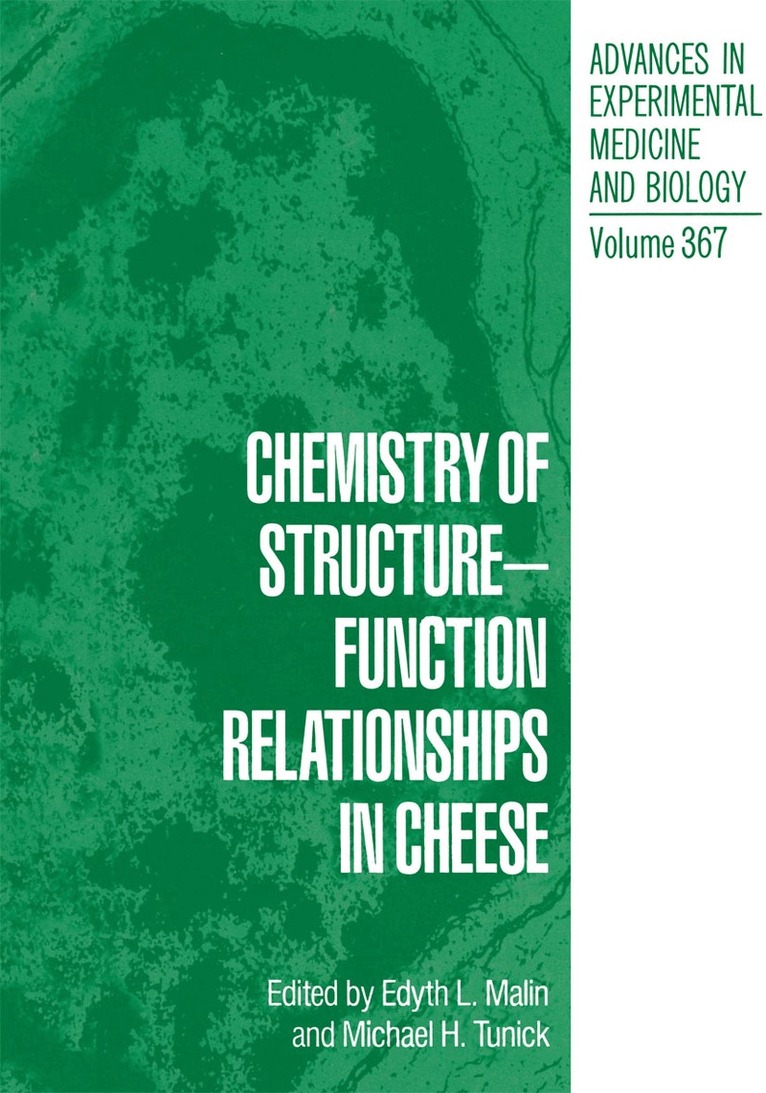
    Chemistry of Structure-Function Relationships in Cheese

    AvEdyth L. Malin,Michael H. Tunick

    Häftad, Engelska, 2012

    Del i serien Advances in Experimental Medicine and Biology

    563 kr

    Beställningsvara. Skickas inom 10-15 vardagar. Fri frakt över 249 kr.

    Beskrivning

    Although the art of making cheese can be traced to prehistoric times, it has continued to evolve as modern civilization progressed. The advent of new technologies and instrumentation has brought exponential growth in the understanding of cheese components and their function. Even more recently, the evolution of cheesemaking has accelerated, driven by economic factors such as the establishment of the European Economic Community, the changing diet of developed countries, and the environmental and economic concerns associated with whey disposal. Molecular biology has revolutionized the development of starter and adjunct cultures as well as rennets, and genetics will make it possible to maintain ideal milk components for cheesemaking. The ability to accelerate traditional ripening procedures has altered the production of certain cheeses, and the emphasis on decreasing the intake of dietary fat, especially in the United States, has prompted the development of technology for producing low-fat cheeses with traditional texture and flavor. In assembling a distinguished group of participants for the symposium, "Chemistry of the Structure/Function Relationships in Cheese," we hoped to review the interplay of these trends and forecast the direction of future research. Contributors evaluated the current status of cheesemaking and highlighted the information that will be essential for new developments. They also focused the attention of agricultural and food chemists on the opportunities in cheese research and the potential contributions they might make to the future of cheese, a most valuable food product. We are indebted to Dr. Patrick Fox, Dr. Mark Johnson, Dr. Milos Kalab, Dr.

    Produktinformation

    • Utgivningsdatum:2012-10-21
    • Mått:178 x 254 x 23 mm
    • Vikt:764 g
    • Format:Häftad
    • Språk:Engelska
    • Serie:Advances in Experimental Medicine and Biology
    • Antal sidor:397
    • Förlag:Springer-Verlag New York Inc.
    • ISBN:9781461357827

    Utforska kategorier

    • Biokemi inom Naturvetenskap och teknik
    • Fysikalisk kemi inom Naturvetenskap och teknik
    • Folkhälsa och hälsopedagogik inom Medicin

    Innehållsförteckning

    • Physical Chemistry of Cheese Texture.- 1. Overview: Cheese Chemistry and Rheology.- 2. Rheology of Reduced-Fat Mozzarella Cheese.- 3. Rheology of Reduced-Fat Cheese Containing Fat Substitute.- 4. Factors Affecting the Functional Characteristics of Unmelted and Melted Mozzarella Cheese.- Chemical Origins of Cheese Flavor.- 5. Chemical Species in Cheese and Their Origin in Milk Components.- 6. Biogenesis of Flavour Compounds in Cheese.- 7. Cheddar Cheese Flavour and Chemical Indices: Changes During Maturation.- 8. Assessment of Accelerated Cheese Ripening by Reverse-Phase HPLC.- 9. Time-Temperature Effects on Microbial, Chemical, and Sensory Changes During Cooling and Aging of Cheddar Cheese.- Proteolysis during Ripening.- 10. Methods for Assessing Proteolysis During Maturation.- 11. Contribution of Milk-Clotting Enzymes and Plasmin to Cheese Ripening.- 12. Contribution of Lactic Acid Bacteria to Cheese Ripening.- 13. Maturation Profiles of Cheddar-Type Cheese Produced from High Heat Treatment Milk to Incorporate Whey Protein.- 14. Inhibition of Proteolysis in Mozzarella Cheese Prepared from Homogenized Milk.- Molecular and Ultrastructure of Cheese.- 15. Practical Aspects of Electron Microscopy in Cheese Research.- 16. Immunolocalization and Microstructure of Milk Proteins and Fat Mimetics.- 17. Microstructure Studies of Reduced Fat Cheeses Containing Fat Substitute.- 18. Influence of Casein Peptide Conformations on Textural Properties of Cheese.- 19. Electron-Density Patterns in Low-Fat Mozzarella Cheeses During Refrigerated Storage.- 20. Applications of Confocal Microscopy to Fat Globule Structure in Cheese.- Technological and Nutritional Aspects of Reduced-Fat Cheese.- 21. Technology of Manufacturing Reduced-Fat Cheddar Cheese.- 22. Nutritional Aspects of Reduced-Fat Cheese.- 23. Microbiology and Biochemistry of Reduced-Fat Cheese.- 24. Whey Protein in Cheese — An Overview.- 25. Reduced-Fat Cheese: Regulations and Definitions.- 26. Improving the Sensory Characteristics of Reduced-Fat Cheese.- Contributors.