• Fri frakt över 249 kr
  • •
  • Snabba leveranser
  • •
  • Billiga böcker
Kundservice

Du är på sajten för privatpersoner.

Företag, bibliotek eller offentlig verksamhet?

Du handlar på classic.bokus.com, där alla dina funktioner finns intakta.
Till classic.bokus.com
Bokus logotyp. Gå till startsidan.
  • Erbjudanden
  • Nyheter
  • Student
  • Topplistor
  • Barn & ungdom
  • Bokus Play
  • E-böcker
  • Pocketböcker
  • Spel & pussel

10% rabatt på allt med kod: NYSTART10 →

Sidfot

Mina sidor

    Hjälp

    • Kundservice
    • Vanliga frågor och svar
    • Frakt och leverans
    • Retur vid ångerrätt
    • Reklamera vara
    • Betalning
    • Köpvillkor
    • Allmänna villkor
    • Information om webbplatsens tillgänglighet

    Om Bokus

    • Om oss
    • Pressrum
    • För studenter
    • För företag
    • För bibliotek och offentlig verksamhet
    • För leverantörer
    • Hållbarhet

    Populärt

    • Aktuella erbjudanden
    • Presentkort
    • Studentlitteratur
    • Nya böcker
    • Topplistor
    • Signerade böcker
    • Engelska böcker

    Inspiration

    • Boktips
    • BookTok
    • Populära bokserier
    • Barnbokskaraktärer
    • Populära författare
    Logotyp för Bokus
    Följ oss på Facebook (extern länk)Följ oss på Instagram (extern länk)Följ oss på YouTube (extern länk)Följ oss på TikTok (extern länk)
    bokus @ CookiesAnpassa cookiesIntegritetspolicyKöpvillkor
    Till Citymail hemsida (extern länk)Till Budbee hemsida (extern länk)Till Postnord hemsida (extern länk)Till Schenker hemsida (extern länk)Till Early Bird hemsida (extern länk)Till Walleys hemsida (extern länk)
    1. Naturvetenskap och teknik
    2. Matematik och naturvetenskap
    3. Biologi
    4. Biovetenskap

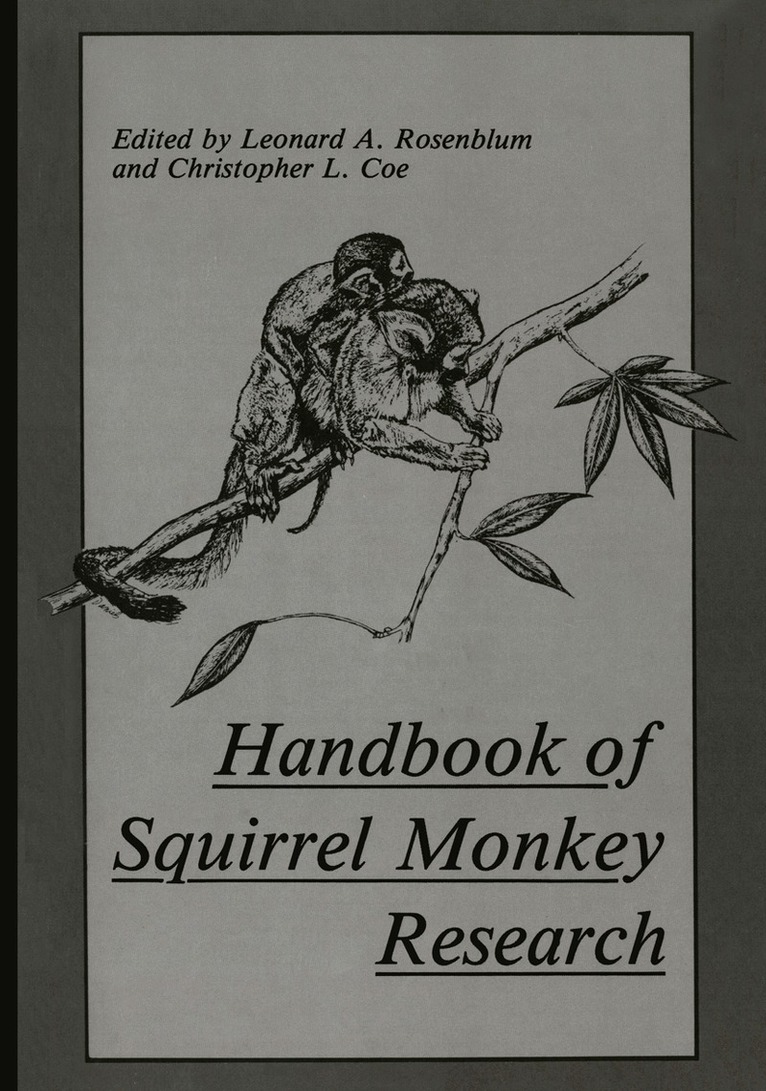
    Handbook of Squirrel Monkey Research

    AvC.L. Coe,Leonard A. Rosenblum

    Häftad, Engelska, 2012

    1 625 kr

    Beställningsvara. Skickas inom 10-15 vardagar. Fri frakt över 249 kr.

    Beskrivning

    As the editors of the first book on the squirrel monkey prophesied in 1968,* there has been an incredible expansion in primate research during the past 16 years. Their projection that the squirrel monkey would play an increasingly important role in this research effort has also come to be true during the ensuing years. One inadvertent result of the rapid growth, however, is that it has become more and more difficult for investigators to keep track of new information, both in their own disciplines and in related fields. For scientists who study and use the squirrel monkey in research, this problem is particularly pronounced, because articles are often published in specialized and disparate journals. We felt that a new synthesis of the vast amount of information on Saimiri would resolve this problem and would provide an extremely valuable com­ panion volume to the first book. The idea grew out of a small symposium held at the IX Congress of the International Primatological Society in Atlanta, Geor­ gia, during August, 1982. Following the format of The Squirrel Monkey, ad­ ditional authors were invited to discuss advances in areas which had experi­ enced exceptional growth or to review basic information that would be of practical value to future researchers. Even with focused topics and synthetic reviews, the wealth of new data resulted in many long manuscripts. In response to the continuing problems with Saimiri nomenclature, Richard Thorington has provided us with a definitive statement on squirrel monkey taxonomy.

    Produktinformation

    • Utgivningsdatum:2012-11-26
    • Mått:170 x 244 x 29 mm
    • Vikt:894 g
    • Format:Häftad
    • Språk:Engelska
    • Antal sidor:501
    • Förlag:Springer-Verlag New York Inc.
    • ISBN:9781475708141

    Utforska kategorier

    • Biovetenskap inom Naturvetenskap och teknik
    • Zoologi inom Naturvetenskap och teknik
    • Djurböcker inom Djur och Natur

    Innehållsförteckning

    • 1 The Taxonomy and Distribution of Squirrel Monkeys (Saimiri).- 1. Introduction.- 2. Methodology.- 3. Methods.- 4. Results.- 5. Discussion.- Appendix 1. Taxonomic Borborygme.- Appendix 2. Specimens Examined.- References.- 2 The Behavior of Squirrel Monkeys (Saimiri) in Natural Environments.- 1. Introduction.- 2. Specializations.- 3. Activity Pattern.- 4. Group Size.- 5. Home Range.- 6. Social Behavior and Organization.- 7. Relations with Other Species.- References.- 3 Cognition in Squirrel Monkeys: A Contemporary Perspective.- 1. Introduction.- 2. Sensory, Motor, and Cognitive Attributes Underlying Behavior.- 3. Performance on Selected Laboratory Tasks.- 4. Expression of Cognitive and Sensorimotor Characteristics in Everyday Behavior.- 5. Topics for Future Research.- 6. Conclusion.- References.- 4 Squirrel Monkey Communication.- 1. Introduction.- 2. Overview of the Vocal Repertoire.- 3. Inherited and Experiential Influences on Squirrel Monkey Vocalization.- 4. Visual Displays.- 5. Olfactory Communication.- 6. Conclusion.- References.- 5 Physiological Consequences of Maternal Separation and Loss in the Squirrel Monkey.- 1. Introduction.- 2. Normal Development and Basic Separation Procedures.- 3. Adrenal Responses to Maternal Separation.- 4. Effect of Environmental Conditions and Social Support.- 5. Effect of Repeated Separation Experiences.- 6. Importance of Adrenal Activation during Separation.- 7. Effect of Separation on the Immune System.- 8. Neurotransmitter Activity during Separation.- 9. General Considerations.- References.- 6 Effects of Surrogate-Rearing on the Infant Squirrel Monkey.- 1. Introduction.- 2. Responsiveness to the Surrogate.- 3. Responses to Separation and Novelty.- 4. Social Behavior.- 5. Atypical Behaviors.- 6. Summary of Comparisons with Macaques.- References.- 7 Reproductive Cyclicity and Breeding in the Squirrel Monkey.- 1. Introduction.- 2. The Reproductive Cycle.- 3. Ovulation and Fertilization.- 4. Captivity Breeding and Artificial Insemination.- 5. Pregnancy.- 6. Embryonic Development.- 7. Pregnancy Outcome.- 8. Summary.- References.- 8 The Endocrine System of the Squirrel Monkey.- 1. Introduction.- 2. Hormone Profile.- 3. Annual Reproductive Pattern.- 4. Diurnal Hormone Rhythm.- 5. Hormone Changes at Puberty.- 6. Effect of Body Weight.- 7. Hormone Differences in Saimiri Females.- 8. Psychological Influences on Hormone Secretion.- 9. General Considerations.- References.- 9 Thermoregulation in the Squirrel Monkey.- 1. Basic Concepts.- 2. Autonomic Thermoregulatory Responses.- 3. Behavioral Thermoregulation.- 10 Sneezing Behavior in the Squirrel Monkey and Its Biological Significance.- 1. Introduction.- 2. Sneezing Behaviors: A Closer Look.- 3. On Functions and Effects.- 4. Sneezing Behaviors: What Function?.- 5. The Hypotheses on Trial.- 6. Sneezing: Functional Aspects.- 7. Epilogue.- References.- 11 Visual System of the Squirrel Monkey.- 1. Introduction.- 2. Organization of the Visual System.- 3. Visual Capacities.- References.- 12 Use of Squirrel Monkeys in Cardiovascular Research.- 1. Introduction.- 2. Naturally Occurring Atherosclerosis.- 3. Dietary Effects on Atherosclerosis.- 4. Additional Effects on Diet-Induced Atherosclerosis.- 5. Summary of Lesions and Complications of Atherosclerosis.- 6. Stress-Induced Cardiomyopathy.- 7. Behaviorally Induced Hypertension.- 8. Diseases Complicating the Use of Squirrel Monkeys in Cardiovascular Research.- 9. Conclusion.- References.- 13 Behavioral Pharmacology of the Squirrel Monkey.- 1. Introduction: Procedures in Behavioral Pharmacology.- 2. Determinants of theBehavioral Effects of Drugs.- 3. Behavioral Effects of Drugs in the Squirrel Monkey.- 4. Discriminative Stimulus Properties of Drugs.- 5. Drugs As Consequent Events.- 6. Drug Effects on Social Behavior.- 7. Comparison of Behavioral Effects of Drugs in the Squirrel Monkey with Other Species.- 8. Summary and Conclusions.- References.- 14 Nutrition and Metabolism of the Squirrel Monkey.- 1. Diet.- 2. Requirements for Specific Nutrients.- 3. Growth and Body Composition As Affected by Diet.- 4. Nutritional and Metabolic Interactions.- References.- 15 Immunology and Pathology of the Squirrel Monkey.- 1. Introduction.- 2. Simian Immunology.- 3. Agents of Disease.- 4. Infectious Agents, Immunological and Pathological Responses.- 5. Comments and Perspectives.- References.- 16 Medical Care and Management of the Squirrel Monkey.- 1. Introduction.- 2. Colony Husbandry.- 3. Principles of Medical Management.- 4. Diseases of the Squirrel Monkey.- 5. Normative Data.- References.