• Fri frakt över 249 kr
  • •
  • Snabba leveranser
  • •
  • Billiga böcker
Kundservice

Du är på sajten för privatpersoner.

Företag, bibliotek eller offentlig verksamhet?

Du handlar på classic.bokus.com, där alla dina funktioner finns intakta.
Till classic.bokus.com
Bokus logotyp. Gå till startsidan.
  • Erbjudanden
  • Nyheter
  • Student
  • Topplistor
  • Barn & ungdom
  • Bokus Play
  • E-böcker
  • Pocketböcker
  • Spel & pussel

10% rabatt på allt med kod: NYSTART10 →

Sidfot

Mina sidor

    Hjälp

    • Kundservice
    • Vanliga frågor och svar
    • Frakt och leverans
    • Retur vid ångerrätt
    • Reklamera vara
    • Betalning
    • Köpvillkor
    • Allmänna villkor
    • Information om webbplatsens tillgänglighet

    Om Bokus

    • Om oss
    • Pressrum
    • För studenter
    • För företag
    • För bibliotek och offentlig verksamhet
    • För leverantörer
    • Hållbarhet

    Populärt

    • Aktuella erbjudanden
    • Presentkort
    • Studentlitteratur
    • Nya böcker
    • Topplistor
    • Signerade böcker
    • Engelska böcker

    Inspiration

    • Boktips
    • BookTok
    • Populära bokserier
    • Barnbokskaraktärer
    • Populära författare
    Logotyp för Bokus
    Följ oss på Facebook (extern länk)Följ oss på Instagram (extern länk)Följ oss på YouTube (extern länk)Följ oss på TikTok (extern länk)
    bokus @ CookiesAnpassa cookiesIntegritetspolicyKöpvillkor
    Till Citymail hemsida (extern länk)Till Budbee hemsida (extern länk)Till Postnord hemsida (extern länk)Till Schenker hemsida (extern länk)Till Early Bird hemsida (extern länk)Till Walleys hemsida (extern länk)
    1. Naturvetenskap och teknik
    2. Matematik och naturvetenskap
    3. Matematik
    4. Optimering

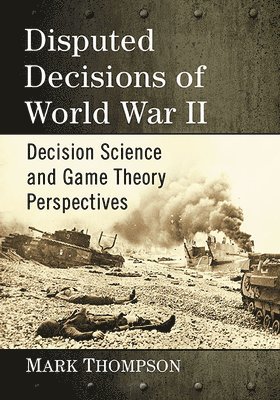
    Disputed Decisions of World War II

    Decision Science and Game Theory Perspectives

    AvMark Thompson

    Häftad, Engelska, 2019

    893 kr

    Beställningsvara. Skickas inom 5-8 vardagar. Fri frakt över 249 kr.

    Beskrivning

    A former Harvard professor of decision science and game theory draws on those disciplines in this review of controversial strategic and tactical decisions of World War II.Allied leaders--although outstanding in many ways--sometimes botched what now is termed meta-decision making or deciding how to decide. Operation Jubilee, a single-division raid on Dieppe, France, in August 1942, for example, illustrated the pitfalls of groupthink. In the Allied invasion of North Africa three months later, American and British leaders fell victim to the planning fallacy: having unrealistically rosy expectations of an easy victory. In Sicily in the summer of 1943, they violated the millennia-old principle of command unity--now re-endorsed and elaborated on by modern theorists. Had Allied strategists understood the game theory of bluffing, in January 1944 they might well not have landed two-plus divisions at Anzio in Italy.

    Produktinformation

    • Utgivningsdatum:2019-12-23
    • Mått:178 x 254 x 11 mm
    • Vikt:386 g
    • Format:Häftad
    • Språk:Engelska
    • Antal sidor:213
    • Förlag:McFarland & Co Inc
    • ISBN:9781476680040

    Utforska kategorier

    • Optimering inom Naturvetenskap och teknik
    • Andra världskriget inom Historia och arkeologi
    • Militär strategi inom Samhälle och politik

    Mer om författaren

    Mark Thompson was a full-time professor at Harvard University from 1975 to 1983 and has been a visiting professor at the Université de Paris and the Universität Bielefeld in North Rhine-Westphalia in Germany. He taught courses on decision science, game theory, and social program evaluation. He lives in Lexington, Massachusetts.

    Recensioner i media

    “The combination of military history and game theory makes this an excellent addition to the library of those interested in military operations and strategy.”—H-Net Reviews

    Innehållsförteckning

    • Table of ContentsAcknowledgmentsIntroduction1. DieppeThe Strategic Decision: Should Dieppe in August 1942 Have Been Raided? 5 • The Outcome: Minor Success; Profitless Movement; Major Disaster 13 • Later Decisions: Should Reserves Have Been Sent to Red and White Beaches—As Was Done? 15 • The Outcome: Wounding, Capture and Death 16 • Still Later Decision: Should the Operation Have Been Called Off—As It Was? 16 • The Outcome: The Return of Twelve Hundred; Crowing in Berlin 17 • How Bad Was the Outcome? How Significant the Battle? 17 • An Alternative Approach to Judging Decisions and Outcomes, That of Decision Science 18 • Did the Lessons of Dieppe Make Its Outcome, on Net, Good? 19 • What Pluses, Other Than Its Lessons, Did Operation Jubilee Have? 21 • Judging Decisions Apart from Outcomes 22 • Was Undertaking Jubilee a Good or a Bad Decision? 23 • How Much Did Ill Luck, Flawed Execution, or Poor Intelligence Contribute to the Bad Outcome? 25 • Given the Retrospective Consensus That the Plans for Operations Rutter and Jubilee Were Disastrous, Why Had They Been Approved? 28 • Could No One Have Prevented the Suicidal Folly? Did the Fault Lie in the ­Meta-Decisions—The Determinations of How the Decisions Would Be Made? 31 • ­Meta-Decisional Issues: How Should ­Go-No-Go Determinations Be Made? How Were They Made on Dieppe? 34 • Did the British Authorize Rutter/Jubilee Expecting Failure—Perhaps Also Hoping for It and Even Acting to Sabotage the Raid? 35 • The Expected Value of Information 37 • What Should the Allies Have Done? 38 • Models of Governmental ­Decision-Making 38 • Conclusions 392. North AfricaThe ­Grand-Strategic Decision: Should the Allies in November 1942 Have Landed in North Africa? 41 • The Four Steps of Decision Science 49 • Competing ­Grand-Strategic Priorities 49 • Strategic Alternatives 51 • Tactical Choices 52 • Uncertainties 54 • Values: ­Anglo-American Differences in Outlook and Priority 57 • Modes of Decision Influence 59 • Roosevelt and Marshall 65 • The Outcome: Brief Opposition in Landing; Loss of the Race for Tunis; Capturing Thrice as Many Men as Had Been in the Afrika Korps 66 • The Sequence of Outcome Ratings for Torch: First Good; Then Bad; Ultimately, Better Than Good 72 • The Planning Fallacy 73 • Consequences of the Allied Failure to Take Tunis Quickly 75 • Was Undertaking Operation Gymnast/Torch a Good or a Bad Decision? 75 • Was the Decision of Adolf Hitler to Send More Troops to Africa Good or Bad? 78 • Game Theory 80 • ­Other-Side Perception 81 • ­Move-Order Plusses and Minuses 83 • Conclusions 843. MessinaThe ­Non-Decision: Should the Allies in July and August of 1943 Have Acted, More Than They Negligibly Did, to Prevent the Escape of 53,000 Germans Across the Strait of Messina? 87 • The Outcome: Allied Conquest of Sicily; German Escape; Italian Forsaking of the Axis Alliance 88 • How Good or Bad Was the Outcome of Operation Husky? 89 • Judgments on the ­Non-Decision of Failing to Interdict German Flight and Its Outcome 90 • What Affected How Bad or How Good the Outcome of Operation Husky Was? 91 • What Steps Might the Allies Have Taken to Have Captured or Killed Tens of Thousands More Germans in Sicily? 93 • Why Did the Allies in Sicily Not Take Any of Many Possible Decision Alternatives, Instead of Drifting into Their Actual, Inferior ­Non-Decision? 97 • Who, If Anyone, Was at Fault? 99 • What Should the Allies Not Have Done? 100 • Principals and Agents; Unity of Command 102 • Why Did the Germans in Sicily Do Better Than the Allies? 108 • The Perspective of Game Theory 108 • Risk Aversion 109 • Organizational Behavior 109 • How Bad Were the Consequences of the ­Non-Decision at Messina? 110 • Conclusions 1114. AnzioThe Strategic Decision: Should the Allies in January 1944 Have Landed at Anzio? 113 • The Operational Decision: Should Major General John Lucas, in His First Two Days Ashore, Have Pushed Boldly Forward—Which He Did Not Do? 118 • The Outcome: Stalemate at the Beachhead 120 • Did the Operational Decision of John Lucas Have a Good or a Bad Outcome? 122 • Was the Operational Decision of John Lucas Good or Bad? 123 • Did Operation Shingle Have a Good or a Bad Outcome? 125 • Deciding on Shingle 127 • Uncertainties 128 • Values 130 • Judgments of the Decision to Undertake Shingle 131 • Shingle as a Bluff 132 • ­Game-Theoretic Perspectives on Anzio 134 • Governmental Politics 134 • Conclusions 137Epilogue: The Science of Deciding, the Theory of Games and WarThe Planning Fallacy 139 • Ways of Influencing and Resolving Decisions 139 • Public Opinion 143 • Weariness 145 • Age 148 • Decision Fatigue, Food and Sex 152 • Groupthink 153 • Expertise 157 • Numbers 159 • Principals, Agents, Asymmetric Information, Command Unity and Coalitions 162 • The Potential Value of Decision Science and Game Theory Between Dieppe and Anzio 165 • Better Decisions in Conflicts to Come 167Chapter NotesBibliographyIndex