• Fri frakt över 249 kr
  • •
  • Snabba leveranser
  • •
  • Billiga böcker
Kundservice

Du är på sajten för privatpersoner.

Företag, bibliotek eller offentlig verksamhet?

Du handlar på classic.bokus.com, där alla dina funktioner finns intakta.
Till classic.bokus.com
Bokus logotyp. Gå till startsidan.
  • Erbjudanden
  • Nyheter
  • Student
  • Topplistor
  • Barn & ungdom
  • Bokus Play
  • E-böcker
  • Pocketböcker
  • Spel & pussel

10% rabatt på allt med kod: NYSTART10 →

Sidfot

Mina sidor

    Hjälp

    • Kundservice
    • Vanliga frågor och svar
    • Frakt och leverans
    • Retur vid ångerrätt
    • Reklamera vara
    • Betalning
    • Köpvillkor
    • Allmänna villkor
    • Information om webbplatsens tillgänglighet

    Om Bokus

    • Om oss
    • Pressrum
    • För studenter
    • För företag
    • För bibliotek och offentlig verksamhet
    • För leverantörer
    • Hållbarhet

    Populärt

    • Aktuella erbjudanden
    • Presentkort
    • Studentlitteratur
    • Nya böcker
    • Topplistor
    • Signerade böcker
    • Engelska böcker

    Inspiration

    • Boktips
    • BookTok
    • Populära bokserier
    • Barnbokskaraktärer
    • Populära författare
    Logotyp för Bokus
    Följ oss på Facebook (extern länk)Följ oss på Instagram (extern länk)Följ oss på YouTube (extern länk)Följ oss på TikTok (extern länk)
    bokus @ CookiesAnpassa cookiesIntegritetspolicyKöpvillkor
    Till Citymail hemsida (extern länk)Till Budbee hemsida (extern länk)Till Postnord hemsida (extern länk)Till Schenker hemsida (extern länk)Till Early Bird hemsida (extern länk)Till Walleys hemsida (extern länk)
    1. Psykologi och pedagogik
    2. Psykologi
    3. Biologisk psykologi och neuropsykologi

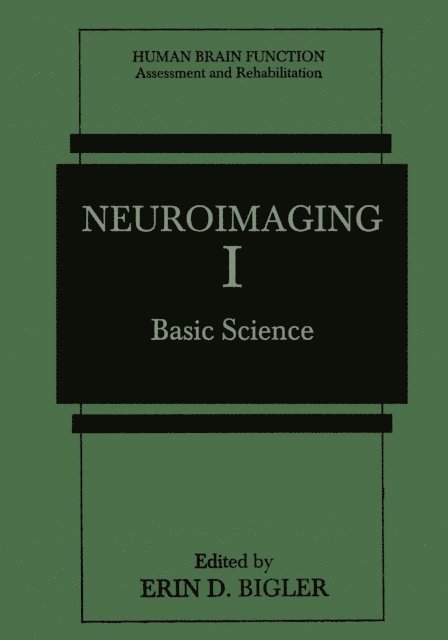
    Neuroimaging I

    Basic Science

    AvErin D. Bigler

    E-bok
    PDF, Engelska, 2013

    2 917 kr

    Läs direkt i Bokus Reader – eller ladda ned till din enhet (PDF kräver ofta zoom och scroll på små skärmar).

    Beskrivning

    Until recent advents in neuroimaging, the brain had been inaccessible to in vivo visualization, short of neurosurgical procedures or some unfortunate traumatic exposure. It is a tribute to the early contributors to clinical neuroscience that through what, by today''s standards, would be deemed extremely crude measure­ ments, advancements in understanding brain function were made. For example, the theories of higher cortical functions of the brain by Aleksandr Luria or Hans-Lukas Teuber in the 1950s were essentially based on military subjects who sustained traumatic head wounds during World War II. These researchers could inspect the patient and determine where penetrating entrance and exit wounds were on the head; sometimes they had skull films to identify entrance and exit fracture wounds, sometimes neurosurgical reports were available, and Luria even had the opportunity to acutely examine some patients with exposed wounds. Thus, one would take whatever information might be available and infer what regions of the brain were involved but could never actually visualize the brain. Of course, this changed dramatically with the introduction of brain imag­ ing in the 1970s, but it really was not until the 1990s that analysis and image display technologies finally caught up with the basic brain-imaging methods of computerized tomography (CT) and magnetic resonance imaging (MRI).

    Produktinformation

    • Utgivningsdatum:2013-06-29
    • Språk:Engelska
    • Filformat:PDF
    • Kopieringsskydd:LCP
    • ISBN:9781489917010
    • Förlag:Springer US

    Utforska kategorier

    • Biologisk psykologi och neuropsykologi inom Psykologi och pedagogik
    • Psykiatri inom Medicin
    • Biovetenskap inom Naturvetenskap och teknik