• Fri frakt över 249 kr
  • •
  • Snabba leveranser
  • •
  • Billiga böcker
Kundservice

Du är på sajten för privatpersoner.

Företag, bibliotek eller offentlig verksamhet?

Du handlar på classic.bokus.com, där alla dina funktioner finns intakta.
Till classic.bokus.com
Bokus logotyp. Gå till startsidan.
  • Erbjudanden
  • Student
  • Topplistor
  • Barn & ungdom
  • Bokus Play
  • E-böcker
  • Ljudböcker
  • Pocketböcker
  • Spel & pussel

Upp till 25% på utvalda nyheter →

Sidfot

Mina sidor

    Hjälp

    • Kundservice
    • Vanliga frågor och svar
    • Frakt och leverans
    • Retur vid ångerrätt
    • Reklamera vara
    • Betalning
    • Köpvillkor
    • Allmänna villkor
    • Information om webbplatsens tillgänglighet

    Om Bokus

    • Om oss
    • Pressrum
    • För studenter
    • För företag
    • För bibliotek och offentlig verksamhet
    • För leverantörer
    • Hållbarhet

    Populärt

    • Aktuella erbjudanden
    • Presentkort
    • Studentlitteratur
    • Nya böcker
    • Topplistor
    • Signerade böcker
    • Engelska böcker

    Inspiration

    • Boktips
    • BookTok
    • Populära bokserier
    • Barnbokskaraktärer
    • Populära författare
    Logotyp för Bokus
    Följ oss på Facebook (extern länk)Följ oss på Instagram (extern länk)Följ oss på YouTube (extern länk)Följ oss på TikTok (extern länk)
    bokus @ CookiesAnpassa cookiesIntegritetspolicyKöpvillkor
    Till Citymail hemsida (extern länk)Till Budbee hemsida (extern länk)Till Postnord hemsida (extern länk)Till Schenker hemsida (extern länk)Till Early Bird hemsida (extern länk)Till Walleys hemsida (extern länk)
    1. Naturvetenskap och teknik
    2. Teknik och industri
    3. Agronomi och lantbruk
    4. Djurhållning

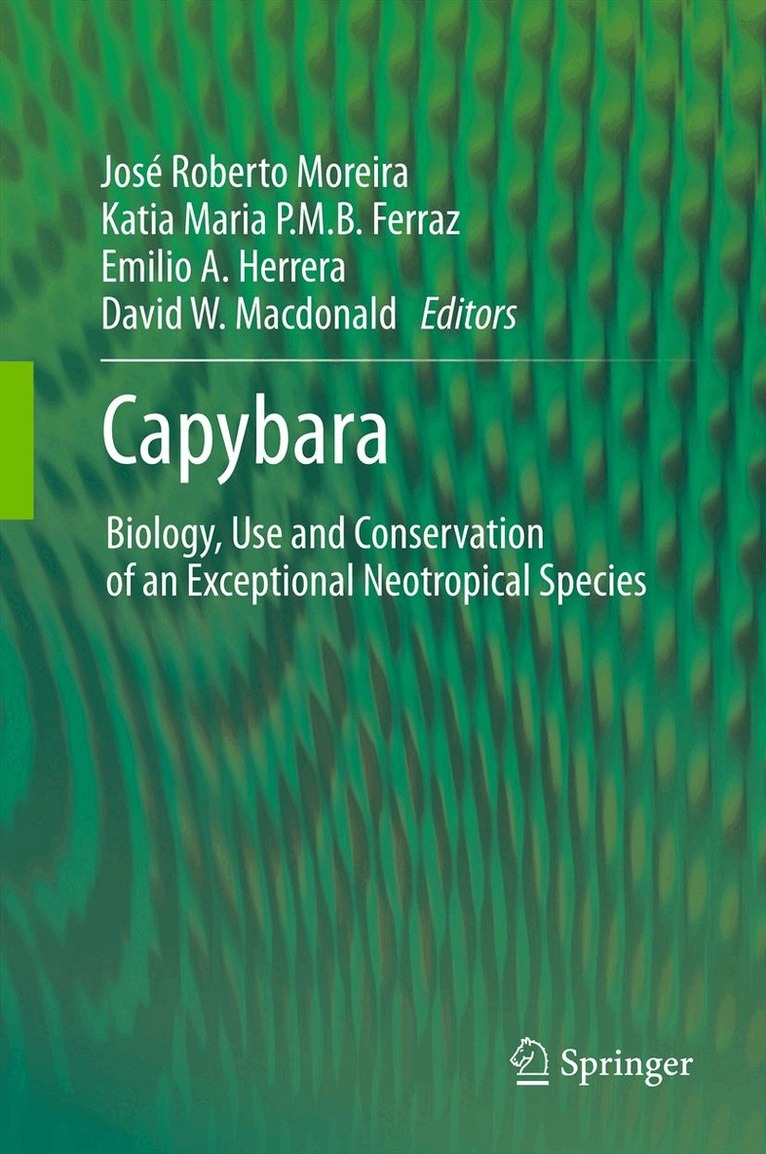
    Capybara

    Biology, Use and Conservation of an Exceptional Neotropical Species

    AvJosé Roberto Moreira,Katia Maria P.M.B. Ferraz

    Häftad, Engelska, 2014

    2 490 kr

    Beställningsvara. Skickas inom 10-15 vardagar. Fri frakt över 249 kr.

    Beskrivning

    The capybara is the neotropical mammal with the highest potential for production and domestication. Amongst the favorable characteristics for domestication we can list its high prolificacy, rapid growth rate, a herbivorous diet, social behavior and relative tameness. The genus (with only two species) is found from the Panama Canal to the north of Argentina on the east of the Andes. Chile is the only country in South America where the capybara is not found. The species is eaten all over its range, especially by poor, rural and traditional communities engaged in subsistence hunting. On the other hand, in large urban settlements wildlife is consumed by city dwellers as a delicacy. The sustainable management of capybara in the wild has been adopted by some South American countries, while others have encouraged capybara rearing in captivity.

    Produktinformation

    • Utgivningsdatum:2014-09-21
    • Mått:155 x 235 x 24 mm
    • Vikt:663 g
    • Format:Häftad
    • Språk:Engelska
    • Antal sidor:422
    • Förlag:Springer-Verlag New York Inc.
    • ISBN:9781493900985

    Utforska kategorier

    • Djurhållning inom Naturvetenskap och teknik
    • Miljövetenskap och miljöpolitik inom Naturvetenskap och teknik
    • Biovetenskap inom Naturvetenskap och teknik

    Innehållsförteckning

    • Foreword.- Preface.- Part I: Biology, Ecology and Evolution.- Taxonomy, natural history and distribution of the capybara.- Paleontology, evolution and systematics of capybara.- Phylogenetics of Caviomorph rodents and genetic perspectives on the evolution of sociality and mating systems in the Caviidae.- Foraging strategies and feeding habits of capybaras.- Capybara digestive adaptations.- Reproductive morphology and physiology of the male capybara.- Morphology and reproductive physiology of female capybaras.- Capybara demographic traits.- Diseases of capybara.- Capybara scent glands and scent-marking behavior.- Capybara social behavior and use of space: patterns and processes.- Part II: Production.- Products and uses of capybaras.- Confined and semi-confined production systems for capybaras.- Social and spatial relationships of capybaras in a semi-confined production system.- Feeds and nutrition of farmed capybaras.- The impact of management practices on female capybara reproductive parameters in captivity.- The sustainable management of capybaras.- Part III: Conservation.- Capybaras as a source of protein: utilization and management in Venezuela.- Conservation and use of the capybara and the lesser capybara in Colombia.- Capybara production in Brazil: captive breeding or sustainable management?.- Capybaras use in Argentina.- Counting capybaras.- Brazilian spotted fever: the role of capybaras.- The capybara paradigm: from sociality to sustainability.- Index.