• Fri frakt över 249 kr
  • •
  • Snabba leveranser
  • •
  • Billiga böcker
Kundservice

Du är på sajten för privatpersoner.

Företag, bibliotek eller offentlig verksamhet?

Du handlar på classic.bokus.com, där alla dina funktioner finns intakta.
Till classic.bokus.com
Bokus logotyp. Gå till startsidan.
  • Erbjudanden
  • Nyheter
  • Student
  • Topplistor
  • Barn & ungdom
  • Bokus Play
  • E-böcker
  • Pocketböcker
  • Spel & pussel

10% rabatt på allt med kod: NYSTART10 →

Sidfot

Mina sidor

    Hjälp

    • Kundservice
    • Vanliga frågor och svar
    • Frakt och leverans
    • Retur vid ångerrätt
    • Reklamera vara
    • Betalning
    • Köpvillkor
    • Allmänna villkor
    • Information om webbplatsens tillgänglighet

    Om Bokus

    • Om oss
    • Pressrum
    • För studenter
    • För företag
    • För bibliotek och offentlig verksamhet
    • För leverantörer
    • Hållbarhet

    Populärt

    • Aktuella erbjudanden
    • Presentkort
    • Studentlitteratur
    • Nya böcker
    • Topplistor
    • Signerade böcker
    • Engelska böcker

    Inspiration

    • Boktips
    • BookTok
    • Populära bokserier
    • Barnbokskaraktärer
    • Populära författare
    Logotyp för Bokus
    Följ oss på Facebook (extern länk)Följ oss på Instagram (extern länk)Följ oss på YouTube (extern länk)Följ oss på TikTok (extern länk)
    bokus @ CookiesAnpassa cookiesIntegritetspolicyKöpvillkor
    Till Citymail hemsida (extern länk)Till Budbee hemsida (extern länk)Till Postnord hemsida (extern länk)Till Schenker hemsida (extern länk)Till Early Bird hemsida (extern länk)Till Walleys hemsida (extern länk)
    1. Naturvetenskap och teknik
    2. Matematik och naturvetenskap
    3. Biologi
    4. Cellbiologi

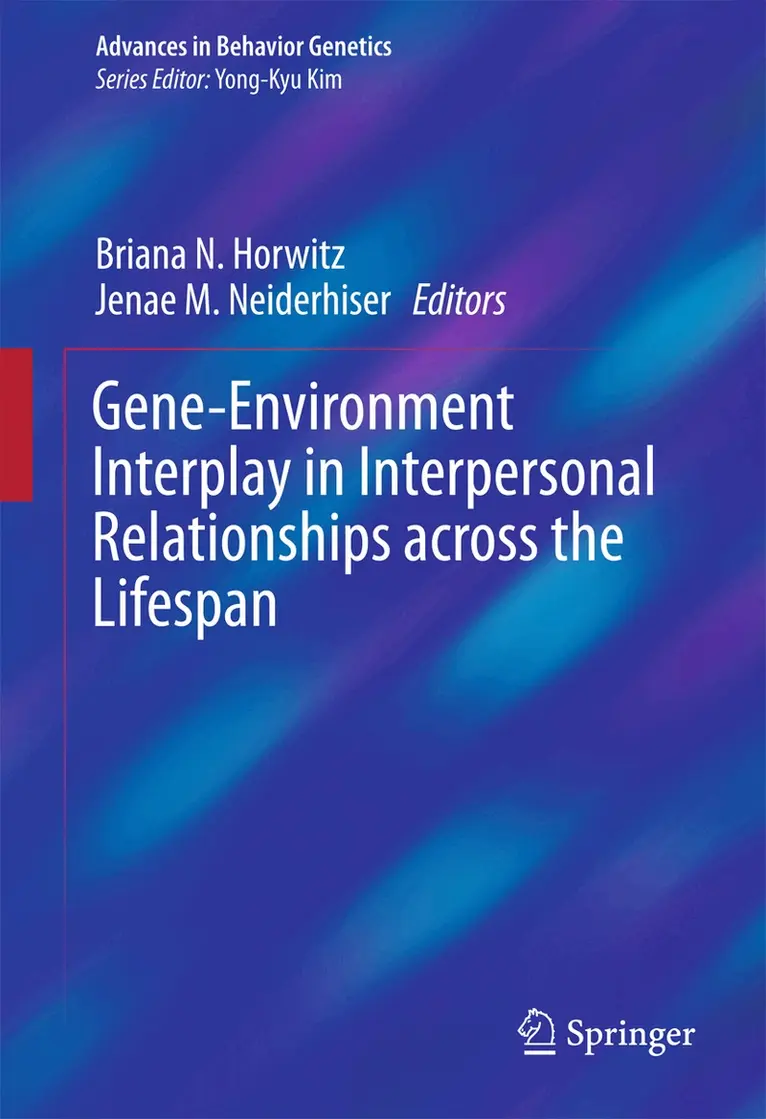
    Gene-Environment Interplay in Interpersonal Relationships across the Lifespan

    AvBriana N. Horwitz,Jenae M. Neiderhiser

    Inbunden, Engelska, 2015

    Del 3 i serien Advances in Behavior Genetics

    563 kr

    Beställningsvara. Skickas inom 10-15 vardagar. Fri frakt över 249 kr.

    Beskrivning

    Intriguing new findings on how genes and environments work together through different stages of life take the spotlight in this significant collection. Studies from infancy to late adulthood show both forces as shaping individuals' relationships within family and non-family contexts, and examine how these relationships, in turn, continue to shape the individual. Transitional periods, in which individuals become more autonomous and relationships and personal identities become more complicated, receive special emphasis. In addition, chapters shed light on the extent to which the quantity and quality of genetic and environmental influence may shift across and even within life stages.Included in the coverage:Gene-environment interplay in parenting young children.The sibling relationship as a source of shared environment.Gene-environment transactions in childhood and adolescent problematic peer relationships.Toward a developmentally sensitive and genetically informed perspective on popularity.Spouse, parent, and co-worker: roles and relationships in adulthood.The family system as a unit of clinical care: the role of genetic systems.Behavioral geneticists, clinical psychologists, and family therapists will find in Gene-Environment Interplay in Interpersonal Relationships across the Lifespan a window into current thinking on the subject, new perspectives for understanding clients and cases, and ideas for further study.

    Produktinformation

    • Utgivningsdatum:2015-07-06
    • Mått:155 x 235 x 21 mm
    • Vikt:611 g
    • Format:Inbunden
    • Språk:Engelska
    • Serie:Advances in Behavior Genetics
    • Antal sidor:281
    • Upplaga:2015
    • Förlag:Springer-Verlag New York Inc.
    • ISBN:9781493929221

    Utforska kategorier

    • Cellbiologi inom Naturvetenskap och teknik
    • Sociologi inom Samhälle och politik
    • Biovetenskap inom Naturvetenskap och teknik

    Mer om författaren

    Briana N. Horwitz, Ph.D., is an assistant professor in the Department of Psychology at California State University, Fullerton. She completed her undergraduate studies at The University of California, Los Angeles and her doctoral studies at the University of California, Irvine. She also served as a postdoctoral fellow under the advisement of Dr. Neiderhiser at the Pennsylvania State University. Her research interests are in understanding the sources and directions of the associations among interpersonal relationships and functioning across the lifespan and more specifically to investigate how genetic and environmental factors explain these associations.Jenae M. Neiderhiser, Ph.D., is Liberal Arts Research Professor in the Department of Psychology and Professor of Human Development and Family Studies at The Pennsylvania State University. She completed her undergraduate studies in Psychology at The University of Pittsburgh and her doctoral studies in Human Development and Family Studies at The Pennsylvania State University. She is currently serving as Associate Editor for the Journal of Research on Adolescence and is on the editorial board of Development and Psychopathology and Child Development. She is also serving as a board member for the Society for Prevention Research. Her research interests are in understanding the interplay between genes and environment throughout the lifespan. The environmental influences that she has examined most closely are interpersonal relationships-including parent-child, spouse, sibling, and peer relationships. Examining how individuals influence their environments, in part because of their genetically-influenced characteristics, has long been a focus on her work.

    Innehållsförteckning

    • The sibling relationship as a source of shared environment.- Gene-environment transitions in childhood and adolescence problematic peer relationships.- Gene-environment processes in adolescent family relationships.- Toward a developmentally sensitive and genetically informed perspective on popularity.- Spouse, parent, and co-workers: Relationships and roles during adulthood.- Interpersonal relationships in late adulthood.- The family system as a unit of clinical care: The role of genetic systems.