• Fri frakt över 249 kr
  • •
  • Snabba leveranser
  • •
  • Billiga böcker
Kundservice

Du är på sajten för privatpersoner.

Företag, bibliotek eller offentlig verksamhet?

Du handlar på classic.bokus.com, där alla dina funktioner finns intakta.
Till classic.bokus.com
Bokus logotyp. Gå till startsidan.
  • Erbjudanden
  • Student
  • Topplistor
  • Barn & ungdom
  • Bokus Play
  • E-böcker
  • Ljudböcker
  • Pocketböcker
  • Spel och pussel

Pocketfynda! Hundratals böcker för 49 kr/st →

Sidfot

Mina sidor

    Hjälp

    • Kundservice
    • Vanliga frågor och svar
    • Frakt och leverans
    • Retur vid ångerrätt
    • Reklamera vara
    • Betalning
    • Köpvillkor
    • Allmänna villkor
    • Information om webbplatsens tillgänglighet

    Om Bokus

    • Om oss
    • Pressrum
    • För studenter
    • För företag
    • För bibliotek och offentlig verksamhet
    • För leverantörer
    • Hållbarhet

    Populärt

    • Aktuella erbjudanden
    • Presentkort
    • Studentlitteratur
    • Nya böcker
    • Topplistor
    • Signerade böcker
    • Engelska böcker

    Inspiration

    • Boktips
    • BookTok
    • Barnbokskaraktärer
    • Populära författare
    Logotyp för Bokus
    Följ oss på Facebook (extern länk)Följ oss på Instagram (extern länk)Följ oss på YouTube (extern länk)Följ oss på TikTok (extern länk)
    bokus @ CookiesAnpassa cookiesIntegritetspolicyKöpvillkor
    Till Citymail hemsida (extern länk)Till Budbee hemsida (extern länk)Till Postnord hemsida (extern länk)Till Schenker hemsida (extern länk)Till Early Bird hemsida (extern länk)Till Walleys hemsida (extern länk)
    1. Ekonomi och Ledarskap
    2. Nationalekonomi

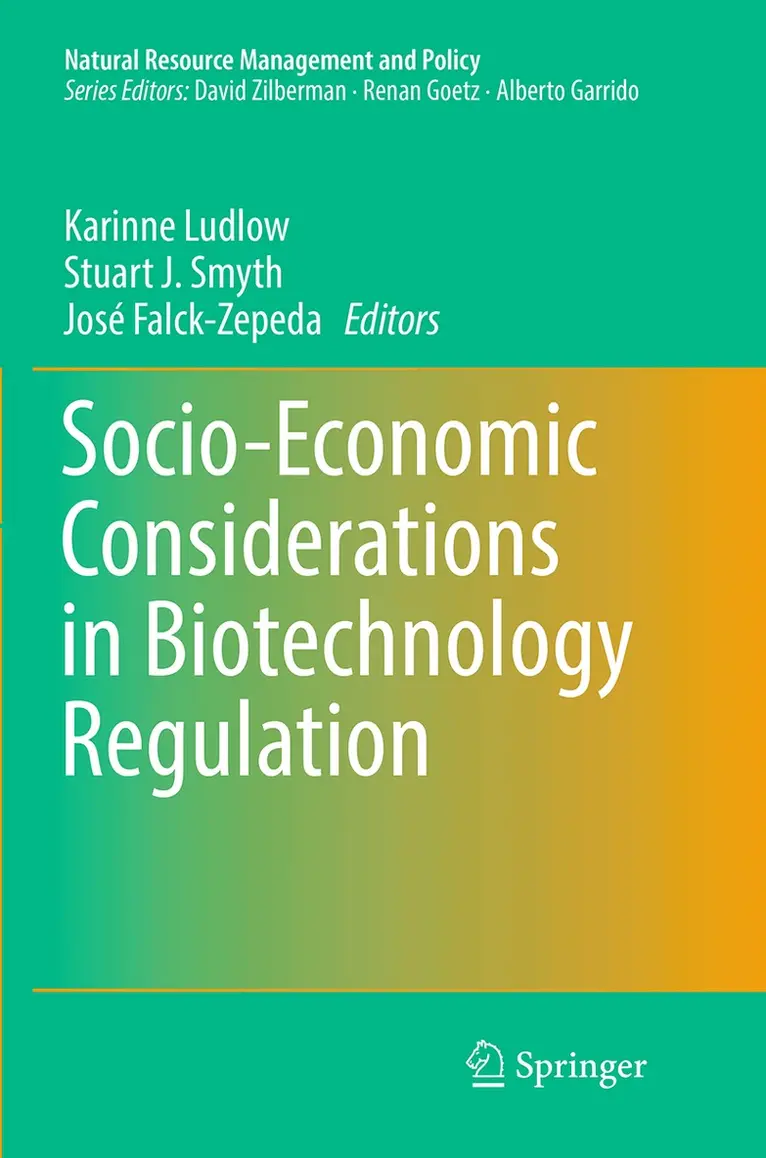
    Socio-Economic Considerations in Biotechnology Regulation

    AvKarinne Ludlow,Stuart J. Smyth

    Häftad, Engelska, 2016

    Del 37 i serien Natural Resource Management and Policy

    1 078 kr

    Beställningsvara. Skickas inom 10-15 vardagar. Fri frakt över 249 kr.

    Beskrivning

    Within the context of the Convention on Biological Diversity (CBD), the Cartagena Protocol on Biosafety (CPB) was established as an implementing agreement. The CPB is an international agreement establishing the rights of recipient countries to be notified of and to approve or reject the domestic import and/or production of living modified organisms (LMOs). Decisions regarding import/production are to be on the basis of a biosafety assessment. Article 26.1 of the CPB allows for the (optional) inclusion of socio-economic considerations (SECs) into that biosafety assessment process. This book compiles expert assessments of the issues relevant to SEC assessment of LMOs and fundamental for decisions regarding whether to undertake such assessments at all. It includes an overview of the inclusion of SEC assessment in the regulation of LMOs that looks at the rationale for the inclusion of SECs, in the context of the existing science-based risk assessment systems. This book reviews the various factors that can and have been suggested for inclusion in SEC assessment, and provides a meaningful dialogue about the contrasts, benefits and tradeoffs that are, and will, be created by the potential move to the inclusion of SECs in the regulation of LMOs, making it of interest to both academics and policy-makers.

    Produktinformation

    • Utgivningsdatum:2016-08-23
    • Mått:155 x 235 x 18 mm
    • Vikt:499 g
    • Format:Häftad
    • Språk:Engelska
    • Serie:Natural Resource Management and Policy
    • Antal sidor:313
    • Förlag:Springer-Verlag New York Inc.
    • ISBN:9781493943852

    Utforska kategorier

    • Nationalekonomi inom Ekonomi och Ledarskap
    • Lantbruk, fiske och skogsbruk inom Ekonomi och Ledarskap
    • Agronomi inom Naturvetenskap och teknik

    Innehållsförteckning

    • Introduction to Regulating LMOs.- The State of Science-based Regulation and GM crops.- Socio-Economic Considerations and the Regulations of LMOs.- Benefits to Producers and Society.- Consumer Choice.- Environmental Impacts.- Ethical/Equity.- Food Security.- Health Impacts.- Impacts on Biodiversity.- Indigenous Knowledge.- Intellectual Property Rights.- Labor Impacts.- Market Access and Trade.- Producer Choice.- Religious/Cultural.- Animal Welfare.- Potential Consequences from the Inclusion of Socio-economics in Decision Making.- A Decision Making Framework for Implementation Issues.- Ensuring Functional Biosafety Systems.