• Fri frakt över 249 kr
  • •
  • Snabba leveranser
  • •
  • Billiga böcker
Kundservice

Du är på sajten för privatpersoner.

Företag, bibliotek eller offentlig verksamhet?

Du handlar på classic.bokus.com, där alla dina funktioner finns intakta.
Till classic.bokus.com
Bokus logotyp. Gå till startsidan.
  • Erbjudanden
  • Nyheter
  • Student
  • Topplistor
  • Barn & ungdom
  • Bokus Play
  • E-böcker
  • Pocketböcker
  • Spel & pussel

10% studentrabatt med kod TERM26

Sidfot

Mina sidor

    Hjälp

    • Kundservice
    • Vanliga frågor och svar
    • Frakt och leverans
    • Retur vid ångerrätt
    • Reklamera vara
    • Betalning
    • Köpvillkor
    • Allmänna villkor
    • Information om webbplatsens tillgänglighet

    Om Bokus

    • Om oss
    • Pressrum
    • För studenter
    • För företag
    • För bibliotek och offentlig verksamhet
    • För leverantörer
    • Hållbarhet

    Populärt

    • Aktuella erbjudanden
    • Presentkort
    • Studentlitteratur
    • Nya böcker
    • Topplistor
    • Signerade böcker
    • Engelska böcker

    Inspiration

    • Boktips
    • BookTok
    • Populära bokserier
    • Barnbokskaraktärer
    • Populära författare
    Logotyp för Bokus
    Följ oss på Facebook (extern länk)Följ oss på Instagram (extern länk)Följ oss på YouTube (extern länk)Följ oss på TikTok (extern länk)
    bokus @ CookiesAnpassa cookiesIntegritetspolicyKöpvillkor
    Till Citymail hemsida (extern länk)Till Budbee hemsida (extern länk)Till Postnord hemsida (extern länk)Till Schenker hemsida (extern länk)Till Early Bird hemsida (extern länk)Till Walleys hemsida (extern länk)
    1. Ekonomi och Ledarskap
    2. Nationalekonomi
    3. Mikroekonomi

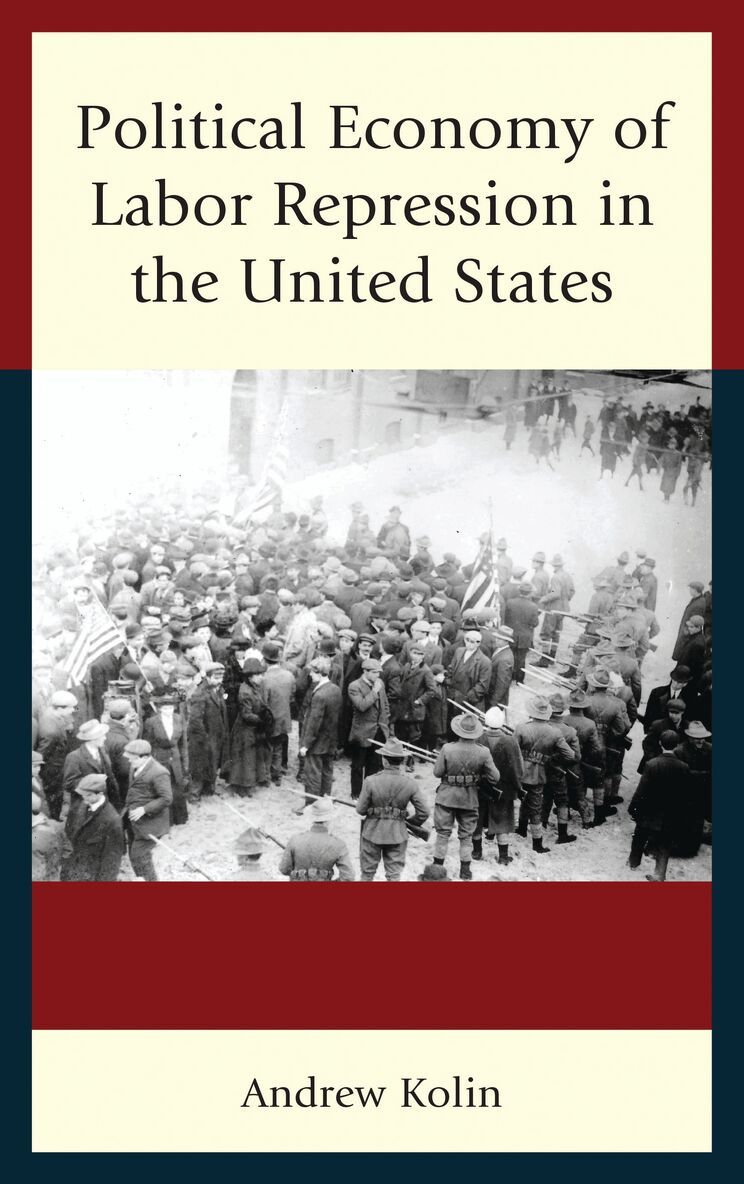
    Political Economy of Labor Repression in the United States

    AvAndrew Kolin

    Inbunden, Engelska, 2016

    1 673 kr

    Beställningsvara. Skickas inom 10-15 vardagar. Fri frakt över 249 kr.

    Fler format och utgåvor

    Häftad

    771 kr

    Beskrivning

    This book presents a detailed explanation of the essential elements that characterize capital labor relations and the resulting social conflict that leads to repression of labor. It links repression to the class struggle between capital and labor. The starting point involves an historical approach used to explore labor repression after the American Revolution. What follows is an examination of the role of government along with the growth of American capitalism to analyze capital-labor conflict. Subsequent chapters trace US history during the 19th century to discuss the question of the role assumed by the inclusion/exclusion of capital and labor in political-economic structures, which in turn lead to repression. Wholesale exclusion of labor from a fundamental role in framing policy in these institutions was crucial in understanding the unfolding of labor repression. Repression emerges amid a social struggle to acquire and maintain control over policy-making bodies, which pits the few against the many. In response, labor attempts to push back against institutional exclusion in part by the formation of labor unions. Capital reacts to such actions using repression to prevent labor from having a greater role in social institutions. For instance, this is played out inside the workplace as capital and labor engage in a political struggle over the function of the workplace. Given capital’s monopoly of ownership, capital employs various means to repress labor at work, including the introduction of technology, mass firings, crushing strikes, and the use of force to break up unions. The role of the state is not to be overlooked in its support of elite control over production, as well as aiding through legal means the growth of a capitalist economy in opposition to labor’s conception of greater economic democracy. This book explains how and why labor continues to confront repression in the 20th and 21st centuries.

    Produktinformation

    • Utgivningsdatum:2016-11-16
    • Mått:157 x 239 x 37 mm
    • Vikt:812 g
    • Format:Inbunden
    • Språk:Engelska
    • Antal sidor:436
    • Förlag:Bloomsbury Publishing Plc
    • ISBN:9781498524025

    Utforska kategorier

    • Mikroekonomi inom Ekonomi och Ledarskap
    • Centralt styre och förvaltning inom Samhälle och politik
    • Ekonomisk politik inom Ekonomi och Ledarskap

    Mer om författaren

    Andrew Kolin is professor of political science at Hilbert College.

    Recensioner i media

    Rather than write a comprehensive history of labor in the US, Kolin (Hilbert College) investigates labor repression by looking at events at specific points in time. He views these events entirely through the lens of class conflict between labor and capital and studies the beginnings of repressive policies in the pre-industrial era during and in the immediate aftermath of the American Revolution. Then he turns to labor’s response to the rise of the factory system. Next, he shows how workplace policies in the late 19th and early 20th centuries excluded labor from decision making. The reasons for continuing political repression of labor during the expanding economy of the 1920s are investigated. Labor and the New Deal are dealt with next. The role of communists and labor’s role in purging communists from its ranks takes the next two chapters. Capital’s backlash against labor from the 1970s forward is the final historical topic. The author concludes by outlining the steps needed to establish a truly democratic economy in the US. Summing Up: Recommended. Upper-division undergraduates through faculty.

    Innehållsförteckning

    • IntroductionChapter One: The State and the Economy after the American RevolutionChapter Two: Inclusion-Exclusion and the Growth of American CapitalismChapter Three: The Working Class on the Defensive: Response to Workplace ExclusionChapter Four: Political Repression at the WorkplaceChapter Five: Post WWI to the DepressionChapter Six: The Depression and Labor RepressionChapter Seven: The Labor Anti-Communism BacklashChapter Eight: Capital and Labor during WWIIChapter Nine: Domestic Cold War Politics and Labor RepressionChapter Ten: Economic Downturns and Labor Repression from the 1970sChapter Eleven: Conclusion: What’s Next? Bibliography