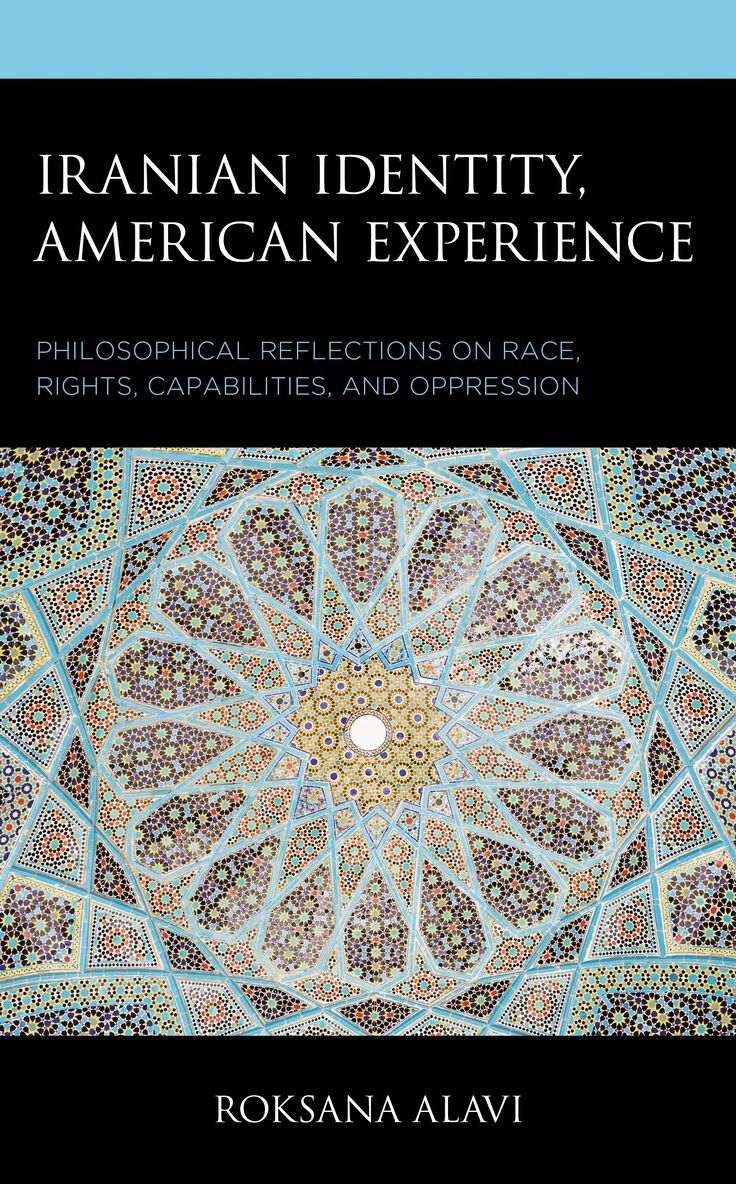
Inbunden, Engelska, 2021
Iranian Identity, American Experience
Philosophical Reflections on Race, Rights, Capabilities, and Oppression
Del i serien Philosophy of Race
1203 kr
Beställningsvara. Skickas inom 10-15 vardagar. Fri frakt över 249 kr.
Beskrivning
Produktinformation
- Utgivningsdatum: 2021-03-01
- Mått: 162 x 239 x 19 mm
- Vikt: 426 g
- Format: Inbunden
- Språk: Engelska
- Serie: Philosophy of Race
- Antal sidor: 166
- Förlag: Bloomsbury Publishing Plc
- ISBN: 9781498575096
Utforska kategorier
Mer om författaren
Roksana Alavi is associate (term) professor of interdisciplinary studies at the University of Oklahoma College of Professional and Continuing Studies and affiliate faculty member in the philosophy department and Iranian studies and women and gender studies programs.
Recensioner i media
In this brief but insightful and clearly organized discussion, Iranian American Alavi reviews and evaluates philosophical literature to develop her own theory of oppression, which she applies to analyzing the identities and social conditions of Iranian émigrés and their descendants in the US. Alavi focuses on experiences, such as stereotyping, discrimination, and self-hate, that coerce assimilation or isolation and inhibit individuals from developing capabilities on the basis of their group membership. She argues that a distinction must be drawn between thriving economically, as Iranian Americans are thought to do, and being free of the effects of racism and discrimination. Indeed, the economic success of Iranian immigrants may camouflage the ways in which the population as a whole is oppressed by experiences of exploitation, marginalization, powerlessness, cultural imperialism, and violence. Alavi also notes the significance of class and gender differences and discusses how skin color, language ability, education, job skills, and geographical location are factors that can systematically and structurally limit people from developing capabilities and accessing the benefits of equality. Although Alavi’s philosophical analysis only minimally examines socioeconomic data and cultural specifics, she makes a good case for understanding, and also potentially eliminating, the effects of oppression. Recommended. General readers through faculty; professionals.
Betyg & recensioner
0 recensioner
Inga recensioner tillgängliga.