• Fri frakt över 249 kr
  • •
  • Snabba leveranser
  • •
  • Billiga böcker
Kundservice

Du är på sajten för privatpersoner.

Företag, bibliotek eller offentlig verksamhet?

Du handlar på classic.bokus.com, där alla dina funktioner finns intakta.
Till classic.bokus.com
Bokus logotyp. Gå till startsidan.
  • Erbjudanden
  • Nyheter
  • Student
  • Topplistor
  • Barn & ungdom
  • Bokus Play
  • E-böcker
  • Pocketböcker
  • Spel & pussel

10% rabatt på allt med kod: NYSTART10 →

Sidfot

Mina sidor

    Hjälp

    • Kundservice
    • Vanliga frågor och svar
    • Frakt och leverans
    • Retur vid ångerrätt
    • Reklamera vara
    • Betalning
    • Köpvillkor
    • Allmänna villkor
    • Information om webbplatsens tillgänglighet

    Om Bokus

    • Om oss
    • Pressrum
    • För studenter
    • För företag
    • För bibliotek och offentlig verksamhet
    • För leverantörer
    • Hållbarhet

    Populärt

    • Aktuella erbjudanden
    • Presentkort
    • Studentlitteratur
    • Nya böcker
    • Topplistor
    • Signerade böcker
    • Engelska böcker

    Inspiration

    • Boktips
    • BookTok
    • Populära bokserier
    • Barnbokskaraktärer
    • Populära författare
    Logotyp för Bokus
    Följ oss på Facebook (extern länk)Följ oss på Instagram (extern länk)Följ oss på YouTube (extern länk)Följ oss på TikTok (extern länk)
    bokus @ CookiesAnpassa cookiesIntegritetspolicyKöpvillkor
    Till Citymail hemsida (extern länk)Till Budbee hemsida (extern länk)Till Postnord hemsida (extern länk)Till Schenker hemsida (extern länk)Till Early Bird hemsida (extern länk)Till Walleys hemsida (extern länk)
    1. Psykologi och pedagogik
    2. Psykologi
    3. Psykologi: känslor

    Medieval Sensibilities

    A History of Emotions in the Middle Ages

    AvDamien Boquet,Piroska Nagy

    Häftad, Engelska, 2018

    267 kr

    Beställningsvara. Skickas inom 5-8 vardagar. Fri frakt över 249 kr.

    Fler format och utgåvor

    Inbunden

    714 kr

    Beskrivning

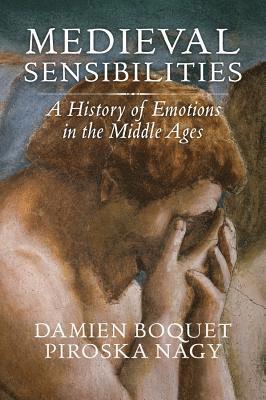
    What do we know of the emotional life of the Middle Ages? Though a long-neglected subject, a multitude of sources – spiritual and secular literature, iconography, chronicles, as well as theological and medical works – provide clues to the central role emotions played in medieval society.In this work, historians Damien Boquet and Piroska Nagy delve into a rich variety of texts and images to reveal the many and nuanced experiences of emotion during the Middle Ages – from the demonstrative shame of a saint to a nobleman's fear of embarrassment, from the enthusiasm of a crusading band to the fear of a town threatened by the approach of war or plague. Boquet and Nagy show how these outbursts of joy and pain, while universal expressions, must be understood within the specific context of medieval society. During the Middle Ages, a Christian model of affectivity was formed in the ‘laboratory’ of the monasteries, one which gradually seeped into wider society, interacting with the sensibilities of courtly culture and other forms of expression.Bouqet and Nagy bring a thousand years of history to life, demonstrating how the study of emotions in medieval society can also allow us to understand better our own social outlooks and customs.

    Produktinformation

    • Utgivningsdatum:2018-06-22
    • Mått:152 x 224 x 28 mm
    • Vikt:612 g
    • Format:Häftad
    • Språk:Engelska
    • Antal sidor:350
    • Förlag:Polity Press
    • ISBN:9781509514663
    • Översättare:Robert Shaw

    Utforska kategorier

    • Psykologi: känslor inom Psykologi och pedagogik
    • Religion: allmänt inom Filosofi och religion
    • Kristendom inom Filosofi och religion

    Mer om författaren

    Damien Boquet is Lecturer in History at the University of Aix-Marseille. Piroska Nagy is Professor of Medieval History at the University of Quebec at Montreal.

    Recensioner i media

    ‘This pathbreaking book, from two pioneer researchers on the history of emotions, tracks the unfolding of a gradual “emotional revolution,” beginning in late antiquity, that slowly transformed medieval society from top to bottom. An ancient ideal of calm self-control was supplanted by a vision of God and human beings bound together by emotional, even passionate, relationships. Every dimension of social life is brought into the story, from religion to politics, to gender, to popular culture, building a new understanding of the medieval world that sweeps aside the all-too-resilient clichés of Johan Huizinga and Norbert Elias.’ William M. Reddy, Duke University

    Innehållsförteckning

    • AcknowledgementsForewordIntroductionChapter 1: The Christianization of Emotion (third to fifth centuries)The theology of emotionAn emotional GodGod’s wrath: a proof of his existenceGod is lovePassion incarnateThe anthropology of emotionThe Christian passionsAugustine: father of medieval affectivitySin and punishmentA new order of humanityChapter 2: The City of Desire: The Monastic LaboratoryThe desert: from the care of the body to the care of the soulThe bad thoughts of Evagrius of PontusCassian and the foundations of community: from charity to virtuous friendshipAffective conversion in Western monasticismMonastic norms for converting the emotionsGregory the Great and sacrificial emotionChapter 3: Emotions for a Christian Society: The Frankish World (fifth to tenth centuries)The early Middle Ages: a fragmented age?Emotional bondsAmicitia / inimicitiaAnd what of women in all of this?The rise of heavenly emotionsNew forms of lay devotionMoral teachingThe Carolingian vision of society: unity in loveChapter 4: The Zenith of Monastic AffectionThe origins of affective renewalA compassionate eremitismThe privilege of love: fraternal affection amongst an ascetic eliteThe affective reform of monasticism and the Church.Friendship as the practice of conversion: Anselm of CanterburyThe expansion of love’s domainPassionate charity as spiritual natureOrdering the emotionsSensitive pietiesThe world as horizon: spiritual friendship and fraternal charity in the twelfth centuryChapter 5: The Ethics and Aesthetics of Aristocratic Emotions in Feudal Society (eleventh to thirteenth centuries)The emotional order of feudal societyA society of spectacleRevolutions of loveThe loving couple and its twinThe naturalization of loveThe impossible innamoramento of same-sex loversLiterary emotions and aristocratic valuesEpic emotionsLooking upon another, another looking upon oneself: jealousy and shameChapter 6: The Emotive Nature of Man (eleventh to thirteenth centuries)A prelude: the controversy over the ‘first movements of the soul’Accidents of the soul and of the heart: the medical science of emotionThe emotional mechanismEmotions and healthy livingRemedies for melancholyMonastic anthropology in the twelfth century: the challenges of a spiritual psychologyAffect as a power of the soulFor better or for worse: the affective union of body and soulTowards a university science of the passions of the soul: the thirteenth centuryEmotions and individuals between psychology and morality: the early thirteenth centuryJohn of La Rochelle: the turning point of scholastic anthropologyThomas Aquinas: a psychological science of the passionsChapter 7: The Politics of Princely Emotion (twelfth to fifteenth centuries)Sovereign emotionFrom the political body to the princely body, and back again.The prince in the mirror of his emotionsThe emotional portrait of St. LouisGoverning through emotionIra regisAnger as verdict: the murder of Thomas Beckett.Casting shame and being ashamedNegotiating emotionsSovereignty and the transformation of political emotion: the example of friendshipEmotion as a political event‘To cry is to govern’Chapter 8: The Mystical Conquest of Emotion (thirteenth to fifteenth centuries)The cultural roots of ‘affective mysticism’The Gregorian renewal of theology and the anthropology of religious practicesReligious fervour: a collective emotionFrancis of Assisi and the revolution of embodied emotionThe experience of pious womenVision, imagination and embodiment: paths towards union with the suffering of ChristThe sacramental ‘emotive’: the emotional navigation of mysticsThe emotional incarnation of the sacred: gender and societyEpilogue: the devotio moderna and the softening of affective pietyChapter 9: Common Emotion (thirteenth to fifteenth centuries)The public sharing of performative emotionsEmotion and violence: popular movementsSettling conflicts through the sharing of emotionEmotions and social identitiesWhen emotions expressed communitiesExcluding through emotion: fomenting hatredThe ‘pastoral of emotions’The scholastic theory of emotional educationEmotional rhetoric: the manufacture of laughter and shameThe scripting of emotional persuasionConclusionNotesBibliographyFigure creditsIndex