• Fri frakt över 249 kr
  • •
  • Snabba leveranser
  • •
  • Billiga böcker
Kundservice

Du är på sajten för privatpersoner.

Företag, bibliotek eller offentlig verksamhet?

Du handlar på classic.bokus.com, där alla dina funktioner finns intakta.
Till classic.bokus.com
Bokus logotyp. Gå till startsidan.
  • Erbjudanden
  • Nyheter
  • Student
  • Topplistor
  • Barn & ungdom
  • Bokus Play
  • E-böcker
  • Pocketböcker
  • Spel & pussel

10% rabatt på allt med kod: NYSTART10 →

Sidfot

Mina sidor

    Hjälp

    • Kundservice
    • Vanliga frågor och svar
    • Frakt och leverans
    • Retur vid ångerrätt
    • Reklamera vara
    • Betalning
    • Köpvillkor
    • Allmänna villkor
    • Information om webbplatsens tillgänglighet

    Om Bokus

    • Om oss
    • Pressrum
    • För studenter
    • För företag
    • För bibliotek och offentlig verksamhet
    • För leverantörer
    • Hållbarhet

    Populärt

    • Aktuella erbjudanden
    • Presentkort
    • Studentlitteratur
    • Nya böcker
    • Topplistor
    • Signerade böcker
    • Engelska böcker

    Inspiration

    • Boktips
    • BookTok
    • Populära bokserier
    • Barnbokskaraktärer
    • Populära författare
    Logotyp för Bokus
    Följ oss på Facebook (extern länk)Följ oss på Instagram (extern länk)Följ oss på YouTube (extern länk)Följ oss på TikTok (extern länk)
    bokus @ CookiesAnpassa cookiesIntegritetspolicyKöpvillkor
    Till Citymail hemsida (extern länk)Till Budbee hemsida (extern länk)Till Postnord hemsida (extern länk)Till Schenker hemsida (extern länk)Till Early Bird hemsida (extern länk)Till Walleys hemsida (extern länk)
    1. Filosofi och religion
    2. Filosofi
    3. Filosofiska discipliner

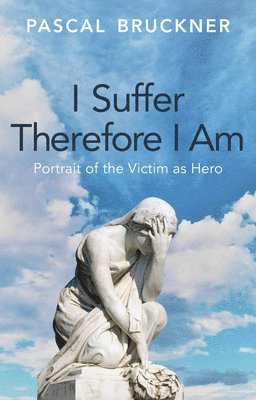
    I Suffer Therefore I Am

    Portrait of the Victim as Hero

    AvPascal Bruckner

    Inbunden, Engelska, 2025

    Del i serien Polity Press

    217 kr

    Beställningsvara. Skickas inom 5-8 vardagar. Fri frakt över 249 kr.

    Fler format och utgåvor

    E-bok

    396 kr

    Beskrivning

    In the West today, suffering has become a new sacred cow.  Once a common feature of the human condition, it is now a special trait you can use to impress your contemporaries.  It provides you with a borrowed identity, transforming you into an exceptional being who can show off on the public stage at little cost. Everyone flaunts their certificate of affliction, positioning themselves above their peers. Even those who are well-off and powerful seek to find a place in the aristocracy of the margins, creating new castes of the dispossessed at the expense of the truly unfortunate. Infused with bitterness, this cult of the victim glorifies the martyr figure and feeds into the passions of revenge and resentment.  This is the message of our age: we are all victims and entitled to feel sorry for ourselves. The submissive humanity of Christianity and the arrogant humanity of modernity have now been replaced by a victimized humanity allergic to distress.  Pampered, coddled, raised in fear and sensitivity, how will younger generations be able to confront the chaotic world that awaits them, marked by war, violence, terrorism and climate chaos?  Who will teach them the courage to endure, to face setbacks head-on, without faltering in the face of misfortune?

    Produktinformation

    • Utgivningsdatum:2025-09-12
    • Mått:140 x 216 x 31 mm
    • Vikt:454 g
    • Format:Inbunden
    • Språk:Engelska
    • Serie:Polity Press
    • Antal sidor:272
    • Förlag:Polity Press
    • ISBN:9781509567164
    • Översättare:Stephen Muecke

    Utforska kategorier

    • Filosofiska discipliner inom Filosofi och religion

    Mer om författaren

    Pascal Bruckner is the bestselling author of many books including The Tyranny of Guilt, Perpetual Euphoria and The Fanaticism of the Apocalyse.

    Recensioner i media

    "Pascal Bruckner is a singular prose stylist and 'moralist' par excellence: the heir to a venerable French literary tradition that was honed during the grand siècle by La Rochefoucauld and La Bruyère and emulated by Nietzsche in Human, All Too Human (1878). In an age of obligatory groupthink, Bruckner's talents as a witty expositor of human folly have become invaluable. I Suffer Therefore I Am exemplifies Bruckner at his very best!"Richard Wolin, Graduate Centre, City University of New York"Reparations, Bruckner explains, have replaced redemption in our secularized world. To demonstrate this claim, Bruckner brings to bear a formidable arsenal of fascinating examples from contemporary life – political, cultural, social, and psychological – to make the point, quite forcefully in fact. Some examples are troubling, others so ludicrous as to make the reader literally laugh out loud. An important, erudite book." Richard J. Golsan, Texas A&M University"Masterful"Simon Heffer, The Daily Telegraph"A merciless analysis of the self-proclaimed victims of our time, all those who make it a life project to expose their suffering with sighs and groans - with professional methods on the public stage."NY TID"Bracing, erudite and stark"Spiked"Bruckner's contention that we are living in a pantheon of victimhood, and that interest groups co-opt the Holocaust for their own ends, is clearly right. This is a form of emotional terrorism, whose perpetrators feel entitled to invert normal rules of morality."The Critic"Self-pity, blubbering, complaints: a French philosopher argues that suffering has become too powerful a force in Western culture, and such masochism, based on ersatz guilt, will be our ruin... Read him and, whatever you do, don't weep."The Greatest Books of 2025, The Telegraph

    Innehållsförteckning

    • Prologue: An inverted PantheonIntroduction: Thucydides and Jesus ChristPART ONE: FACING MISFORTUNEChapter 1: ‘One day all will be well, so runs our hope’Chapter 2. All kinds of awfulChapter 3. Suffering produces lawsChapter 4. The one-upmanship of martyrdomPART TWO: VICTIMIST COMPETITIONChapter 5. The thieves of sufferingChapter 6. Putin, or the petty civil servant of crimeChapter 7. Towards a generalised ‘gynocide’?Chapter 8. Decolonise the decolonisers?PART THREE: HOW CAN WE LIVE WITH OUR WOUNDS?Chapter 9. Barbarity as a cover-up?Chapter 10: Healing the past?Chapter 11. The hero, an ambiguous antithesisChapter 12. Is this how men live? (Louis Aragon)ConclusionNotes