• Fri frakt över 249 kr
  • •
  • Snabba leveranser
  • •
  • Billiga böcker
Kundservice

Du är på sajten för privatpersoner.

Företag, bibliotek eller offentlig verksamhet?

Du handlar på classic.bokus.com, där alla dina funktioner finns intakta.
Till classic.bokus.com
Bokus logotyp. Gå till startsidan.
  • Erbjudanden
  • Nyheter
  • Student
  • Topplistor
  • Barn & ungdom
  • Bokus Play
  • E-böcker
  • Pocketböcker
  • Spel & pussel

10% rabatt på allt med kod: NYSTART10 →

Sidfot

Mina sidor

    Hjälp

    • Kundservice
    • Vanliga frågor och svar
    • Frakt och leverans
    • Retur vid ångerrätt
    • Reklamera vara
    • Betalning
    • Köpvillkor
    • Allmänna villkor
    • Information om webbplatsens tillgänglighet

    Om Bokus

    • Om oss
    • Pressrum
    • För studenter
    • För företag
    • För bibliotek och offentlig verksamhet
    • För leverantörer
    • Hållbarhet

    Populärt

    • Aktuella erbjudanden
    • Presentkort
    • Studentlitteratur
    • Nya böcker
    • Topplistor
    • Signerade böcker
    • Engelska böcker

    Inspiration

    • Boktips
    • BookTok
    • Populära bokserier
    • Barnbokskaraktärer
    • Populära författare
    Logotyp för Bokus
    Följ oss på Facebook (extern länk)Följ oss på Instagram (extern länk)Följ oss på YouTube (extern länk)Följ oss på TikTok (extern länk)
    bokus @ CookiesAnpassa cookiesIntegritetspolicyKöpvillkor
    Till Citymail hemsida (extern länk)Till Budbee hemsida (extern länk)Till Postnord hemsida (extern länk)Till Schenker hemsida (extern länk)Till Early Bird hemsida (extern länk)Till Walleys hemsida (extern länk)
    1. Samhälle och politik
    2. Sociologi och antropologi
    3. Antropologi

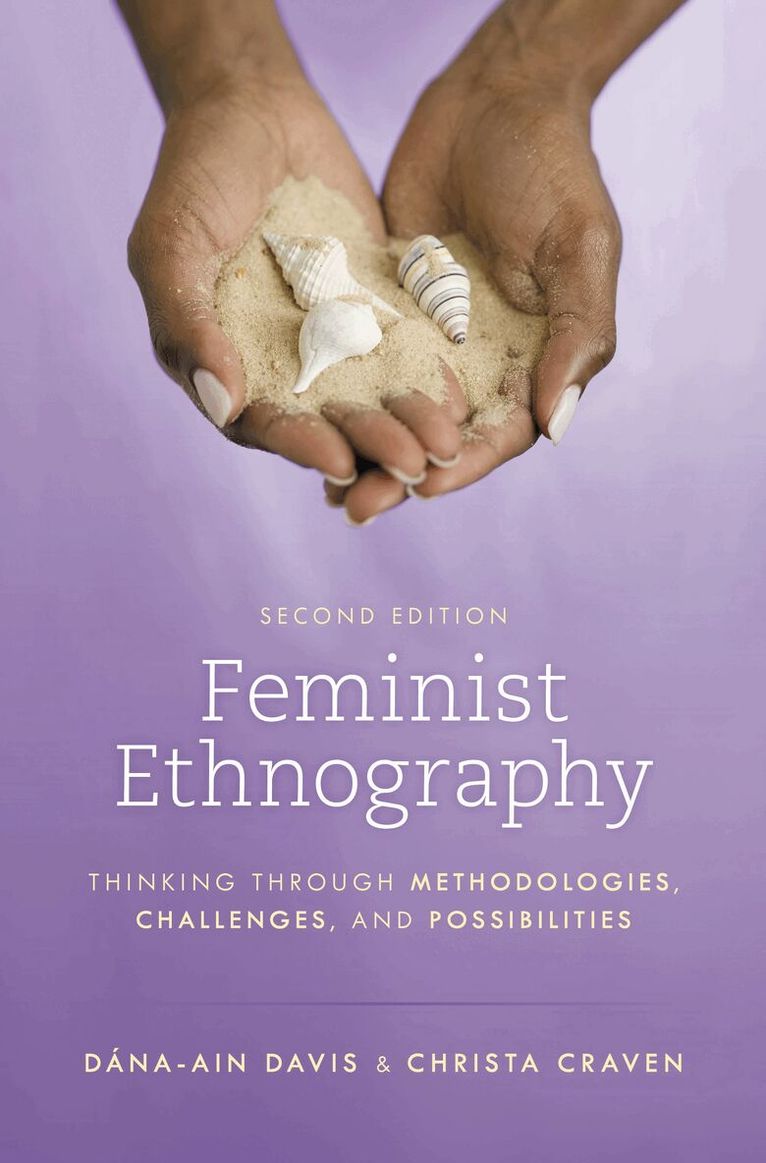
    Feminist Ethnography

    Thinking through Methodologies, Challenges, and Possibilities

    AvDána-Ain Davis,Christa Craven

    Häftad, Nederländska, 2022

    506 kr

    Beställningsvara. Skickas inom 10-15 vardagar. Fri frakt över 249 kr.

    Fler format och utgåvor

    Inbunden

    1 117 kr

    Beskrivning

    Feminist Ethnography, Second Edition, is an interdisciplinary and cross-cultural introduction to the methods, challenges, and possibilities of feminist ethnography. Dána-Ain Davis and Christa Craven use a problem-based approach—focused on inquiry and investigation—to present a feminist framework for thinking critically about how we document everyday experiences. The book begins with an introduction to feminist perspectives, their meanings over time, and a brief history of feminist ethnography. Then the authors examine feminist methodologies, answering the question, how does one do feminist ethnography, and investigates common challenges such as ethical dilemmas and logistical constraints faced during fieldwork. Finally, Davis and Craven discuss what it means to be a feminist activist ethnographer, including advocacy efforts and engagement with public policy, and ask students to consider: what is your vision for the future of feminist ethnography? New to this Edition:Six new interviews with feminist ethnographers include reflections on the intersections of trans studies, disability studies, and the Cite Black Women movementNew section on safety, accessibility, and fieldwork to address the risks all ethnographers face, but in particular those who challenge long-held assumptions that ethnographers are (all) white, Western, able-bodied, well-funded, cisgender, and usually male Enhanced discussion of virtual ethnography in the wake of COVID-19Added content on transgender/nonbinary experiences and disability studies

    Produktinformation

    • Utgivningsdatum:2022-02-28
    • Mått:179 x 256 x 17 mm
    • Vikt:562 g
    • Format:Häftad
    • Språk:Nederländska
    • Antal sidor:272
    • Upplaga:2
    • Förlag:Bloomsbury Publishing Plc
    • ISBN:9781538129807

    Utforska kategorier

    • Antropologi inom Samhälle och politik
    • Genusvetenskap inom Samhälle och politik

    Mer om författaren

    Dána-Ain Davis is professor of urban studies and anthropology at Queens College and Graduate Center, City University of New York, and directs the Center for the Study of Women and Society at the Graduate Center.Christa Craven is a professor of anthropology and women’s, gender, and sexuality studies at the College of Wooster, and currently serves as Dean for Faculty Development.

    Recensioner i media

    I was so excited when the 1st edition of Feminist Ethnography was released that I created a Feminist Ethnography course at Spelman College that I have now taught four times since Spring 2016. Every semester, my students are incredibly enthusiastic about the book. They were very engaged with the material and inspired by the careful attention that the authors paid to ethical dilemmas and the role of activism in research. I am even more excited to teach the second edition of Feminist Ethnography, which includes more of a focus on social media, digital humanities, and a reflection on current social movements and struggles, and cites the latest cutting-edge scholarship in feminist ethnography. This text is a guidebook, a blueprint, and perhaps even a "Bible" for students and scholars who seek to do engaged, activist-oriented, feminist ethnographic research that will make a difference in the world.

    Innehållsförteckning

    • Acknowledgments xiii Preface to the Second Edition xv About the Authors xix Timeline xxi Introduction 1 Thinking Through This Text 3 Unique Features of This Book 4 1 What Is the “Feminist” in Feminist Ethnography? 7 Spotlight: Zenzele Isoke on Feminist Concepts 8 What Is Feminist Ethnography? 9 Spotlight: Dyese Osaze on Meaningful Ethnography 12 Essential: Commentary on Doing Feminist Ethnography by Rosemarie A. Roberts 13 Spotlight: Scott L. Morgensen on the Influence of Feminist Ethnography 15 What Contributed to the History of Feminisms? 15 Reconsidering “The Waves” 15 The Time of Suffrage 17 Essential: A Portion of the Seneca Falls Declaration of Sentiments, July 19, 1848 17 Radical Movement Building 19 Expanding a Feminist Legacy 22 Thinking Through . . . Foremothers of Feminism 23 How Are Feminist Perspectives Categorized? 24 Spotlight: Gayle Rubin’s Influence 26 Essential: Excerpt from the Combahee River Collective Statement 28 Essential: Excerpt from “Under Western Eyes Revisited” by Chandra Talpade Mohanty 30 Thinking Through . . . Feminisms 31 Conclusion 31 Thinking Through . . . Feminist Perspectives and Key Texts 322 Historicizing Feminist Ethnography 35 Who Were Some of the Early Contributors to Feminist Ethnography? 36 Essential: Excerpt from The Omaha Tribe by Alice Fletcher and Francis LaFlesche 37How Did Feminist Ethnography Mature between the 1920s and 1960s? 40Essential: Excerpt from Mules and Men by Zora Neale Hurston 41What Impact Did the Women’s Movement of the 1960s Have on the Next Phase of Feminist Ethnographic Production? (1960s–1980s) 42Thinking Through . . . Restudying Culture 43Spotlight: Florence Babb on the Impact of Woman, Culture, and Society and Toward an Anthropology of Women 44Essential: Excerpt from “Too Queer for College” by Esther Newton 46Spotlight: Louise Lamphere on the Legacy of Lamphere v. Brown 48Thinking Through . . . Faculty Composition at Your Institution 50What Interventions Came Out of Feminist Ethnography from the 1990s Through the Present? 50Essential: Excerpt from “Methodological Gifts in Latina/o Studies and Feminist Anthropology” by Gina Pérez 52Spotlight: C. Riley Snorton on Feminist Anthropology and Trans Studies 55Spotlight: Lee Baker on Feminist Histories 57Conclusion 58Thinking Through . . . Critiques and Reviews of an Ethnography 583 Debates and Interventions in Feminist Ethnography 61Who Should Be Claimed as a Feminist Ethnographer? 62Essential: Excerpt from Decolonizing Methodologies: Research and Indigenous Peoples by Linda Tuhiwai Smith 63Can There Be a Feminist Ethnography? 64Essential: Excerpt from “Can There Be a Feminist Ethnography?” by Judith Stacey 65Essential: Excerpt from Feminism and Method by Nancy A. Naples 68How Have Feminist Ethnographers Approached the Insider/Outsider Dilemma? 69Essential: Excerpt from “Feminist Insider Dilemmas” by Patricia Zavella 70Spotlight: Shannon Speed on Fieldwork and Identity 72What Is the Role of Citational Politics in Feminist Ethnography? 75Spotlight / Essential: Christen A. Smith on Citing Black Women 76Essential: Excerpt from “Making Feminist Points,” on the feministkilljoys Blog by Sara Ahmed 80Thinking Through . . . An Intellectual Genealogy 81Can an Ethnographer’s Personal Experience Be a Part of a Study? 81Spotlight: Laura Mauldin on the Impact of Life Experiences 82How Involved or Engaged Should a Feminist Ethnographer Be? 84 Spotlight: Brenna McCaffrey on the Political Stakes of Feminist Ethnography 85Spotlight: Mary L. Gray on the Labor of Feminist Ethnography 86Conclusion 88Thinking Through . . . What Would a Feminist Ethnographer Do? 884 How Does One Do Feminist Ethnography? 91Essential: Excerpt from “Feminist Methodology . . .” by Faye V. Harrison 92How Should a Feminist Ethnographer Choose a Topic? 94Spotlight: Elisabeth Engebretsen on Choosing Methods and Shifting Knowledge 95What Methods Have Been Useful to Feminist Ethnographers? 97Participant-Observation 98Essential: Excerpt from Queer Activism in India by Naisargi Dave 99Ethnographic Interviewing 100Spotlight: Class of 2021 Undergraduates on Fieldwork during a Pandemic 102Oral History/Life History 106Spotlight: Tracy Fisher on Using Oral/Life History to Address Feminist Ethnographic Questions 106Survey 108Analysis of Cultural Material 109Social Media Research 110Ethnohistory 113Spotlight: Whitney Battle-Baptiste on Historical Archaeology and Literary Fiction 114Participatory Research 115Essential: Excerpt from “Photovoice” by Caroline C. Wang and Mary Ann Burris 116Interpretive Communities 118Conclusion 119Thinking Through . . . Three Options to Explore Methodological Possibilities 120Thinking Through . . . Word Cloud Magic! 1205 Challenges for Feminist Ethnographers 123Spotlight: Elizabeth Chin on Envisioning a Feminist IRB Process 125What Logistical Constraints Arise in Feminist Ethnographic Research? 126Essential: Excerpt from “Following as Method” in Mobile Subjects: Transnational Imaginaries of Gender Reassignment by Aren Z. Aizura 128Essential: Excerpt from “Cast among Outcastes” by Delores Walters 131Essential: Excerpt from “Toward a Fugitive Anthropology: Gender, Race, and Violence in the Field,” by Maya J. Berry, Claudia Chávez Argüelles, Shanya Cordis, Sarah Ihmoud, Elizabeth Velásquez Estrada 134 How Do Ethical Concerns Shape the Research Encounter? 136Thinking Through . . . Difficult Ethnographic Experiences 137Spotlight: Loretta J. Ross on Working with Former Skinhead White Supremacists 138Spotlight: Tanya Erzen on the Politics of Reciprocity and Mediation 141How Can We Assess the (Potential) Impacts of Feminist Ethnography? 144Spotlight: Kiersten Downs on “Feminist Curiosity” and Stamina 144Spotlight: Sandra Morgen on Movement Building 146Thinking Through . . . Ethical Dilemmas 148Conclusion 1486 Producing Feminist Ethnography 151How Does One Write Feminist Ethnography? 152Essential: Excerpt from Alive in the Writing by Kirin Narayan 156Essential: Excerpt from Progressive Dystopia: Abolition, Antiblackness and Schooling in San Francisco by Savannah Shange 157Essential: Excerpt from Playing with Fire by the Sangtin Writers Collective and Richa Nagar 160What Creative Possibilities Exist for Writing and Circulating Feminist Ethnography? 161Spotlight: Asale Angel-Ajani on Writing (Without Swagger) 162Fiction 163Essential: Excerpt from A World of Babies by Judy DeLoache and Alma Gottlieb 164Parallel Writing 165Autoethnography and Ethnographic Memoir 166Essential: Excerpt from Downtown Ladies, “My Jelly Platform Shoes” by Gina Athena Ulysse 167Thinking Through . . . Citational Politics, Revisited in the Age of #MeToo 170How Can We Make Feminist Ethnography Publicly Accessible? 170Spotlight: Harjant Gill on Film as a Powerful Feminist Medium 172How Do Feminist Ethnographers Engage in Creative and Artistic Projects? 175Thinking Through . . . Experimental Design 176Conclusion 177Thinking Through . . . Developing Creative Ethnography 1787 Feminist Activist Ethnography 181What Does It Mean to Be a Feminist Activist Ethnographer? 183Thinking Through . . . Engaging in Public Scholarship 185 What Should Feminist Activist Ethnography Seek to Accomplish? 185Essential: Excerpt from “Water Is Life—Meters Out!” by Susan Brin Hyatt 186Is Feminist Ethnography Inherently Activist? 187What Forms Can Feminist Activist Ethnography Take? 189Essential: Excerpt from Black Autonomy: Race, Gender, and Afro-Nicaraguan Activism by Jennifer Goett 190Collaboration and Participatory Action Research 190Essential: Excerpt from “Makes Me Mad! Stereotypes of Young Urban Womyn of Color” by the Fed Up Honeys 191Social Media and Film 194Spotlight: Tom Boellstorff on New Technologies and Activism 194Thinking Through . . . Working with Activists 196Spotlight: Michelle Téllez on Activism Through Storytelling in Visual Media 196Serving as an Interlocutor 197Essential: Excerpt from “Introduction: Comparative Perspectives on the Indigenous Rights Movement in Africa and the Americas” by Dorothy Hodgson 198How Can Feminist Activist Ethnographers Reflect upon Our Practice? 199Spotlight: Leith Mullings on Keeping Feminist Ethnography Meaningful 201Conclusion 2018 Thinking Through the Futures of Feminist Ethnography 205Glossary 209Bibliography 213Index 231