• Fri frakt över 249 kr
  • •
  • Snabba leveranser
  • •
  • Billiga böcker
Kundservice

Du är på sajten för privatpersoner.

Företag, bibliotek eller offentlig verksamhet?

Du handlar på classic.bokus.com, där alla dina funktioner finns intakta.
Till classic.bokus.com
Bokus logotyp. Gå till startsidan.
  • Erbjudanden
  • Nyheter
  • Student
  • Topplistor
  • Barn & ungdom
  • Bokus Play
  • E-böcker
  • Pocketböcker
  • Spel & pussel

10% rabatt på allt med kod: NYSTART10 →

Sidfot

Mina sidor

    Hjälp

    • Kundservice
    • Vanliga frågor och svar
    • Frakt och leverans
    • Retur vid ångerrätt
    • Reklamera vara
    • Betalning
    • Köpvillkor
    • Allmänna villkor
    • Information om webbplatsens tillgänglighet

    Om Bokus

    • Om oss
    • Pressrum
    • För studenter
    • För företag
    • För bibliotek och offentlig verksamhet
    • För leverantörer
    • Hållbarhet

    Populärt

    • Aktuella erbjudanden
    • Presentkort
    • Studentlitteratur
    • Nya böcker
    • Topplistor
    • Signerade böcker
    • Engelska böcker

    Inspiration

    • Boktips
    • BookTok
    • Populära bokserier
    • Barnbokskaraktärer
    • Populära författare
    Logotyp för Bokus
    Följ oss på Facebook (extern länk)Följ oss på Instagram (extern länk)Följ oss på YouTube (extern länk)Följ oss på TikTok (extern länk)
    bokus @ CookiesAnpassa cookiesIntegritetspolicyKöpvillkor
    Till Citymail hemsida (extern länk)Till Budbee hemsida (extern länk)Till Postnord hemsida (extern länk)Till Schenker hemsida (extern länk)Till Early Bird hemsida (extern länk)Till Walleys hemsida (extern länk)
    1. Samhälle och politik
    2. Samhälle och kultur
    3. Kultur och medier
    4. Medievetenskap

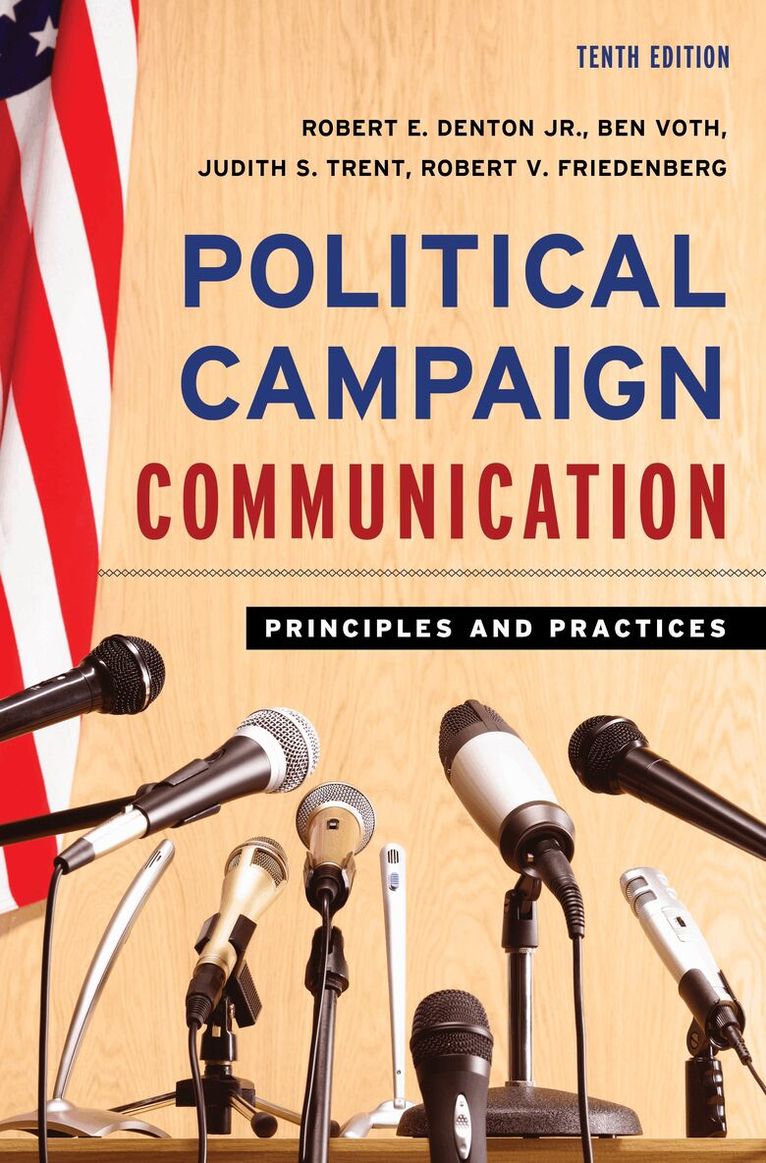
    Political Campaign Communication

    Principles and Practices

    AvRobert E. Denton Jr.,Ben Voth

    Häftad, Engelska, 2023

    Del i serien Communication, Media, and Politics

    701 kr

    Beställningsvara. Skickas inom 10-15 vardagar. Fri frakt över 249 kr.

    Fler format och utgåvor

    Inbunden

    1 395 kr

    E-bok

    755 kr

    Beskrivning

    The tenth edition of Political Campaign Communication: Principles and Practices provides a clear and thorough survey of the strategic decisions vital to the success of contemporary political campaigns. The authors draw on a host of examples involving political campaigns at local, statewide, and national levels to illustrate all aspects of campaign communication, from forms of public address to buttons, yard-signs, and billboards, to traditional media and the use of internet and social media platforms. Throughout the volume they draw on communication theories to clearly explain contemporary political campaign practices.Updated to reflect the most recent practices and events from the 2020 presidential campaign, the book also considers journalistic practices and ethical considerations of today. Features of the tenth edition:Includes examples and data from the 2020 election cycleUpdated and expanded discussion of social media platforms and practicesIncreased art and graphics program to engage students and increase information retentionExpanded discussion of the history, practice, and state of journalism todayNew chapter on local elections and offices

    Produktinformation

    • Utgivningsdatum:2023-11-20
    • Mått:180 x 255 x 36 mm
    • Vikt:839 g
    • Format:Häftad
    • Språk:Engelska
    • Serie:Communication, Media, and Politics
    • Antal sidor:494
    • Upplaga:10
    • Förlag:Bloomsbury Publishing Plc
    • ISBN:9781538171448

    Utforska kategorier

    • Medievetenskap inom Samhälle och politik
    • Referensverk och tvärvetenskap inom Samhälle och politik
    • Politisk aktivism inom Samhälle och politik

    Mer om författaren

    Robert E. Denton Jr. holds the W. Thomas Rice Chair of Leadership Studies in the Pamplin College of Business and is professor in the Department of Communication at Virginia Tech. He has degrees in political science and communication from Wake Forest University and Purdue University. In addition to numerous articles, essays, and book chapters, he is author, coauthor, or editor of thirty books, several in multiple editions. Ben Voth is professor of rhetoric and director of speech and debate at the SMU Dedman College of Humanities and Sciences. He is author of Rwanda Rising: Debate as an Empowering International Pedagogy and the Rhetoric of Genocide: Death as a Text, as well as co-author with Robert E. Denton of Social Fragmentation and the Decline of American Democracy: The End of the Social Contract.Judith S. Trent was Professor Emerita of Communication at the University of Cincinnati. She was the author of numerous books, book chapters, and journal articles. She wrote and spoke widely on the subject of political campaign communication and was a frequent commentator and analyst on political campaigns and candidates for the ABC, NBC, and CBS television affiliates in Cincinnati, as well as Ohio/Cincinnati newspapers. Robert V. Friedenberg is Professor Emeritus of Communication at Miami (Ohio) University. He is the author of numerous books, book chapters, and articles. He has served as a communication consultant for the Republican National Committee and has been involved in more than seventy political campaigns.

    Recensioner i media

    Political Campaign Communication has been my go-to book every semester I have taught Political Communication. The way the book treats political discourse by genres enables the professor to focus each unit on both form/style and content such as themes and strategies. Kudos to the authors on this new and improved edition!

    Innehållsförteckning

    • Preface1 The Campaign Communications LandscapeImportance of Political CampaignsChanges in the Political CampaignDecline of Political PartiesFinance ReformsPolitical Action CommitteesTechnologyCommunication and Political CampaignsEssential Elements of Political CampaignsOrganization and Preview of Chapters2 Communicative Functions of CampaignsFirst Political Stage: SurfacingDemonstrating Fitness for OfficeInitiating Political RitualsLearning about a CandidateDeveloping Voter Expectations of a Candidate’s StyleDetermining Main Campaign IdeasSelecting Serious ContendersEstablishing Candidate-Media RelationshipsSecond Political Stage: PrimariesA Source of Feedback for the CandidatesA Source of Information for VotersCitizen Involvement in the Political PressPromises Made in Personalized SettingsDetermination of the True Front-RunnersThird Political Stage: Nominating ConventionsThe Evolution of Change of Political ConventionsReaffirming and Legitimizing the Electoral ProcessLegitimizing the Party NomineesDemonstrating Party UnityIntroducing the Candidate’s Campaign Themes and IssuesFourth Political Stage: The General ElectionGaining InformationLegitimizing the Political SystemMeeting Campaign ExpectationsThe Fifth Political Stage: Post ElectionConclusions3 Communicative Styles and Strategies of CampaignsPreliminary ConsiderationsStyleImage and Campaign StyleTechnology and Campaign StyleStyles and Strategies of CampaignsIncumbency StyleSymbolic StrategiesSymbolic Strategies of the OfficeLegitimacy of the OfficeCompetency and the OfficeCharisma and the OfficePragmatic StrategiesCreating PseudoeventsMaking Appointments to Jobs and CommitteesCreating Special Task ForcesAppropriating Funds/GrantsConsulting with World LeadersManipulating Important Domestic IssuesReceiving Endorsements from Other LeadersEmphasizing AccomplishmentsCreating an Image of Being Above the Political TrenchesInterpreting or Intensifying Foreign Policy Problems into International CrisesSummaryDisadvantages to Incumbency CampaigningChallenger StyleAttacking the RecordTaking the Offensive Position on IssuesCalling for a ChangeEmphasizing Optimism for the FutureTaking the Offensive Position on IssuesCalling for a ChangeEmphasizing Optimism for the FutureSpeaking to Traditional ValuesAppearing to Represent the Philosophical CenterDelegating Personal or Harsh AttacksSummaryIncumbent/Challenger: A Merger of StylesConclusions4 Communicative Mass Channels of CampaignsEarly StudiesEarly American Adaptation of Public Relations and PropagandaHypodermic EffectLimited Effects or the Social Influence ModelContemporary StudiesDiffusion of InformationUses and GratificationsElaboration LikelihoodAgenda-Setting HypothesisReconceptualization of the Classics21st Century Mass Channels of Political CampaignConclusions5 Communicative Types and Functions of Televised Campaign AdvertisingHistorical DevelopmentUnderstanding Theory and Praxis Regarding Televisual Attack and DefenseAds Extolling the Candidate’s VirtuesAds Condemning/Attacking/Questioning the OpponentAds Responding the Attacks or InnuendosFinal Questions: How Effective Is Television Advertising and Do Televised Attack Ads Work?Does Money Equate to Effectiveness in Advertising?Televised Comedy as Political AdvertisingConclusions6 Ethical Considerations of Campaign CommunicationAge of Citizen Mistrust, Polarization, and CynicismA “Philosophy” of Political Campaign EthicsCampaigns and EthicsEthical PivotsAreas of Ethical Concerns in Political Campaign CommunicationNews Media and JournalismPolitical AdvertisingRejecting the False Model of Political Campaign Ethics: AlinskyToward a Model of Political Campaign Communication EthicsConclusions7 Public Speaking in CampaignsThe Decision to SpeakAudiencesMessagesCompetency and FormatCampaign MessagesIncumbent/Challenger StrategiesThe SpeechNeed and JustificationStock Speeches: Utilizing Speech ModulesSpeech-Like Opportunities and Modular SpeechSpeaking Style: Extemporaneous or PreparedStock Speeches: The Basic Stump SpeechStock Speeches: The “Why I am Running” SpeechPolitical SpeechwritingJustification and Implications of Political SpeechwritingJob DemandsSpeechwriting TeamsMethods of Political SpeechwritingSurrogate SpeakersSelection of SurrogatesBenefits of SurrogatesViral Speech VideosConclusions8 Recurring Forms of Political CommunicationAnnouncement SpeechesPreannouncement SituationPurpose of AddressStrategies of AddressAcceptance AddressesSituation during AddressPurpose of AddressStrategies of AddressUsing Simplified Partisan StatementsLamenting the Present while Celebrating the FutureStressing the Crucial Nature of the ElectionCalling for UnityUsing BiographyUsing Biography to Go NegativeSummaryNews ConferencesSituation for News ConferencesPurposes of News ConferencesStrategies of News ConferencesApologiasSituation for an ApologiaPurposes of ApologiaStrategies of ApologiaControl of the Apologia SettingDenialBolsteringDifferentiationTranscendental StrategyConfessionSummaryConclusions9 Debates in CampaignsHistory of Political DebatesDeciding Whether to DebatePolitical Debate StrategiesPre-Debate StrategiesLowering Public ExpectationsDetermining the Target AudienceDevising and Rehearsing Possible AnswersDetermining the Target AudienceDevising and Rehearsing Possible AnswersDebate StrategiesRelating Issues to an Overall ThemeDeveloping an ImagePost-Debate StrategiesOffering a Large, Well-Coordinated Surrogate EffortUsing Ads to Underscore Debate ThemesUsing Audience Members to Project a Positive ViewEffects of Political DebatesIncreased AudiencesReinforce Audience OpinionsShift Limited Numbers of VotersHelp Set Voters’ AgendaIncrease the Voter’s Knowledge of IssuesModify Candidate ImagesBuild Confidence in U.S. DemocracySuggestions for Improving Presidential DebatesConclusions10 Interpersonal Communication in CampaignsInterpersonal Communication between Candidate and VotersMicro-targetingSpecial EventsPublic AppearancesDinnersCoffees and ReceptionsDoor-to-Door CanvassesPhone BanksThe InternetInterpersonal Communication between the Candidate and Prospective Financial ContributorsThe Importance of Individual ContributorsThe Role of AttractionInterpersonal Communication between VotersImportanceDiscussion TopicsInterpersonal Communication among Voters, Mass Media, and Voting BehaviorInterpersonal Communication and Getting-Out-the-Vote EffortsBehavioral Characteristics of Successful Interpersonal CampaignersConclusions11 Advertising in CampaignsDeveloping a Master Plan for Political AdvertisingBasic Considerations in the Selection of Political Advertising MediaDirect MailTelephone Contact ServicesRadioTelevisionThe InternetMaking Television AdsTargeting of Television AdsCampaign Advertising Strategies Media Concentration and Media DispersionContinuity Scheduling, Flight Scheduling, and Pulse SchedulingThe Spurt StrategyThe Fast Finish StrategyThe Really Big Show StrategyThe Cruise Control StrategyMedia and Other Types of Political ConsultantsHistory of Political ConsultingFunctions of Political ConsultantsWritersSpeech CoachesDirect Mail SpecialistsConclusions12 The Internet and Social Media in CampaignsHistorical Overview of Campaigns and New Communication TechnologiesSocial Media in CampaignsSocial Media and Digital StrategiesBlogsEmailMobile DevicesText MessagingWeb 2.0Social MediaFacebookYouTubeMySpaceTwitterPinterestTumblrRedditSnapchatInstagramTikTokChatGPTConclusions13 Journalism and Fake News in CampaignsThe Transition of American JournalismSources of Political NewsTrust in NewsHow Media Cover Presidential CampaignsThe Path to Fake News and MisinformationEffects of Fake News and MisinformationIdentifying Fake News and MisinformationConclusions14 Campaigning for Local Elections and OfficesEarly ConsiderationsCampaign OrganizationCampaign PlanCampaign MessagingSlogansCampaign ColorsLogoIssuesOpposition ResearchMedia and TacticsAnnouncing CandidacyCandidate Coffees and ReceptionsTrinketsYard SignsLettersFlyers and HandoutsDoor to Door/Neighborhood WalksLiterature DropsDebatesMedia CoverageNews ReleasesNews ConferencesLetters to the EditorEditorial BoardsDirect MailBroadcast MediaInternet/WebConclusionsIndexAbout the Authors