• Fri frakt över 249 kr
  • •
  • Snabba leveranser
  • •
  • Billiga böcker
Kundservice

Du är på sajten för privatpersoner.

Företag, bibliotek eller offentlig verksamhet?

Du handlar på classic.bokus.com, där alla dina funktioner finns intakta.
Till classic.bokus.com
Bokus logotyp. Gå till startsidan.
  • Erbjudanden
  • Nyheter
  • Student
  • Topplistor
  • Barn & ungdom
  • Bokus Play
  • E-böcker
  • Pocketböcker
  • Spel & pussel

10% rabatt på allt med kod: NYSTART10 →

Sidfot

Mina sidor

    Hjälp

    • Kundservice
    • Vanliga frågor och svar
    • Frakt och leverans
    • Retur vid ångerrätt
    • Reklamera vara
    • Betalning
    • Köpvillkor
    • Allmänna villkor
    • Information om webbplatsens tillgänglighet

    Om Bokus

    • Om oss
    • Pressrum
    • För studenter
    • För företag
    • För bibliotek och offentlig verksamhet
    • För leverantörer
    • Hållbarhet

    Populärt

    • Aktuella erbjudanden
    • Presentkort
    • Studentlitteratur
    • Nya böcker
    • Topplistor
    • Signerade böcker
    • Engelska böcker

    Inspiration

    • Boktips
    • BookTok
    • Populära bokserier
    • Barnbokskaraktärer
    • Populära författare
    Logotyp för Bokus
    Följ oss på Facebook (extern länk)Följ oss på Instagram (extern länk)Följ oss på YouTube (extern länk)Följ oss på TikTok (extern länk)
    bokus @ CookiesAnpassa cookiesIntegritetspolicyKöpvillkor
    Till Citymail hemsida (extern länk)Till Budbee hemsida (extern länk)Till Postnord hemsida (extern länk)Till Schenker hemsida (extern länk)Till Early Bird hemsida (extern länk)Till Walleys hemsida (extern länk)
    1. Samhälle och politik
    2. Politik och statsskick
    3. Politiska partier

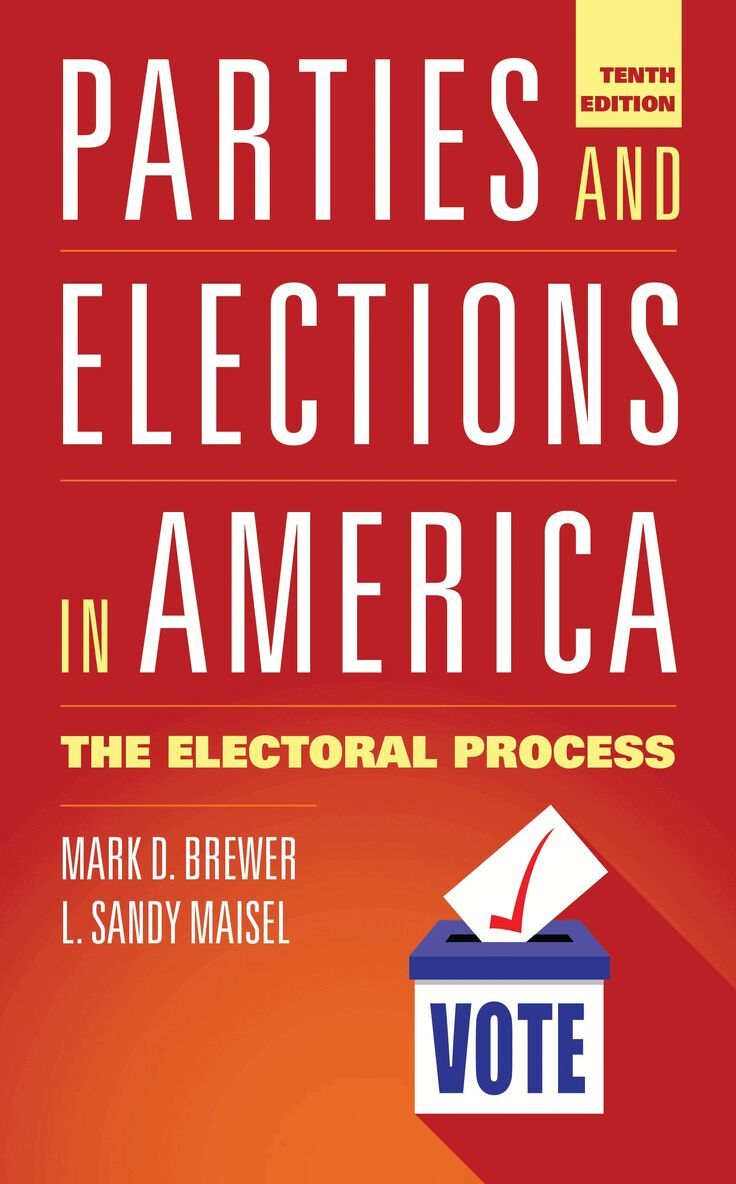
    Parties and Elections in America

    The Electoral Process

    AvMark D. Brewer,L. Sandy Maisel

    Häftad, Engelska, 2024

    Del i serien Rowman & Littlefield Publishers

    839 kr

    Beställningsvara. Skickas inom 10-15 vardagar. Fri frakt över 249 kr.

    Fler format och utgåvor

    Inbunden

    1 533 kr

    E-bok

    906 kr

    Beskrivning

    The 10th edition of this classic text introduces students to political parties and their critical role in representative democracy at the local, state, and national levels. Students will engage in fully up-to-date discussion of changes to presidential campaigns and elections, the ever-evolving world of campaign finance, rapidly changing media environment and much more. In addition, Parties and Elections in America reflects the authors’ continuing emphasis on the foundations of our modern political system by providing historical context throughout the text. The new edition fully incorporates the 2020 and 2022 election cycles as well as the initial run-up to the 2024 election.

    Produktinformation

    • Utgivningsdatum:2024-07-10
    • Mått:152 x 229 x 52 mm
    • Vikt:689 g
    • Format:Häftad
    • Språk:Engelska
    • Serie:Rowman & Littlefield Publishers
    • Antal sidor:510
    • Upplaga:10
    • Förlag:Bloomsbury Publishing Plc
    • ISBN:9781538188811

    Utforska kategorier

    • Politiska partier inom Samhälle och politik
    • Politisk aktivism inom Samhälle och politik
    • Val och folkomröstningar inom Samhälle och politik

    Mer om författaren

    Mark D. Brewer is professor of political science at the University of Maine.L. Sandy Maisel is the Goldfarb Family Distinguished Professor of American Government, Emeritus, at Colby College.

    Innehållsförteckning

    • List of Figures and TablesAbout the AuthorsPrefaceAcknowledgmentsChapter One: Elections and Political PartiesAn Examination of Elections in the United StatesThe Role of Elections in Democratic TheoryModes of ElectionsImplications for RepresentationDefinitions of “Political Party” and “Party Systems”ConclusionCritical Thinking Questions | Key TermsChapter Two: American Political Parties and Party OrganizationThe Development of American Political PartiesThe First Party SystemThe Second Party SystemThe Third Party SystemThe Fourth Party SystemThe Fifth Party SystemA Sixth Party System—Yes, But Defined How?The Modern Party OrganizationLocal and County OrganizationsState Party OrganizationsParty Organization at the National LevelCritical Thinking Questions | Key TermsChapter Three: Voting and Other Forms of Political ParticipationWho Votes; Who Doesn’tExpansion of the FranchiseDecline in Voter ParticipationVoters in Presidential ElectionsModels of Voting Behavior: The American VoterCritics of the American Voter ModelPresidential Voting ReviewedVoters in Congressional, Senatorial, and State and Local ElectionsVoting Behavior Theory RevisitedVoting in the Real WorldCritical Thinking Questions | Key TermsChapter Four: Organized Groups in the Political ProcessOrganized Groups in American PoliticsPolitical and Nonpolitical AssociationsPolitically Active GroupsElectoral Activities of Organized GroupsWorking within the PartyGroup RatingsPolitical Action CommitteesInterest Groups’ Influence on their MembersCritical Thinking Questions | Key TermsChapter Five: Campaign FinanceThe Long History of Campaign Finance ReformThe Climate for ReformThe Federal Election Campaign Act of 1971 and Efforts at AmendmentBuckley v. Valeo, 424 U.S. 1 (1976) and Its ImpactThe Seven-Year Battle for McCain-Feingold and Its DemiseThe Costs of Democracy and Who Pays for ItThe CostsSources of Campaign FundsCampaign Finance in a Post–Citizens United and Post-McCutcheon WorldCritical Thinking Questions | Key TermsChapter Six: State and Local NominationsPolitical Context and Politicians’ Decisions to RunDevelopment of the Direct Primary SystemPrimaries as a Response to One-Party DominationPrimaries as an Item on the Progressive AgendaVarieties of PrimariesWho May RunWho May VoteWho WinsThe Politics of NominationsUncontested NominationsContested NominationsConclusionCritical Thinking Questions | Key TermsChapter Seven: State and Local ElectionsThe Conventional Wisdom: Old versus New PoliticsThe New Politics: Campaigning in a Media AgeRedistricting and ReapportionmentThe Role of Political PartiesThe Role of Organized GroupsMedia PoliticsThe Candidate’s Personal OrganizationThe Structure of a Modern CampaignOld-Style Politics: A More Prominent Role for PartiesReexamination of the Role of Political PartiesLocal Campaigns in the Absence of PartyDo Campaigns Determine Who Wins Elections?Lack of Competition in American ElectionsIncumbent Advantage in US House and State Legislative RacesCompetition in US Senate and Gubernatorial RacesCredible Competition in American ElectionsThird Parties in State and Local ElectionsConclusionCritical Thinking Questions | Key TermsChapter Eight: Presidential NominationsThe Post-1968 ReformsThe McGovern-Fraser CommissionThe 1972 NominationThe Reform Movement: An AssessmentTwenty-First-Century Presidential NominationsStrategic Considerations in the Contests for NominationsThe Political CalendarThe Rules of the GameStrategic Use of Campaign ResourcesEvaluating Nominating CampaignsThe ConventionsCredentials ChallengesRules DisputesParty PlatformsVice Presidential NominationsAn Evaluation of the ConventionsThe Presidential Nominating Process as It StandsCritical Thinking Questions | Key TermsChapter Nine: Presidential ElectionsFrom the Convention to the General ElectionOrganizing for the General ElectionStructuring the Campaign OrganizationFunctions of a Presidential Campaign OrganizationSetting a Campaign StrategyStrategies for the General ElectionGeographic DeterminationsCoalition StrategiesIssue StrategiesThe Strategic Use of IncumbencyTactics for the General ElectionTactical Considerations of Where to GoTactical Considerations of Media UseTactical Considerations of Image EstablishmentThe Tactics of Presidential DebatesThird-Party Candidates in Presidential ElectionsThe All-Consuming Nature of a Presidential CampaignCritical Thinking Questions | Key TermsChapter Ten: The Media and the Electoral ProcessThe Media in the Contemporary ContextFree or Earned Media: Journalists’ Presentations of Candidates and CampaignsThe Varieties of Free MediaThe Role of the Free/Earned MediaThe Actual Role That the Media PlayAn Assessment of the Role of Free MediaPaid Media: The Candidate Provides the MessageTypes of Paid MediaControversies Caused by the Use of Paid MediaImpact of Paid Media on Election CampaignsAn Uneasy yet Necessary Relationship in TransitionCritical Thinking Questions | Key TermsChapter Eleven: Party in GovernmentTheoretical and Historical Context: Is Strong Party Government Possible in the United States?Measuring Party Strength in CongressParty Organization in Congress: The Leadership Hierarchy in the House and SenateHouse LeadershipSenate LeadershipThe President as Leader of Party in GovernmentCritical Thinking Questions | Key TermsChapter Twelve: The Role of Political PartiesThe Role of ElectionsThe Context of FederalismVoters, Parties, and ElectionsThe Electronic Revolution: Television and Digital MediaThe Parties in the Modern ElectionParties’ Appeal to the ElectorateThe Tone of Twenty-First-Century PoliticsConcluding RemarksCritical Thinking QuestionsGlossaryReferencesCreditsIndex