• Fri frakt över 249 kr
  • •
  • Snabba leveranser
  • •
  • Billiga böcker
Kundservice

Du är på sajten för privatpersoner.

Företag, bibliotek eller offentlig verksamhet?

Du handlar på classic.bokus.com, där alla dina funktioner finns intakta.
Till classic.bokus.com
Bokus logotyp. Gå till startsidan.
  • Erbjudanden
  • Nyheter
  • Student
  • Topplistor
  • Barn & ungdom
  • Bokus Play
  • E-böcker
  • Pocketböcker
  • Spel & pussel

10% rabatt på allt med kod: NYSTART10 →

Sidfot

Mina sidor

    Hjälp

    • Kundservice
    • Vanliga frågor och svar
    • Frakt och leverans
    • Retur vid ångerrätt
    • Reklamera vara
    • Betalning
    • Köpvillkor
    • Allmänna villkor
    • Information om webbplatsens tillgänglighet

    Om Bokus

    • Om oss
    • Pressrum
    • För studenter
    • För företag
    • För bibliotek och offentlig verksamhet
    • För leverantörer
    • Hållbarhet

    Populärt

    • Aktuella erbjudanden
    • Presentkort
    • Studentlitteratur
    • Nya böcker
    • Topplistor
    • Signerade böcker
    • Engelska böcker

    Inspiration

    • Boktips
    • BookTok
    • Populära bokserier
    • Barnbokskaraktärer
    • Populära författare
    Logotyp för Bokus
    Följ oss på Facebook (extern länk)Följ oss på Instagram (extern länk)Följ oss på YouTube (extern länk)Följ oss på TikTok (extern länk)
    bokus @ CookiesAnpassa cookiesIntegritetspolicyKöpvillkor
    Till Citymail hemsida (extern länk)Till Budbee hemsida (extern länk)Till Postnord hemsida (extern länk)Till Schenker hemsida (extern länk)Till Early Bird hemsida (extern länk)Till Walleys hemsida (extern länk)
    1. Medicin
    2. Andra medicinska specialiteter
    3. Klinisk psykologi
    4. Psykoterapi som behandlingsmetod

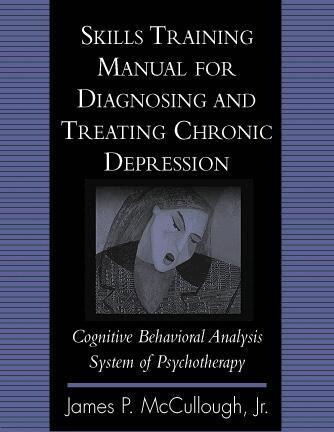
    Skills Training Manual for Diagnosing and Treating Chronic Depression

    Cognitive Behavioral Analysis System of Psychotherapy

    AvJames P. McCullough, Jr.

    Häftad, Engelska, 2001

    644 kr

    Beställningsvara. Skickas inom 3-6 vardagar. Fri frakt över 249 kr.

    Beskrivning

    This handy 8 1/2 x 11 manual provides a step-by-step guide to the clinical strategies and tools presented in Treatment for Chronic Depression. Each chapter summarizes one step of the CBASP technique and details precisely how to implement the skills training procedures. Featuring paper-and-pencil exercises based on realistic case vignettes, the manual helps therapists master the process of clinical decision making within CBASP.

    Produktinformation

    • Utgivningsdatum:2001-10-25
    • Mått:210 x 280 x 13 mm
    • Vikt:530 g
    • Format:Häftad
    • Språk:Engelska
    • Antal sidor:188
    • Förlag:Guilford Publications
    • ISBN:9781572306912

    Utforska kategorier

    • Psykoterapi som behandlingsmetod inom Medicin
    • Kognitiv psykologi inom Psykologi och pedagogik
    • Socialt arbete och välfärd inom Samhälle och politik

    Mer om författaren

    James P. McCullough, Jr., PhD, is a fellow of the American Psychological Association and was elected a Diplomate in Clinical Psychology by the American Board of Psychological Forensic Examiners. He is is Emeritus Professor of Psychology at Virginia Commonwealth University, where he served on the faculty for 45 years. An award-winning educator and researcher, Dr. McCullough's areas of special interest are dysthymia, double depression, and chronic major depression, particularly diagnostic criteria; unipolar diagnostic category psychosocial comparisons; and cognitive and single-case methodology evaluating both private practice and research.

    Recensioner i media

    In his creative blending of cognitive, behavioral, and interpersonal strategies, McCullough speaks directly to the clinician, clearly outlining and illustrating how to intervene effectively when working with chronically depressed patients. Recognizing that the feeling of not being able to get what one wants is at the core of this depression, McCullough provides clinically sound guidelines for helping patients to overcome the cognitive, affective, and behavioral obstacles to having their needs met.--Marvin R. Goldfried, PhD, Department of Psychology, State University of New York at Stony BrookThis is quite simply a superb and unique therapist manual. McCullough presents a series of exercises that literally walk the therapist through CBASP treatment. The reader is given the opportunity to identify and constructively address common problems in carrying out the therapy. In its experiential approach to learning, the manual mirrors many of the innovative features of the treatment itself. This manual is essential for any clinician who wants to learn and apply CBASP. It is an outstanding text for students of psychotherapy at all levels and provides instructors with a timesaving, efficient, and indispensable method of teaching.--Bruce Arnow, PhD, Stanford University School of MedicineThe Cognitive Behavioral Analysis System of Psychotherapy (CBASP) is novel, systematic, and has undergone empirical evaluation. Now McCullough has provided an additional tool to aid in the dissemination of this new evidence-based treatment for chronic depression. A gifted clinician and teacher, McCullough not only has determined what needs to be taught, but also has developed an excellent method for doing so. The Skills Training Manual offers clinicians instant feedback on their mastery of key CBASP concepts. The exercises are challenging, while the feedback is gentle and encouraging. I recommend this manual and the accompanying text to practitioners and trainees in diverse settings.--Robin B. Jarrett, PhD, Department of Psychiatry, The University of Texas Southwestern Medical Center at Dallas-

    Innehållsförteckning

    • 1. Introduction to the ManualExercise Format of the Manual2. The Big Picture A Brief Introduction to CBASP3. Diagnosing the Chronically Depressed Adult Using a Clinical Course Timeline4. Administering Situational AnalysisPart I. Situational Analysis: Elicitation PhasePart II. Situational Analysis: Remediation Phase5. Using Disciplined Personal Involvement to Modify Patient BehaviorPart I. The Impact Message InventoryPart II. Steps Leading to the Construction of the TransferenceHypotheses Part III. Interpersonal Discrimination ExerciseReferencesIndex