• Fri frakt över 249 kr
  • •
  • Snabba leveranser
  • •
  • Billiga böcker
Kundservice

Du är på sajten för privatpersoner.

Företag, bibliotek eller offentlig verksamhet?

Du handlar på classic.bokus.com, där alla dina funktioner finns intakta.
Till classic.bokus.com
Bokus logotyp. Gå till startsidan.
  • Erbjudanden
  • Nyheter
  • Student
  • Topplistor
  • Barn & ungdom
  • Bokus Play
  • E-böcker
  • Pocketböcker
  • Spel & pussel

10% rabatt på allt med kod: NYSTART10 →

Sidfot

Mina sidor

    Hjälp

    • Kundservice
    • Vanliga frågor och svar
    • Frakt och leverans
    • Retur vid ångerrätt
    • Reklamera vara
    • Betalning
    • Köpvillkor
    • Allmänna villkor
    • Information om webbplatsens tillgänglighet

    Om Bokus

    • Om oss
    • Pressrum
    • För studenter
    • För företag
    • För bibliotek och offentlig verksamhet
    • För leverantörer
    • Hållbarhet

    Populärt

    • Aktuella erbjudanden
    • Presentkort
    • Studentlitteratur
    • Nya böcker
    • Topplistor
    • Signerade böcker
    • Engelska böcker

    Inspiration

    • Boktips
    • BookTok
    • Populära bokserier
    • Barnbokskaraktärer
    • Populära författare
    Logotyp för Bokus
    Följ oss på Facebook (extern länk)Följ oss på Instagram (extern länk)Följ oss på YouTube (extern länk)Följ oss på TikTok (extern länk)
    bokus @ CookiesAnpassa cookiesIntegritetspolicyKöpvillkor
    Till Citymail hemsida (extern länk)Till Budbee hemsida (extern länk)Till Postnord hemsida (extern länk)Till Schenker hemsida (extern länk)Till Early Bird hemsida (extern länk)Till Walleys hemsida (extern länk)
    1. Samhälle och politik
    2. Samhälle och kultur
    3. Kultur och medier
    4. Referensverk och tvärvetenskap

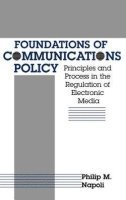
    Foundations of Communications Policy

    Principles and Process in the Regulation of Electronic Media

    AvPhilip M. Napoli

    Inbunden, Engelska, 2001

    Del i serien New Media: Policy & Research Issues

    865 kr

    Beställningsvara. Skickas inom 10-15 vardagar. Fri frakt över 249 kr.

    Fler format och utgåvor

    Häftad

    322 kr

    Beskrivning

    Rapid changes in communication technologies are straining the existing system of electronic media regulation. Despite the increasing pace of technological change, the electronic media continue to be regulated under a well-established set of guiding principles. Principles such as the First Amendment, the public interest, the marketplace of ideas, diversity, competition, localism and universal service continue to serve as the primary objectives for policymakers and as the focal points for contemporary policy controversies. This volume focuses on these principles, examining their underlying motivations and assumptions, their central components, their different interpretive approaches and their continued applicability in a rapidly changing electronic media environment. Central to this book's analysis is the need for more thorough and rigorous application of these principles as tools for policy analysis, rather than primarily as rhetorical devices for justifying policy outcomes. Toward this end, the book explicitly links each of these principles with communication policy analysis and illustrates how the dynamics of the policymaking process undermine the analytical utility of the foundation principles.

    Produktinformation

    • Utgivningsdatum:2001-05-31
    • Vikt:333 g
    • Format:Inbunden
    • Språk:Engelska
    • Serie:New Media: Policy & Research Issues
    • Antal sidor:368
    • Förlag:Hampton Press
    • ISBN:9781572733428

    Utforska kategorier

    • Referensverk och tvärvetenskap inom Samhälle och politik
    • Media och underhållning inom Ekonomi och Ledarskap

    Innehållsförteckning

    • Part 1 Introduction: Plan of the Book. Part 2 Foundation Principles and Communications Policymaking: The Unique Nature of Communications Regulation; The Extended Potential Influence of Communications Policy Decisions; Communications Regulation as Both Economic and Social Regulation; The ""Mixed"" Nature of Individual Policy Decisions; Policy Principles and Policy Analysis; A Model of the Foundation Principles. Part 3 The First Amendment: Functions of the First Amendment; The Liberty/Self-Fulfillment Function; The Advancement of Knowledge/Discovery of Truth Function; The Enhancing the Democratic Process Function; The Checking Government Power Function; The Community Stability Function; The Self-Realization/Autonomy of Consciousness Function; Observations; Individual Versus Collective Approaches to the First Amendment; The Individualists Interpretation of the First Amendment; The Collectivist Interpretation of the First Amendment; The First Amendment and Communications Policymaking; Toward a New First Amendment Balancing Test. Part 4 The Public Interest: Origins of the Phrase; Levels of Public Interest; The Public Interest at the Conceptual Level; The Public Interst at the Applicational Level. Part 5 The Marketplace of Ideas: Origins of the Metaphor; The Marketplace of Ideas Metaphor in FCC Decision Making; Methodology; Results. Part 6 Diversity: The Marketplace of Ideas and Diversity; The Dimensions of Diversity; Source Diversity; Content Diversity; Exposure Diversity. Part 7 Competition: Geographic Markets; Product Markets; Assessing Competition in Media Markets; Competition Measures; Competition Assessments - Multiple Techniques - Diverse Results. Part 8 Universal Service: Three Components of the Universal Service Principle; The Universal Service Policy Imperative; Universal Services; The Means of Providing Universal Service. Part 9 Localism: Rationales for Localism; Political Rationales for Localism Policies; Cultural Rationales for Localism Policies; The Localism Principle in Practice; Local Programming as Point of Origin; Moving Beyond the Point of Origin; Discussion; Reconceptualizing Localism in the New Media Environment; Localism and Community. Part 10 Linking Principles with Process - the Dynamics of Communications Policymaking: The Communications Policymaking Process - a Principal-Agent Perspective; Private Sector Tier; Judicial Tier; Political Tier; Bureaucratic Tier; Integrating Process and Policy. Part 11 The Federal Communications Commission and the Limitations of Communications Policy Analysis: ""Private Sector"" Stakeholder Monitoring and FCC Decision Making -a Case Study of Broadcast Policymaking; Methodology; Results; The Analytical Capacity Within the FCC; Policy Analysis Within the Federal Government; Policy Analysis Within the Federal Communications Commission. Part 12 Toward an Expanded Analytical Approach to Communications Policymaking: Toward an Expanded Analytical Approach to Communications Policy Issues.