• Fri frakt över 249 kr
  • •
  • Snabba leveranser
  • •
  • Billiga böcker
Kundservice

Du är på sajten för privatpersoner.

Företag, bibliotek eller offentlig verksamhet?

Du handlar på classic.bokus.com, där alla dina funktioner finns intakta.
Till classic.bokus.com
Bokus logotyp. Gå till startsidan.
  • Erbjudanden
  • Nyheter
  • Student
  • Topplistor
  • Barn & ungdom
  • Bokus Play
  • E-böcker
  • Pocketböcker
  • Spel & pussel

10% rabatt på allt med kod NYSTART10 →

Sidfot

Mina sidor

    Hjälp

    • Kundservice
    • Vanliga frågor och svar
    • Frakt och leverans
    • Retur vid ångerrätt
    • Reklamera vara
    • Betalning
    • Köpvillkor
    • Allmänna villkor
    • Information om webbplatsens tillgänglighet

    Om Bokus

    • Om oss
    • Pressrum
    • För studenter
    • För företag
    • För bibliotek och offentlig verksamhet
    • För leverantörer
    • Hållbarhet

    Populärt

    • Aktuella erbjudanden
    • Presentkort
    • Studentlitteratur
    • Nya böcker
    • Topplistor
    • Signerade böcker
    • Engelska böcker

    Inspiration

    • Boktips
    • BookTok
    • Populära bokserier
    • Barnbokskaraktärer
    • Populära författare
    Logotyp för Bokus
    Följ oss på Facebook (extern länk)Följ oss på Instagram (extern länk)Följ oss på YouTube (extern länk)Följ oss på TikTok (extern länk)
    bokus @ CookiesAnpassa cookiesIntegritetspolicyKöpvillkor
    Till Citymail hemsida (extern länk)Till Budbee hemsida (extern länk)Till Postnord hemsida (extern länk)Till Schenker hemsida (extern länk)Till Early Bird hemsida (extern länk)Till Walleys hemsida (extern länk)
    1. Psykologi och pedagogik
    2. Pedagogik
    3. Högskola och universitet
    4. Lärarutbildning

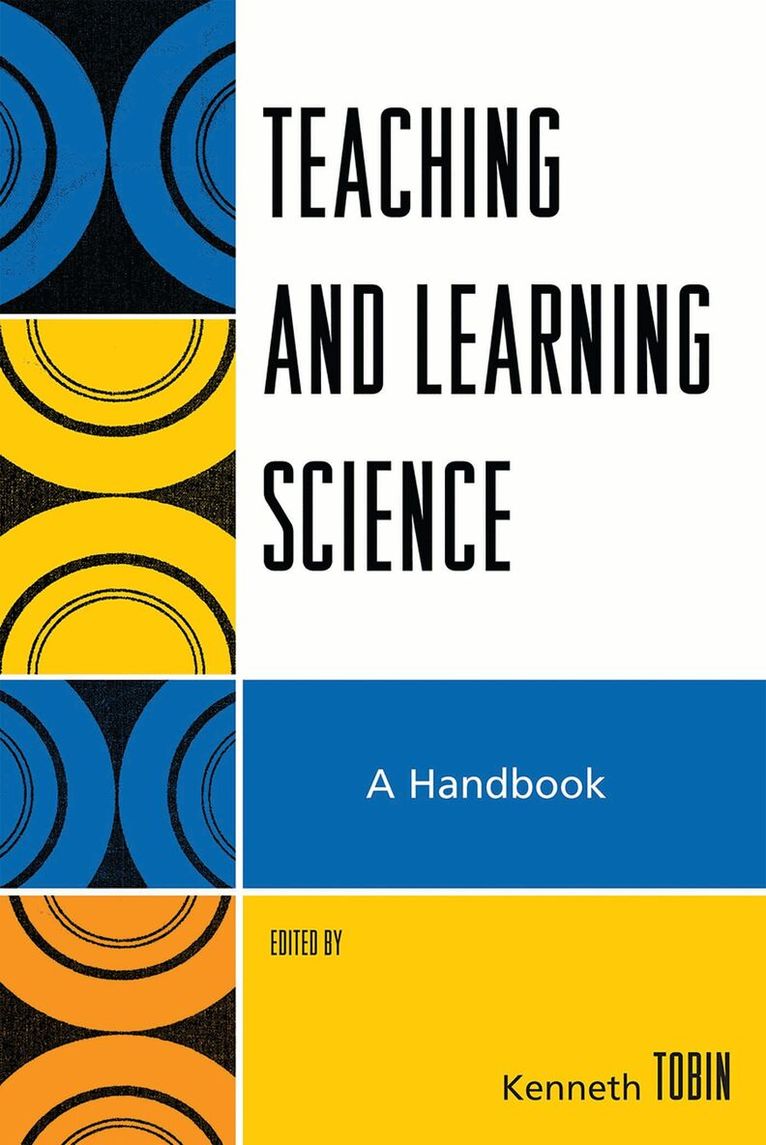
    Teaching and Learning Science

    AvKenneth Tobin

    Häftad, Engelska, 2008

    816 kr

    Beställningsvara. Skickas inom 10-15 vardagar. Fri frakt över 249 kr.

    Beskrivning

    Teaching and Learning Science consists of sixty-six chapters written by more than ninety leading educators and scientists. The contributions are informed by cutting-edge theory and research and address numerous issues that are central to K–12 education. This resource will be particularly valuable for parents and teachers as schools around the country prepare students to meet the challenges presented when science is added to the No Child Left Behind Act in 2007. These insightful contributions touch on many of the most controversial topics facing science educators and students today, including evolution, testing, homeschooling, ecology, and the achievement gaps faced by girls, children of color, and ESL learners. Accessible and full of insight, the set is written for teachers, parents, and students, and offers a wealth of resources germane to K-12 settings. The book is arranged according to themes that are central to science education: language and scientific literacy, home and school relationships, equity, new roles for teachers and students, connecting science to other areas of the curriculum, resources for teachers and learners, and science in the news. The authors address controversial topics such as evolution, and present alternative ways to think about teaching, learning, the outcomes of science education, and issues associated with high stakes testing. In addition, relationships between science and literacy are explored in terms of art and science, making sense of visuals in textbooks, reading, writing, children's literature, and uses of comics to represent science. Chapters also address how to teach contemporary science, including the origin of the chemical elements, the big bang, hurricanes, tornadoes, volcanoes, and tsunamis.

    Produktinformation

    • Utgivningsdatum:2008-07-08
    • Mått:154 x 232 x 36 mm
    • Vikt:934 g
    • Format:Häftad
    • Språk:Engelska
    • Antal sidor:580
    • Förlag:Bloomsbury Publishing Plc
    • ISBN:9781578866861

    Utforska kategorier

    • Lärarutbildning inom Psykologi och pedagogik
    • Undervisning i specifika ämnen inom Psykologi och pedagogik

    Mer om författaren

    Kenneth Tobin is presidential professor, Urban Education Program, The Graduate Center, City University of New York.

    Recensioner i media

    Teaching and Learning Science is an excellent resource for those studying science instruction as well as those in need of a survey course in science education. Readers will certainly appreciate the suggested readings and websites at the end of the chapters. The book is also a valuable tool for conducting a book study for science professionals and is highly recommended for all science learning institutions, especially college libraries.

    Innehållsförteckning

    • Part 1 Key Issues in Science EducationChapter 2 Analyses of Current Trends and Practices in Science EducationChapter 3 High-Stakes Science TestingChapter 4 Conceptual Change as a Viable Approach to Understanding Student Learning in ScienceChapter 5 Finding Meaning in ScienceChapter 6 Controversy over EvolutionChapter 7 Learning from Laboratory ActivitiesChapter 8 Learning Environments in Science ClassroomsPart 9 Language and Scientific LiteracyChapter 10 Scientific LiteracyChapter 11 Verbal and Nonverbal Interactions in Science ClassroomsChapter 12 Understanding Visuals in Science TextbooksChapter 13 Science and WritingChapter 14 Reading and ScienceChapter 15 Making Science Content Comprehensible for English Language LearnersChapter 16 The Interrelationship between Technological Fluency and Scientific LiteracyPart 17 Home and School RelationshipsChapter 18 Elementary Students and Parents Learning Science through Shared InquiryChapter 19 Rethinking HomeworkChapter 20 Using Science to Bridge the Learning Gap between Home and SchoolChapter 21 The Homeschooled Child and SciencePart 22 EquityChapter 23 Race, Equity, and the Teaching of ScienceChapter 24 Exploring Issues of Race, Power, and Concern in Rural Lower-Track Science ContextsChapter 25 Science Learning Achievements to Leave No Community BehindChapter 26 Poverty and Science EducationChapter 27 Gender Equity IssuesChapter 28 Understanding Agency in Science EducationChapter 29 Building Rovers to Bridge the Achievement Gap: Space Exploration at School and at HomePart 30 New Roles for Teachers and StudentsChapter 31 Teachers as ResearchersChapter 32 Choreographing Teaching: Coteaching with Special Education/inclusion Teachers in Science ClassroomsChapter 33 Theater of the Oppressed Pedagogy: Fostering Critically Reflective Science TeachersChapter 34 Constructing Knowledge about Electricity, Motors, and Magnets outside of the BoxChapter 35 Students as Researchers: Creating New IdentitiesChapter 36 Using Cogenerative Dialogues to Improve Science EducationChapter 37 Distributed Leadership Practices in Science EducationPart 38 Making Connections with ScienceChapter 39 Culturally Relevant Pedagogy for Science EducationChapter 40 Interactive Historical Vignette: The Scientific Endeavors of Mary Anning, the First Woman PaleontologistChapter 41 Science and ArtChapter 42 Resources for Connecting Science and LiteratureChapter 43 The place for Comics in Science EducationChapter 44 Using Driving Questions to Motivate and Sustain Student Interest in Learning ScienceChapter 45 Students as Curriculum Guides: Environmental ScienceChapter 46 Student Interest-Focused CurriculaPart 47 Resources for Teaching and Learning ScienceChapter 48 The Internet and Science EducationChapter 49 Educational RoboticsChapter 50 Science Teaching and Learning through the Zoo, Aquarium, and Botanical GardenChapter 51 Using the Museum as a Resource for Learning ScienceChapter 52 Using Field Trip Experiences to Further the Participation in and Learning of ScienceChapter 53 Building Adult Advocacy in Science: A Girl Scout and Science Museum CollaborationChapter 54 Pitfalls in the Teaching of Evolution: Darwin, Finches, HistoryChapter 55 Teaching ElectrochemistryChapter 56 Demo Essays: Using an Old Trick to Teach in a New WayChapter 57 The Sumatra Earthquake and Tsunami, December 26, 2004Chapter 58 Investigating Volvanic Flows through InquiryChapter 59 A Matter of Timing: Learning about the Impact of Environmental Changes on Animal MigrationChapter 60 Get Rocks in Your Head!Chapter 61 Use of the Internet in the Teacing of Elementary ScienceChapter 62 Using Bill Nye, The Science Guy within a Framework of Inquiry SciencePart 63 Science in the NewsChapter 64 The Origin of the Chemical ElementsChapter 65 The Big Bang: How the Universe Began, and How to Teach ItChapter 66 Hurricanes and TornadoesChapter 67 Global WarmingChapter 68 Environmental ProtectionChapter 69 Protecting the Air We BreatheChapter 70 Childhood Overweight and Science EducationChapter 71 The Truth about Trans Fats Will Break Your HeartChapter 72 Hair Relaxers: The Chemistry of an Everyday ExperienceChapter 73 Sunscreens and Sunblocks: Using Sunprint Paper to Investigate SPFChapter 74 Hydrogen Fuel Cells: The Alternative Energy Source of the Future?