• Fri frakt över 249 kr
  • •
  • Snabba leveranser
  • •
  • Billiga böcker
Kundservice

Du är på sajten för privatpersoner.

Företag, bibliotek eller offentlig verksamhet?

Du handlar på classic.bokus.com, där alla dina funktioner finns intakta.
Till classic.bokus.com
Bokus logotyp. Gå till startsidan.
  • Erbjudanden
  • Nyheter
  • Student
  • Topplistor
  • Barn & ungdom
  • Bokus Play
  • E-böcker
  • Pocketböcker
  • Spel & pussel

10% rabatt på allt med kod: NYSTART10 →

Sidfot

Mina sidor

    Hjälp

    • Kundservice
    • Vanliga frågor och svar
    • Frakt och leverans
    • Retur vid ångerrätt
    • Reklamera vara
    • Betalning
    • Köpvillkor
    • Allmänna villkor
    • Information om webbplatsens tillgänglighet

    Om Bokus

    • Om oss
    • Pressrum
    • För studenter
    • För företag
    • För bibliotek och offentlig verksamhet
    • För leverantörer
    • Hållbarhet

    Populärt

    • Aktuella erbjudanden
    • Presentkort
    • Studentlitteratur
    • Nya böcker
    • Topplistor
    • Signerade böcker
    • Engelska böcker

    Inspiration

    • Boktips
    • BookTok
    • Populära bokserier
    • Barnbokskaraktärer
    • Populära författare
    Logotyp för Bokus
    Följ oss på Facebook (extern länk)Följ oss på Instagram (extern länk)Följ oss på YouTube (extern länk)Följ oss på TikTok (extern länk)
    bokus @ CookiesAnpassa cookiesIntegritetspolicyKöpvillkor
    Till Citymail hemsida (extern länk)Till Budbee hemsida (extern länk)Till Postnord hemsida (extern länk)Till Schenker hemsida (extern länk)Till Early Bird hemsida (extern länk)Till Walleys hemsida (extern länk)
    1. Medicin
    2. Veterinärmedicin

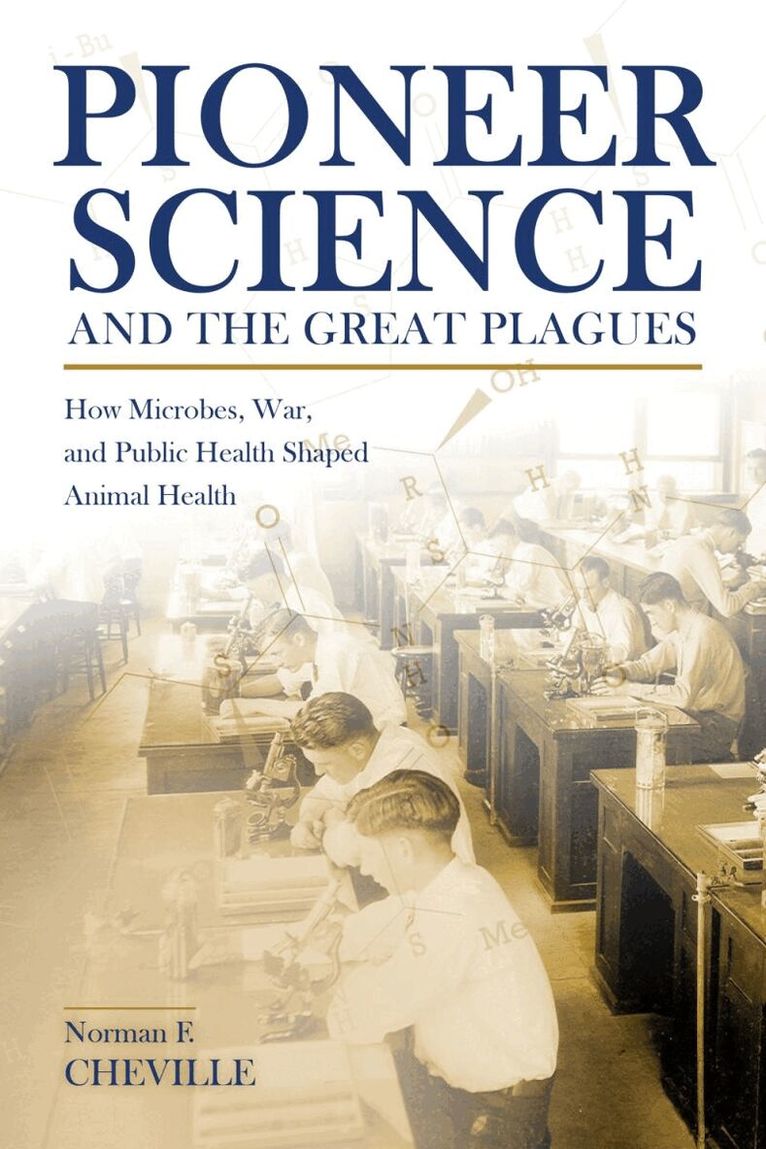
    Pioneer Science and the Great Plagues

    How Microbes, War, and Public Health Shaped Animal Health

    AvNorman F. Cheville

    Inbunden, Engelska, 2021

    Del i serien New Directions in the Human-Animal Bond

    1 150 kr

    Beställningsvara. Skickas inom 10-15 vardagar. Fri frakt över 249 kr.

    Fler format och utgåvor

    Häftad

    364 kr

    Beskrivning

    Pioneer Science and the Great Plagues covers the century when infectious plagues - anthrax, tuberculosis, tetanus, plague, smallpox, and polio - were conquered, and details the important role that veterinary scientists played. The narrative is driven by astonishing events that centered on animal disease: the influenza pandemic of 1872, discovery of the causes of anthrax and tuberculosis in the 1880s, conquest of Texas cattle fever and then yellow fever, German anthrax attacks on the United States during World War I, the tuberculin war of 1931, Japanese biological warfare in the 1940s, and today's bioterror dangers. Veterinary science in the rural Midwest arose from agriculture, but in urban Philadelphia it came from medicine; similar differences occurred in Canada between Toronto and Montreal. As land-grant colleges were established after the American Civil War, individual states followed divergent pathways in supporting veterinary science. Some employed a trade school curriculum that taught agriculturalists to empirically treat animal diseases and others emphasized a curriculum tied to science. This pattern continued for a century, but today some institutions have moved back to the trade school philosophy. Avoiding lessons of the 1910 Flexner Report on medical education reform, university-associated veterinary schools are being approved that do not have control of their own veterinary hospitals, diagnostic laboratories, and research institutes - components that are critical for training students in science. Underlying this change were twin idiosyncrasies of culture - disbelief in science and distrust of government - that spawned scientology, creationism, anti-vaccination movements, and other anti-science scams. As new infectious plagues continue to arise, Pioneer Science and the Great Plagues details the strategies we learned defeating plagues from 1860 to 1960 - and the essential role veterinary science played. To defeat the plagues of today it is essential we avoid the digital cocoon of disbelief in science and cultural stasis now threatening progress.

    Produktinformation

    • Utgivningsdatum:2021-03-15
    • Mått:152 x 228 x 22 mm
    • Vikt:658 g
    • Format:Inbunden
    • Språk:Engelska
    • Serie:New Directions in the Human-Animal Bond
    • Antal sidor:370
    • Förlag:Purdue University Press
    • ISBN:9781612496566

    Utforska kategorier

    • Veterinärmedicin inom Medicin
    • Medicinhistoria inom Medicin
    • Samhällsmedicin och preventiv medicin inom Medicin

    Mer om författaren

    Norman F. Cheville is distinguished professor and dean emeritus of the College of Veterinary Medicine at Iowa State University. Cheville began his work at the Army Biological Laboratory in Fort Detrick, Maryland, in the Veterinary Corps of the US Army from 1959 to 1961. After three years as research associate at the University of Wisconsin, he moved to the National Animal Disease Center as chief of Pathology from 1964 to 1989, and later as chief of the Brucellosis Research Unit, where he led the team that developed a new vaccine for bovine brucellosis. Working under Tony Allison at the National Institute for Medical Research in London in 1968, he investigated cellular immunity in poxvirus diseases. He was appointed chair of the Department of Veterinary Pathology at Iowa State University in 1995, and in 2000 was appointed dean of the College of Veterinary Medicine in 2000, from which he retired in 2004.

    Innehållsförteckning

    • PrefaceAcknowledgmentsPart I. Prologue1. The Veterinary Schools of Europe2. Edward Jenner: Zoologist, Physician, Pioneer3. William Dick: From Farrier to Veterinarian in Edinburgh4. The Science Giants of 1860: Pasteur, Virchow, and Darwin5. Robert Koch: Game ChangePart II. Farrier to Veterinarian6. Emigrants West: Ohio Country, Iowa Territory, and Tejas7. The Canadian Midwest: Divergence of Lower and Upper Canada8. Pioneers in the Midwest Frontier: Physicians in Veterinary Practice9. New Plagues, Civil War, and the United States Department of Agriculture10. Agriculture and Veterinary Science in the MidwestPart III. Pioneering Veterinary Education11. Urban East Versus Rural West: Montreal and New York Diss Toronto and Iowa12. The Pioneer State Colleges: Iowa, Ohio, Pennsylvania, and Cornell13. Plagues and the Bureau of Animal Industry14. Bacteriology in the Heartland15. The 1890s: Horse Markets and Enrollments DropPart iv. Livestock and Veterinarians Go West16. Private Veterinary Schools: Chicago, Kansas City, and Indianapolis17. Public Veterinary Schools: The Second-Generation Pioneers18. The Bureau of Animal Industry and Hog Cholera19. Veterinary Education, Charles Stange, and the Flexner Report20. World War I: Biowarfare, Prejudice, and the U.S. ArmyVeterinary CorpsPart v. Ascendance21. Agricultural Depression Amidst a National Boom: The 1920s22. 1929: Prelude to Bad Times23. Public Health and Distrust of Government: The Tuberculin War24. A Depression Paradox: Culture and Science25. New Deal: Discoveries in Infectious DiseasePart vi. Duty Required26. War: The Home Front27. Veterinary Corps and Bioterror28. Postwar Investigations of Enemy Biological Warfare29. Prelude to the Science Revolution30. The Atomic AgePart vii. Transformation31. New Programs, New Laboratories: Malaria, Polio, and New Viruses32. Comparative Medicine: Models for Leukemia33. Grassroots Mandates: The National Research Centers for Livestock Diseases34. Old Plagues in the Wild: The National Wildlife Centers35. New Plagues: Scrapie, Mad Cow Disease, and the PrionPart VIII. Epilogue36. The Farm Crises of 1980–1995: Distrust of Science37. The Gender Shift38. Biopolitics39. Bioterror, Anthrax, and the National Animal Health Networks40. Anti-Science Scams and Keys to ProgressAppendixesNotesIndex