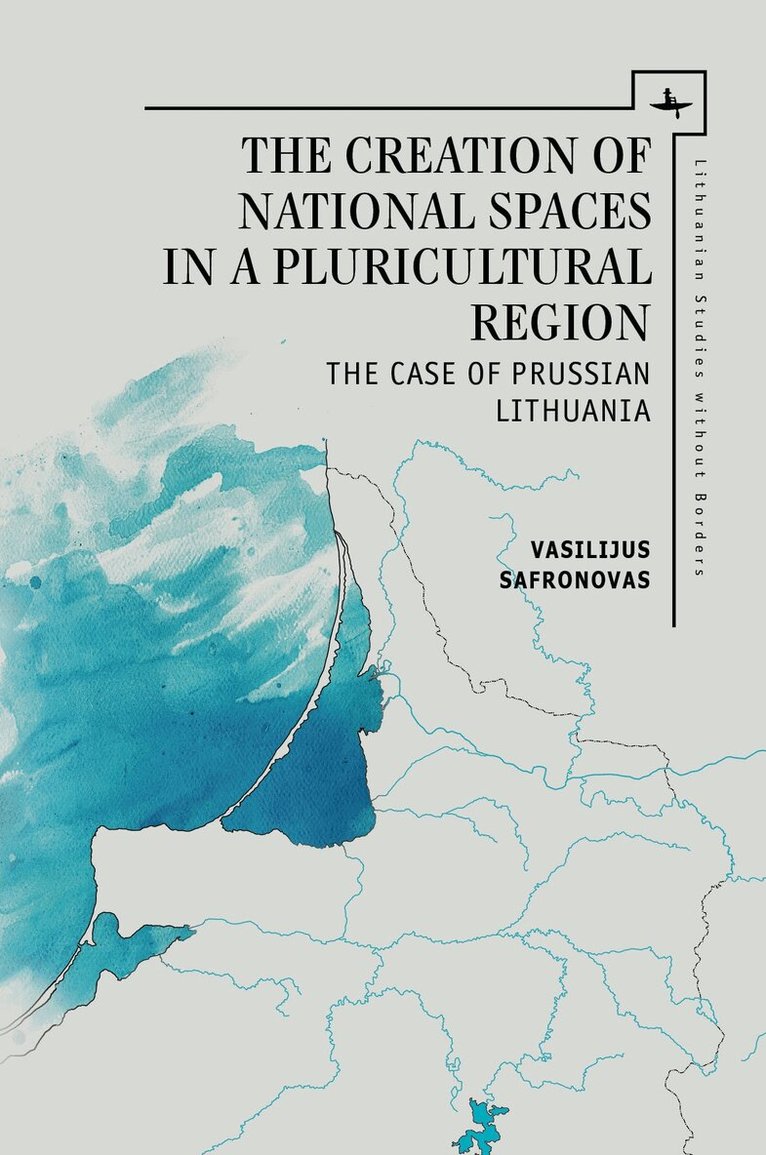
Inbunden, Engelska, 2017
Creation of National Spaces in a Pluricultural Region
The Case of Prussian Lithuania
Del i serien Lithuanian Studies without Borders
1158 kr
Skickas tisdag 17/11. Fri frakt över 249 kr.
Beskrivning
Produktinformation
- Utgivningsdatum: 2017-01-19
- Mått: 155 x 234 x 34 mm
- Vikt: 824 g
- Format: Inbunden
- Språk: Engelska
- Serie: Lithuanian Studies without Borders
- Antal sidor: 470
- Förlag: Academic Studies Press
- ISBN: 9781618115249
Utforska kategorier
Mer om författaren
Vasilijus Safronovas is principal investigator at the Institute of Baltic Region History and Archaeology, at Klaipėda University. He has published widely on issues of memory, identity, and cultural contact. His recent study Kampf um Identität: Die ideologische Auseinandersetzung in Memel/Klaipeda im 20. Jahrhundert (Wiesbaden: Harrassowitz, 2015) was awarded the Immanuel-Kant-Forschungspreis from the German Federal Government.
Recensioner i media
"Maps are not made in a vacuum. In this geographically sophisticated book, Vasilijus Safronovas shows how Lithuania was formed by its diverse peoples as a space for interaction. Interrogating how the toponyms of East Prussia, Lithuania Minor, and Prussian Lithuania evolved as regions, and fed into modern nation-building, irredentist, or diasporic projects, the author skillfully analyzes the country's social and political history. Making fine use of German, Polish, Lithuanian and Russian sources, he persuasively challenges us to reconsider the criteria behind Lithuania's slew of mental maps—why some systems of meaning persisted, while others were suppressed or altered beyond recognition."
Betyg & recensioner
0 recensioner
Inga recensioner tillgängliga.