• Fri frakt över 249 kr
  • •
  • Snabba leveranser
  • •
  • Billiga böcker
Kundservice

Du är på sajten för privatpersoner.

Företag, bibliotek eller offentlig verksamhet?

Du handlar på classic.bokus.com, där alla dina funktioner finns intakta.
Till classic.bokus.com
Bokus logotyp. Gå till startsidan.
  • Erbjudanden
  • Nyheter
  • Student
  • Topplistor
  • Barn & ungdom
  • Bokus Play
  • E-böcker
  • Pocketböcker
  • Spel & pussel

10% rabatt på allt med kod: NYSTART10 →

Sidfot

Mina sidor

    Hjälp

    • Kundservice
    • Vanliga frågor och svar
    • Frakt och leverans
    • Retur vid ångerrätt
    • Reklamera vara
    • Betalning
    • Köpvillkor
    • Allmänna villkor
    • Information om webbplatsens tillgänglighet

    Om Bokus

    • Om oss
    • Pressrum
    • För studenter
    • För företag
    • För bibliotek och offentlig verksamhet
    • För leverantörer
    • Hållbarhet

    Populärt

    • Aktuella erbjudanden
    • Presentkort
    • Studentlitteratur
    • Nya böcker
    • Topplistor
    • Signerade böcker
    • Engelska böcker

    Inspiration

    • Boktips
    • BookTok
    • Populära bokserier
    • Barnbokskaraktärer
    • Populära författare
    Logotyp för Bokus
    Följ oss på Facebook (extern länk)Följ oss på Instagram (extern länk)Följ oss på YouTube (extern länk)Följ oss på TikTok (extern länk)
    bokus @ CookiesAnpassa cookiesIntegritetspolicyKöpvillkor
    Till Citymail hemsida (extern länk)Till Budbee hemsida (extern länk)Till Postnord hemsida (extern länk)Till Schenker hemsida (extern länk)Till Early Bird hemsida (extern länk)Till Walleys hemsida (extern länk)
    1. Psykologi och pedagogik
    2. Pedagogik
    3. Utbildningsstrategier och utbildningspolitik
    4. Studievägledning och elevhälsa

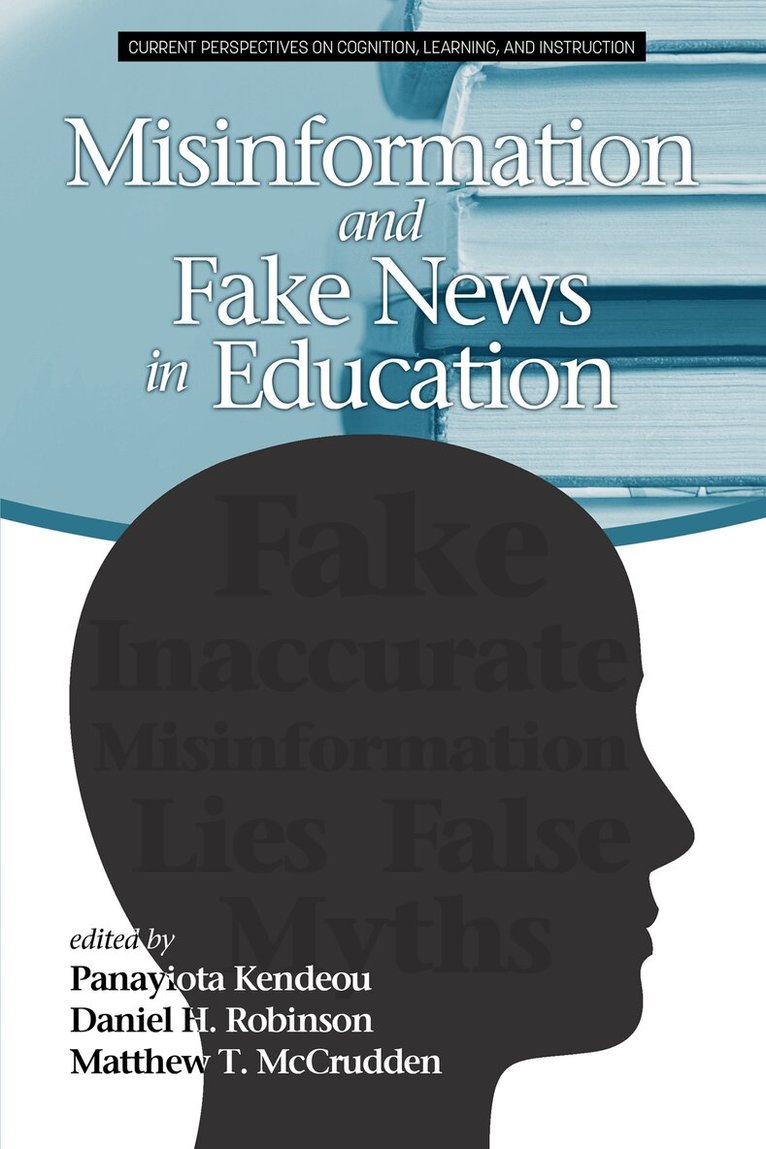
    Misinformation and Fake News in Education

    AvPanayiota Kendeou,Daniel H. Robinson

    Häftad, Engelska, 2019

    Del i serien Current Perspectives on Cognition, Learning and Instruction

    605 kr

    Beställningsvara. Skickas inom 5-8 vardagar. Fri frakt över 249 kr.

    Beskrivning

    Today, like no other time in our history, the threat of misinformation and disinformation is at an all-time high. This is also true in the field of Education. Misinformation refers to false information shared by a source who intends to inform, but is unaware that the information is false, such as when an educator who recommends the use of a learning strategy that is not actually beneficial. Disinformation is false information shared by a source who has the intent to deceive and is aware that the information is false, such as when a politician claim that high-stakes testing will fix K-12 education when in fact there is no evidence to support this practice. This book provides recent examples of how misinformation and disinformation manifest in the field of education and remedies.

    Produktinformation

    • Utgivningsdatum:2019-09-24
    • Mått:156 x 234 x 18 mm
    • Vikt:473 g
    • Format:Häftad
    • Språk:Engelska
    • Serie:Current Perspectives on Cognition, Learning and Instruction
    • Antal sidor:336
    • Förlag:Emerald Publishing Inc
    • ISBN:9781641138512

    Utforska kategorier

    • Studievägledning och elevhälsa inom Psykologi och pedagogik

    Innehållsförteckning

    • Chapter 1. Misinformation and Disinformation in Education: An Introduction; Panayiota Kendeou, Daniel H. Robinson, and Matthew T. McCrudden.Section I. Susceptibility To Misinformation In Education.Chapter 2. Zombie Concepts in Education: Why They Won't Die and Why You Can't Kill Them; Gale M. Sinatra and Neil G. Jacobson.Chapter 3. Understanding Susceptibility to Educational Inaccuracies: Examining the Likelihood of Adoption Model; Alexandra List and Lisa DaVia Rubenstein.Chapter 4. Psychological Tribes and Processes: Understanding Why and How Misinformation Persists; Gregory J. Trevors.Chapter 5. Cognitive Biases in Forensic Science Training and Education; Candice Bridge and Mark Marić.Chapter 6. Do Individual Differences in Conspiratorial and Political Leanings Influence the Use of Inaccurate Information? David N. Rapp, Megan N. Imundo, and Rebecca M. Adler.Chapter 7. Educational Muckrakers, Watchdogs, and Whistleblowers; Daniel H. Robinson and Robert A. Bligh.Chapter 8. Designing Interventions to Combat Misinformation Based on Factors That Increase Susceptibility; Abbey M. Loehr and Andrew C. Butler.Section II. Practices In The Service Of Reducing Misinformation In Education.Chapter 9. Modeling the Dissemination of Misinformation Through Discourse Dynamics; Laura K. Allen, Aaron D. Likens, and Danielle S. McNamara.Chapter 10. A Nation of Curators: Educating Students to be Critical Consumers and Users of Online Information; Jeffrey A. Greene, Brian M. Cartiff, Rebekah F. Duke, and Victor M. Deekens.Chapter 11. Misinformation in Autism Spectrum Disorder and Education; Jessica Paynter, Ullrich K. H. Ecker, David Trembath, Rhylee Sulek, and Deb Keen.Chapter 12. From Theory to Practice: Implications of KReC for Designing Effective Learning Environments; Jasmine Kim, Reese Butterfuss, Joseph Aubele, and Panayiota Kendeou.Chapter 13. How Attempting to Reduce Misconceptions in Psychology Reveals the Challenges of Change; Patricia Kowalski and Annette Taylor.Chapter 14. Critical Thinking in the Post-Truth Era; Åsa Wikforss.Chapter 15. Attempting to Reduce Misinformation and Other Inaccuracies in Education; Matthew T. McCrudden.About the Editors.About the Contributors.