• Fri frakt över 249 kr
  • •
  • Snabba leveranser
  • •
  • Billiga böcker
Kundservice

Du är på sajten för privatpersoner.

Företag, bibliotek eller offentlig verksamhet?

Du handlar på classic.bokus.com, där alla dina funktioner finns intakta.
Till classic.bokus.com
Bokus logotyp. Gå till startsidan.
  • Erbjudanden
  • Nyheter
  • Student
  • Topplistor
  • Barn & ungdom
  • Bokus Play
  • E-böcker
  • Pocketböcker
  • Spel & pussel

Må bättre, för mindre! Upp till 50% rabatt på hälsoböcker

Sidfot

Mina sidor

    Hjälp

    • Kundservice
    • Vanliga frågor och svar
    • Frakt och leverans
    • Retur vid ångerrätt
    • Reklamera vara
    • Betalning
    • Köpvillkor
    • Allmänna villkor
    • Information om webbplatsens tillgänglighet

    Om Bokus

    • Om oss
    • Pressrum
    • För studenter
    • För företag
    • För bibliotek och offentlig verksamhet
    • För leverantörer
    • Hållbarhet

    Populärt

    • Aktuella erbjudanden
    • Presentkort
    • Studentlitteratur
    • Nya böcker
    • Topplistor
    • Signerade böcker
    • Engelska böcker

    Inspiration

    • Boktips
    • BookTok
    • Populära bokserier
    • Barnbokskaraktärer
    • Populära författare
    Logotyp för Bokus
    Följ oss på Facebook (extern länk)Följ oss på Instagram (extern länk)Följ oss på YouTube (extern länk)Följ oss på TikTok (extern länk)
    bokus @ CookiesAnpassa cookiesIntegritetspolicyKöpvillkor
    Till Citymail hemsida (extern länk)Till Budbee hemsida (extern länk)Till Postnord hemsida (extern länk)Till Schenker hemsida (extern länk)Till Early Bird hemsida (extern länk)Till Walleys hemsida (extern länk)
    1. Ekonomi och Ledarskap
    2. Nationalekonomi
    3. Mikroekonomi

    Egyptian Economy in the Twenty-first Century

    The Hard Road to Inclusive Prosperity

    AvKhalid Ikram,Heba Nassar

    Inbunden, Engelska, 2022

    1 190 kr

    Skickas . Fri frakt över 249 kr.

    Beskrivning

    A multi-faceted account of Egyptian economic development by nineteen internationally recognized authorities and the critical challenges the economy is likely to face in the next twenty yearsThe Egyptian Economy in the Twenty-first Century addresses the question of why Egypt, despite possessing a plethora of assets—such as a fertile agriculture, a strategic geographic location, oil and gas deposits, innumerable tourist sites, a labor force prized by regional countries, and a diaspora that remits large amounts of funds—has seldom performed to its economic potential during the last sixty years. Indeed, economic weakness created political weakness, and often exposed the country to foreign diktats. What should the country do to change this state of affairs?Nineteen internationally recognized authorities on the Egyptian economy discuss the critical challenges that the Egyptian economy is likely to face in the next two to three decades, challenges which must be overcome in order to improve the life of Egypt’s citizens and to protect the country from external pressures. Their analyses cover population and employment; development strategies; principal macroeconomic issues; development of a digital economy; fiscal and monetary matters; the external sector; poverty and income distribution; the enterprise structure; higher education; water availability; urbanization; institutional performance; and many others.Contributors:- Gouda Abdel Khalek, Cairo University, Cairo, Egypt- Khaled M. Abu-Zeid, Regional Water Resources, CEDARE (Center for Environment and Development for the Arab Region and Europe), Cairo, Egypt.- Fatma El Ashmawy, World Bank.- Ragui Assaad, University of Minnesota, Twin Cities of Minneapolis and Saint Paul, Minnesota, USA- Izak Atiyas, Economic Research Forum, Cairo, Egypt.- Marwa Biltagy, Cairo University, Cairo, Egypt.- Lahcen Bounader, International Monetary Fund.- Ishac Diwan, École Normale Supérieure, Paris, France.- Ahmed Ghoneim, Cairo University, Cairo, Egypt.- Khalid Ikram, Washington DC, USA.- Karima Korayem, al-Azhar University, Cairo, Egypt.- Heba el-Laithy, Cairo University, Cairo, Egypt.- Noha el-Mikawy, Ford Foundation, Middle East and North Africa, Cairo, Egypt. - Mohamed Mohieddin, Menoufia University, Menoufia, Egypt.- Heba Nassar, Cairo University, Cairo, Egypt.- Osman Mohamed Osman, Cairo, Egypt.- Noha Razek, University of Regina, Regina, Saskatchewan, Canada.- David Sims, Cairo, Egypt.- John Waterbury, Princeton, New Jersey.

    Produktinformation

    • Utgivningsdatum:2022-11-29
    • Mått:152 x 229 x 36 mm
    • Vikt:852 g
    • Format:Inbunden
    • Språk:Engelska
    • Antal sidor:476
    • Förlag:American University in Cairo Press
    • ISBN:9781649031778

    Utforska kategorier

    • Mikroekonomi inom Ekonomi och Ledarskap
    • Centralt styre och förvaltning inom Samhälle och politik
    • Internationell ekonomi inom Ekonomi och Ledarskap

    Mer om författaren

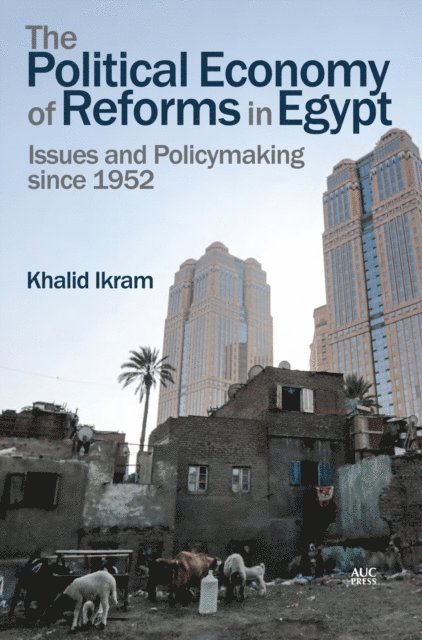
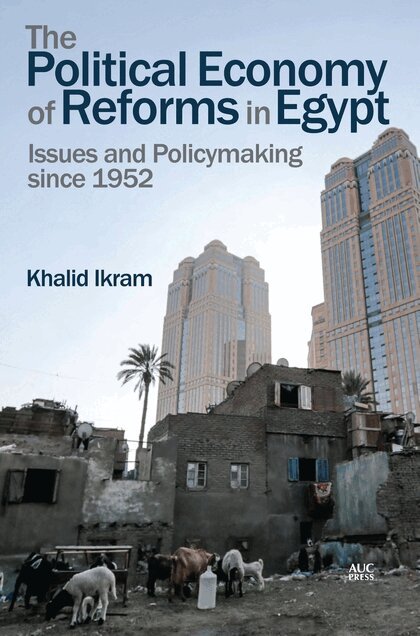
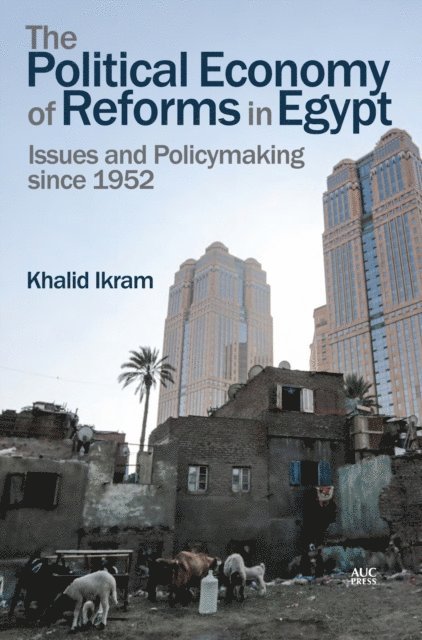
    Khalid Ikram has been associated with Egypt’s economy for more than forty years, including as director of the World Bank’s Egypt department. His international consultancies include governments, the World Bank, the Asian Development Bank, USAID, DFID, ITZ, OECD, UNCTAD, UNDP, and leading private institutions. He is the author of Egypt: Economic Management in a Period of Transition (1981), The Egyptian Economy, 1952–2000: Performance, Policies and Issues (2006), and The Political Economy of Reforms in Egypt: Issues and Policymaking since 1952 (AUC Press, pbk edition, 2021). His awards include the Korean President’s medal for services to Korean development.Heba Nassar is professor of economics at the Faculty of Economics and Political Science and former vice-president of Cairo University. She is also chief editor of the Review of Economics and Political Science and currently directs and has participated in research projects for leading private and international institutions, including the World Bank, UNDP, UNIDO, ILO, and the Ford Foundation. The author of several articles and books, she received in 2021 the Egyptian state’s Women’s Appreciation Award from the Academy for Scientific Research and Technology.

    Recensioner i media

    "A collection of essays by many of the most distinguished social scientists working on Egypt today, this book provides a detailed and sobering picture of the country’s challenges after decades of negligent and inept economic management. . . . That said, no government of Egypt could ask for a better roadmap to a more hopeful future than the one outlined in these essays."—Foreign Affairs"[A] highly readable account of Egypt’s economic situation and approaches to the twin challenges of providing its citizens with a better life and minimizing its vulnerability to external pressures. After Ikram’s extensive introduction summarizing the volume, 14 chapters—nearly all by Egyptian academics—discuss a wide array of issues, from demographic trends to higher education, urbanization to street children, water challenges to natural gas, and fiscal and monetary policies. . . . Highly recommended. Undergraduates through faculty; professionals; general readers."—CHOICE“[This] book is a model of how to analyze a country's economic situation. It is rich in information and solid analysis, presented in a manner easily accessible by the general reader but well versed in economic theory.”—Middle East Quarterly"This book is a significant contribution to Egypt's political economy literature."—Journal of Economic Issues"A tour de force! Ikram and Nassar have assembled leading experts on Egypt and have compiled a masterful collection of strongly analytic yet highly policy-relevant chapters on key aspects of the economy. Critical challenges are identified with acuity, and vital recommendations are offered to help steer future policies. An excellent contribution and a must read." —Danny Leipziger, George Washington University"This book brings together articles by well-known experts on the critical areas of the Egyptian economy, both its current situation, and the near term outlook. It not only addresses the challenges that the economy is currently encountering, but also provides the analytical framework that will be needed to assess and respond to the likely unforeseen economic effects of the possible structural shifts in the global economy in the period ahead. The book is an important contribution to understanding the evolving Egyptian political economy and helps establish a sound basis for formulating the needed policy reforms to achieve Egypt's medium term objectives."—Zubair Iqbal, Middle East Institute“This tour de force is a major contribution to development economics in times of unprecedented and accelerating change. The chapters in this book set out to explain why Egypt, despite its numerous physical and human assets, has so frequently underperformed its economic potential during the last sixty years. The way out is by abandoning the current zigzag of incoherent policies in favor of a human-resource-based strategy similar to that of the East Asian Tigers. The main message may be summed up in the words of Albert Einstein: 'We cannot solve our problems with the same thinking we used when we created them.'”—Samir Radwan, Former Minister of Finance of Egypt

    Innehållsförteckning

    • Note on ContributorsList of Figures and TablesPrefaceAcknowledgmentsIntroductionKhalid IkramPart 1: The Human Factor1. Prospects for Egypt’s Population and Labor Force: 2000 to 2050Ragui Assaad2. The poverty trap: Why is it Persisting in Egypt?Osman Mohamed Osman and Heba El Laithy3. Urbanization in EgyptDavid Sims4. Street Children in Egypt: Principal Causes and Economic CostKarima Korayem5. Is Egypt’s Higher Education System Broken?John Waterbury6. Water Challenges and Recommended PoliciesKhaled Abu-ZeidPart 2: Development Strategies7. The “Trickle-down” Approach: Its Relevance to The Case of EgyptGouda Abdel-Khalek8. Human Resource Competitiveness and the Digital EconomyHeba Nassar and Marwa Biltagy9. The “Missing Middle” in Egypt’s Enterprises and Its Impact on Economic GrowthIzak Atiyas and Ishac DiwanPart 3: Drivers and Policy Instruments10. The External Sector: Performance and IssuesAhmed Ghoneim11. The Natural Gas Sector: Opportunities and ChallengesNoha H.A. Razek12. Fiscal Policies and IssuesFatma El Ashmawy13. Monetary Policy in Egypt: Medium- and Long-term ViewLahcen BounaderPart 4: Institutional Development14. Institutional Constraints and OpportunitiesNoha El-Mikawy and Mohamed Mohieddin