• Fri frakt över 249 kr
  • •
  • Snabba leveranser
  • •
  • Billiga böcker
Kundservice

Du är på sajten för privatpersoner.

Företag, bibliotek eller offentlig verksamhet?

Du handlar på classic.bokus.com, där alla dina funktioner finns intakta.
Till classic.bokus.com
Bokus logotyp. Gå till startsidan.
  • Erbjudanden
  • Nyheter
  • Student
  • Topplistor
  • Barn & ungdom
  • Bokus Play
  • E-böcker
  • Pocketböcker
  • Spel & pussel

10% rabatt på allt med kod: NYSTART10 →

Sidfot

Mina sidor

    Hjälp

    • Kundservice
    • Vanliga frågor och svar
    • Frakt och leverans
    • Retur vid ångerrätt
    • Reklamera vara
    • Betalning
    • Köpvillkor
    • Allmänna villkor
    • Information om webbplatsens tillgänglighet

    Om Bokus

    • Om oss
    • Pressrum
    • För studenter
    • För företag
    • För bibliotek och offentlig verksamhet
    • För leverantörer
    • Hållbarhet

    Populärt

    • Aktuella erbjudanden
    • Presentkort
    • Studentlitteratur
    • Nya böcker
    • Topplistor
    • Signerade böcker
    • Engelska böcker

    Inspiration

    • Boktips
    • BookTok
    • Populära bokserier
    • Barnbokskaraktärer
    • Populära författare
    Logotyp för Bokus
    Följ oss på Facebook (extern länk)Följ oss på Instagram (extern länk)Följ oss på YouTube (extern länk)Följ oss på TikTok (extern länk)
    bokus @ CookiesAnpassa cookiesIntegritetspolicyKöpvillkor
    Till Citymail hemsida (extern länk)Till Budbee hemsida (extern länk)Till Postnord hemsida (extern länk)Till Schenker hemsida (extern länk)Till Early Bird hemsida (extern länk)Till Walleys hemsida (extern länk)
    1. Psykologi och pedagogik
    2. Pedagogik
    3. Undervisning i specifika ämnen

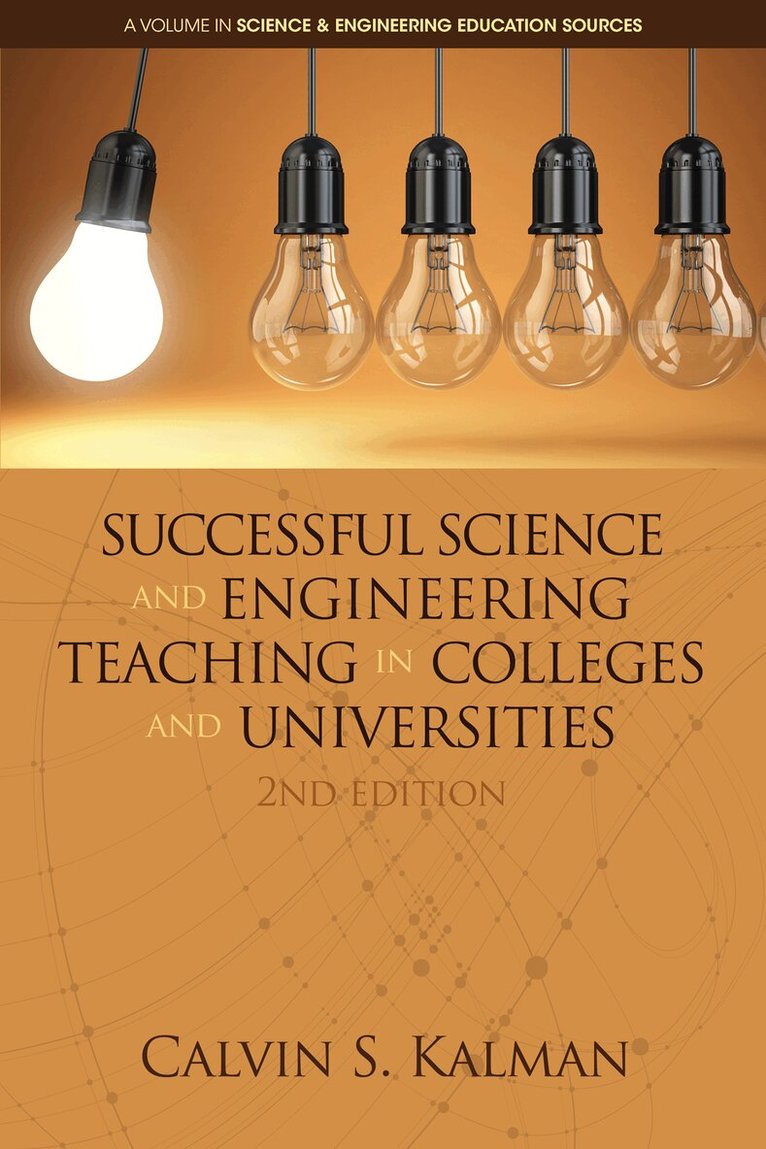
    Successful Science and Engineering Teaching in Colleges and Universities

    AvCalvin S. Kalman

    Inbunden, Engelska, 2017

    Del i serien Science & Engineering Education Sources

    1 018 kr

    Beställningsvara. Skickas inom 5-8 vardagar. Fri frakt över 249 kr.

    Fler format och utgåvor

    Häftad

    554 kr

    E-bok

    395 kr

    E-bok

    592 kr

    Beskrivning

    Based on the author's work in science and engineering educational research, this book offers broad, practical strategies for teaching science and engineering courses and describes how faculty can provide a learning environment that helps students comprehend the nature of science, understand science concepts, and solve problems in science courses.This book's student-centered approach focuses on two main themes: writing to learn (especially Reflective Writing) and interactive activities (collaborative groups and labatorials). When faculty incorporate these methods into their courses, students gain a better understanding of science as a connected structure of concepts rather than as a toolkit of assorted practices.

    Produktinformation

    • Utgivningsdatum:2017-06-22
    • Mått:156 x 234 x 13 mm
    • Vikt:455 g
    • Format:Inbunden
    • Språk:Engelska
    • Serie:Science & Engineering Education Sources
    • Antal sidor:196
    • Upplaga:2
    • Förlag:Emerald Publishing Inc
    • ISBN:9781681239583

    Utforska kategorier

    • Undervisning i specifika ämnen inom Psykologi och pedagogik
    • Naturvetenskap:allmänt inom Naturvetenskap och teknik

    Mer om författaren

    Calvin S. Kalman, Concordia University.

    Innehållsförteckning

    • Part I. Introduction, Road Map of the Book.Writing to Learn.Two Goals for Any Science and Engineering Course.Questions by Students.What Students Get Out of Class.In-Class and Out-of-Class Activities.Solving Problems.Computer Aids.Part II. Reflective Writing.Freewriting.Getting Students to Read Material in the Textbook Before Coming to Class.Gadamer's Hermeneutical Approach.Instructions on Doing Reflective Writing.Samples of Student Use of Reflective Writing.Marking Reflective Writing.Student Response to Reflective Writing.Reflective Writing Rubric.Part III. Writing to Learn.Reflective Write-Pair-Share.Scenario for a Class.The Course Dossier Method.Transforming Each Lecture Into a Mini Research Paper.End of Semester.Hosting an End of Semester Conference.Part IV. Constructing Student Knowledge.Cognitive Dissonance Students' Intellectual Development.Student Misconceptions.Debate in the Science Education Community.Critical Thinking.Part V. Collaborative Groups.Team Work and Group Projects Benefits to Having Students Work in Groups.Team Formation.Team Size.Team Management.Team Evaluation.Group Development.Classroom Warmups.Roles for Group Member.Dysfunctional Groups.Part VI. Utilizing Collaborative Groups to Promote Conceptual Conflict.Conceptual Conflict.Peer Instruction.Collaborative Group Conceptual Conflict Activity.Comparison of Peer Instruction With the Conceptual Conflict Group Activity.Incommensurability in Conceptual Change.Task Sheets for Warm-Up and the Four Concept Exercises.Part VII. Selected Methods of Utilizing Collaborative Groups.Labatorials.Jigsaw.The Learning Cell.Concept Mapping.Collaborative Concept Mapping.Appendix.Sample Labatorial Worksheet.Part VIII. Changing Students' Epistemologies.Developing a Scientific Mindset.Stages in Epistemic Development in Students.Critique Exercise.Model Course: Presenting Students With Alternative Frameworks: Pre-Galilean Physics and Newtonian Physics.The Calgary Study: Reflective Writing and Labatorials.Epistemology.Critique Exercise.Students' Epistemic Thinking.Appendix: Critique #1.Critique #2.Critique #3.Part IX. Problem Solving.Solving Problems Using Templates Versus Solutions.Using Paradigms.Five-Step Method for Solving Problems.Part X. Methods for Training Students to Solve Problems.Writing Their Way Into the Solution.Collaborative Problem-Solving Groups.How Many People Should Be in the Group? Who Should Be Placed in the Group? Individual Accountability.Appendix.A Student's Advice for Studying Physics.Part XI. Using the Computer to Aid Teaching.Computer-Assisted Instruction (CAI).Using the Computer to Manage Laboratories.References.