• Fri frakt över 249 kr
  • •
  • Snabba leveranser
  • •
  • Billiga böcker
Kundservice

Du är på sajten för privatpersoner.

Företag, bibliotek eller offentlig verksamhet?

Du handlar på classic.bokus.com, där alla dina funktioner finns intakta.
Till classic.bokus.com
Bokus logotyp. Gå till startsidan.
  • Erbjudanden
  • Nyheter
  • Student
  • Topplistor
  • Barn & ungdom
  • Bokus Play
  • E-böcker
  • Pocketböcker
  • Spel & pussel

10% rabatt på allt med kod: NYSTART10 →

Sidfot

Mina sidor

    Hjälp

    • Kundservice
    • Vanliga frågor och svar
    • Frakt och leverans
    • Retur vid ångerrätt
    • Reklamera vara
    • Betalning
    • Köpvillkor
    • Allmänna villkor
    • Information om webbplatsens tillgänglighet

    Om Bokus

    • Om oss
    • Pressrum
    • För studenter
    • För företag
    • För bibliotek och offentlig verksamhet
    • För leverantörer
    • Hållbarhet

    Populärt

    • Aktuella erbjudanden
    • Presentkort
    • Studentlitteratur
    • Nya böcker
    • Topplistor
    • Signerade böcker
    • Engelska böcker

    Inspiration

    • Boktips
    • BookTok
    • Populära bokserier
    • Barnbokskaraktärer
    • Populära författare
    Logotyp för Bokus
    Följ oss på Facebook (extern länk)Följ oss på Instagram (extern länk)Följ oss på YouTube (extern länk)Följ oss på TikTok (extern länk)
    bokus @ CookiesAnpassa cookiesIntegritetspolicyKöpvillkor
    Till Citymail hemsida (extern länk)Till Budbee hemsida (extern länk)Till Postnord hemsida (extern länk)Till Schenker hemsida (extern länk)Till Early Bird hemsida (extern länk)Till Walleys hemsida (extern länk)
    1. Historia och arkeologi
    2. Historia
    3. Historia: särskilda händelser och ämnen
    4. Folkmord och etnisk rensning

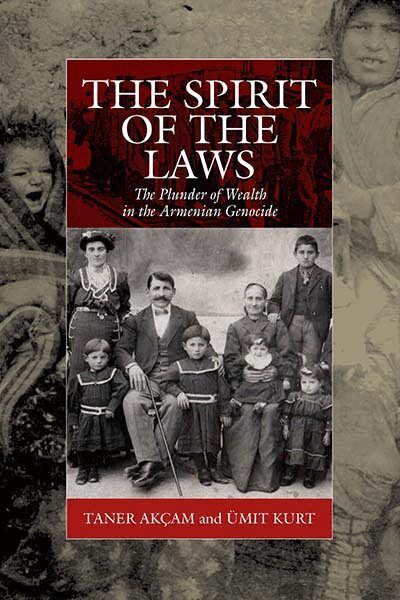
    Spirit of the Laws

    The Plunder of Wealth in the Armenian Genocide

    AvTaner Akçam,Umit Kurt

    Inbunden, Engelska, 2015

    Del 21 i serien War and Genocide

    1 916 kr

    Beställningsvara. Skickas inom 5-8 vardagar. Fri frakt över 249 kr.

    Fler format och utgåvor

    Häftad

    526 kr

    Beskrivning

    Pertinent to contemporary demands for reparations from Turkey is the relationship between law and property in connection with the Armenian Genocide. This book examines the confiscation of Armenian properties during the genocide and subsequent attempts to retain seized Armenian wealth. Through the close analysis of laws and treaties, it reveals that decrees issued during the genocide constitute central pillars of the Turkish system of property rights, retaining their legal validity, and although Turkey has acceded through international agreements to return Armenian properties, it continues to refuse to do so. The book demonstrates that genocides do not depend on the abolition of the legal system and elimination of rights, but that, on the contrary, the perpetrators of genocide manipulate the legal system to facilitate their plans.

    Produktinformation

    • Utgivningsdatum:2015-07-01
    • Mått:152 x 229 x 17 mm
    • Vikt:476 g
    • Format:Inbunden
    • Språk:Engelska
    • Serie:War and Genocide
    • Antal sidor:220
    • Förlag:Berghahn Books
    • ISBN:9781782386230

    Utforska kategorier

    • Folkmord och etnisk rensning inom Historia och arkeologi
    • Europas historia inom Historia och arkeologi

    Mer om författaren

    Taner Akçam holds the Kaloosdian and Mugar Chair of Armenian Genocide Studies at Clark University. His best-known books are A Shameful Act: The Armenian Genocide and the Question of Turkish Responsibility (Metropolitan Books, 2006);  Judgment at Istanbul: The Armenian Genocide Trials, with Vahakn Dadrian (Berghahn Books, 2011); and The Young Turks’ Crime Against Humanity: The Armenian Genocide and Ethnic Cleansing in the Ottoman Empire, (Princeton University Press, 2012), which in 2013 received the Middle East Studies Association’s Hourani Book Prize and  was listed by Foreign Affairs as “Best International Relations Books of 2012.”

    Recensioner i media

    “This book is a valuable addition to filling the gaps of our understanding of genocide and helps readers navigate complex terrain in the case study presented… I recommend this book as a case study to be included in graduate level courses. In addition to its thorough review of the questionable statecraft of genocidal states, it is a reminder of the merits of engaged scholarship. Akçam and Kurt, by sharing their research as an act of solidarity with citizens who continue to challenge state restraints and master narratives based on genocide, make a contribution to the ongoing process of crafting a just society.” • Histoire Sociale/Social History“[This volume] will make an invaluable contribution to the field of genocide studies. It is meticulously researched and features superb attention to detail.” • Deborah Mayersen, University of Wollongong“Akçam and Kurt have written a fundamentally important book... We know that genocides are accompanied by the expropriation of the assets possessed by the targeted population… But nothing like that has been done for the Armenian Genocide—until now.” • Eric Weitz, CUNY City College

    Innehållsförteckning

    • IntroductionChapter 1. The Laws and Decrees of the Committee of Union and Progress PeriodThe Decrees and Regulations of 17, 30 and 31 May 1915The Regulation of 10 June 1915The Temporary Law of 26 September 1915 and the Regulation of 8 November 1915A Brief EvaluationChapter 2. The Armistice Period and the Returning ArmeniansThe First Ones Returning from Deportation12 January 1920: The Ittihadist Laws Are AnnulledA Brief EvaluationThe Treaty of Sèvres of 10 August 1920The Prohibition against the Return of Greeks and Armenians Staying Outside of TurkeyThe Articles of Law Used to Prevent Their ReturnPolicies to Obstruct RepatriationThe Prohibition of Domestic Travel and MigrationA Brief EvaluationChapter 3. The Turkish Republic Prior to LausanneThe First Laws and Regulations of the Turkish Grand National AssemblyThe 20 April 1922 Abandoned Properties LawThe Regulations of November to December 1922Regulations Relevant to IstanbulThe 14 September 1922 “Abrogation of the Property Regulation”Why Was There a Return to the Ittihadist Laws of the Genocide?The Plunder of Izmir and the Independence TribunalsReturn to the Ittihadist Mentality: The 15 April Law and 29 April Regulation of 1923A Brief EvaluationAbandoned Properties and National Tax Obligations (Tekalif-i Milliye)Chapter 4. The Treaty of Lausanne: A Turning PointThe Abandoned Properties Question in the Negotiations and TreatyMass and Individual Repatriations and the Armenian HomelandA Plan to Expel the Armenian PopulationThe Question of the Belongings Which Were Left BehindThe Amnesty: Draft Proposal and Final FormThe Lausanne Regulations: The Question of NationalityThe Lausanne Regulations: Property, Rights and Interests, or, The Issue of CompensationA Brief Evaluation of LausanneChapter 5. After Lausanne: The Armenians Remaining Outside of TurkeyThe Treaties of Alexandrapol (Gyumri), Kars and MoscowTurkey-France: A Pair of TreatiesThe 25 October 1934 Turkey-US Compensation TreatyAn Interim Note on the US Compensation TreatyThe International Commission and Mixed Arbitral TribunalsChapter 6. Turkey after Lausanne: Virtually Raising a Wall around Its Borders Like a FortressArmerican Armenians Are Not Permitted to Enter TurkeyThe Return of the Armenians: A Question of the Honor and Pride of the State“To Allow Their Return…Means to Waste the Blood We Spilled”The Legal Vacuum Created by Lausanne on RepatriationThe Travel Regulation: Bans on Entry into the Country and Domestic TravelProhibitions on Domestic TravelPassport LawsChapter 7. Domestic Legal Regulations During the Republican PeriodThe First AdjustmentsThe 13 June 1926 Regulation1928: The Distribution of Title Deeds and the Transfer of Revenue to the Treasury BeginThe 22 April 1963 Constitutional Court DecisionThe Citizenship Laws of 1928 and 1964Those Removed from Citizenship and the Liquidation of Their PropertiesThe Abandoned Properties Laws and the Present SituationThe 1983 and 2001 Circulars of the General Directorate of Land Registry and CadasterProfound Fear: Title Deed RegistriesConclusionBibliographyIndex