• Fri frakt över 249 kr
  • •
  • Snabba leveranser
  • •
  • Billiga böcker
Kundservice

Du är på sajten för privatpersoner.

Företag, bibliotek eller offentlig verksamhet?

Du handlar på classic.bokus.com, där alla dina funktioner finns intakta.
Till classic.bokus.com
Bokus logotyp. Gå till startsidan.
  • Erbjudanden
  • Nyheter
  • Student
  • Topplistor
  • Barn & ungdom
  • Bokus Play
  • E-böcker
  • Pocketböcker
  • Spel & pussel

10% rabatt på allt med kod: NYSTART10 →

Sidfot

Mina sidor

    Hjälp

    • Kundservice
    • Vanliga frågor och svar
    • Frakt och leverans
    • Retur vid ångerrätt
    • Reklamera vara
    • Betalning
    • Köpvillkor
    • Allmänna villkor
    • Information om webbplatsens tillgänglighet

    Om Bokus

    • Om oss
    • Pressrum
    • För studenter
    • För företag
    • För bibliotek och offentlig verksamhet
    • För leverantörer
    • Hållbarhet

    Populärt

    • Aktuella erbjudanden
    • Presentkort
    • Studentlitteratur
    • Nya böcker
    • Topplistor
    • Signerade böcker
    • Engelska böcker

    Inspiration

    • Boktips
    • BookTok
    • Populära bokserier
    • Barnbokskaraktärer
    • Populära författare
    Logotyp för Bokus
    Följ oss på Facebook (extern länk)Följ oss på Instagram (extern länk)Följ oss på YouTube (extern länk)Följ oss på TikTok (extern länk)
    bokus @ CookiesAnpassa cookiesIntegritetspolicyKöpvillkor
    Till Citymail hemsida (extern länk)Till Budbee hemsida (extern länk)Till Postnord hemsida (extern länk)Till Schenker hemsida (extern länk)Till Early Bird hemsida (extern länk)Till Walleys hemsida (extern länk)
    1. Djur och Natur
    2. Naturböcker
    3. Växtböcker

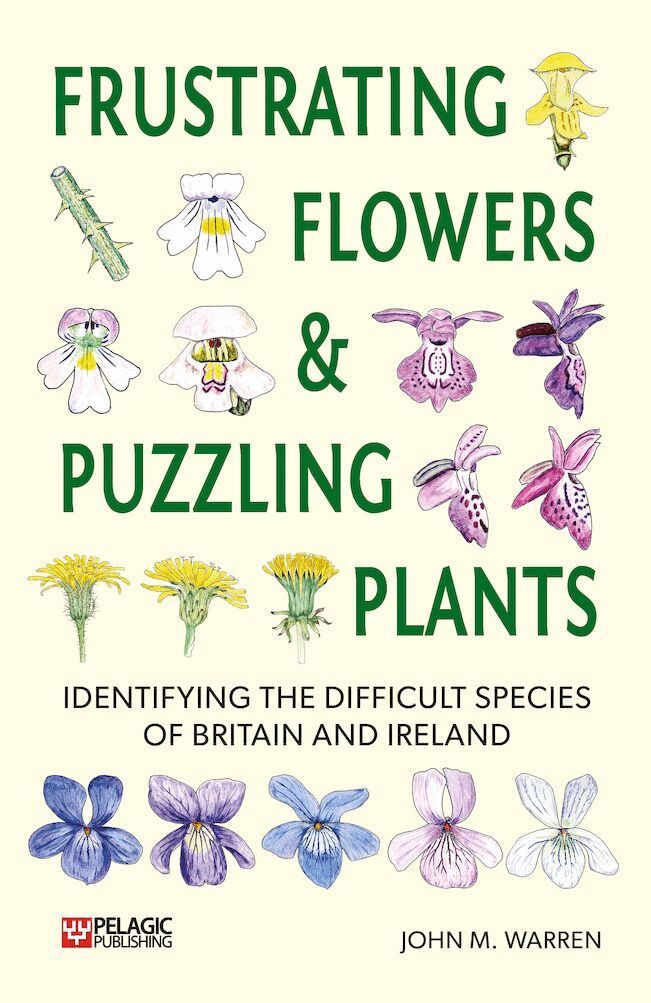
    Frustrating Flowers and Puzzling Plants

    Identifying the difficult species of Britain and Ireland

    AvJohn M. Warren

    Häftad, Engelska, 2024

    Del i serien Pelagic Identification Guides

    646 kr

    Skickas . Fri frakt över 249 kr.

    Beskrivning

    If you have tried to identify wildflowers, you'll already know exactly what is meant by the title of this book. Although a lot of plants are relatively straightforward to recognise, many others are not. Standard wildflower guides tend to provide as much guidance with identifying the easy and distinctive as they do with complex, tricky species. This ingenious book is designed to come to the rescue of the exasperated novice botanist and to help those more experienced who might be stuck on unfamiliar and complex groups.From willows to water-crowfoots, from eyebrights to dandelion look-a-likes, all of us have struggled with baffling specimens or the seemingly cryptic. Presented here is a fresh new approach to identifying difficult plants by giving an understanding of the biology behind their complexity. In simple language, you will be directed to the particular parts of the plant that you need to look at most closely. The tabular keys are more user friendly and evolutionarily valid than conventional dichotomous keys, which are often confusing and unwieldy. Each chapter contains illustrations of key diagnostic features, rather than of entire plants. Other novel aspects include coverage of the historical recognition of complexity within each group, which is used to inform debate about the level of resolution that may be most appropriate for your needs.This accessible guide is the perfect chance to get to grips with that challenging group you keep saving for 'next year' or for untangling a botanical mystery which keeps repeating itself.

    Produktinformation

    • Utgivningsdatum:2024-01-09
    • Mått:138 x 216 x 19 mm
    • Vikt:615 g
    • Format:Häftad
    • Språk:Engelska
    • Serie:Pelagic Identification Guides
    • Antal sidor:304
    • Förlag:Pelagic Publishing
    • ISBN:9781784273316

    Utforska kategorier

    • Växtböcker inom Djur och Natur
    • Botanik inom Naturvetenskap och teknik
    • Biovetenskap inom Naturvetenskap och teknik

    Mer om författaren

    John Warren has had a long academic career researching the origins of botanical diversity and promoting public understanding of science. Having been a senior lecturer in ecology at Aberystwyth University, in 2016 he became Vice Chancellor of the Papua New Guinea University of Natural Resources and Environment. Now retired back in the UK, he is an Associate Tutor for the Field Studies Council.

    Recensioner i media

    John M. Warren's book tackles the trickiest of taxonomies, helping us understand our umbellifers and suss out our speedwells. It's funny, clearly written and absolutely fascinating.

    Innehållsförteckning

    • Foreword Preface AcknowledgmentsSECTION I. APOMICTIC SPECIES: SPECIES THAT PRODUCE SEEDS WITHOUT SEX 1 Brambles 2 Dandelions 3 Lady’s-mantles 4 Sea-lavenders 5 Whitebeams, rowans and service trees 6 Yellow composites – things that look a bit like a dandelionSECTION II. HYBRIDS: SPECIES THAT HAVE SEX WITH OTHER SPECIES 7 Docks and sorrels 8 Pondweeds 9 Roses 10 Marsh-orchids and spotted-orchids 11 Water-crowfoots 12 WillowsSECTION III. INBREEDERS: SPECIES THAT HAVE SEX WITH THEMSELVES 13 Eyebrights 14 Fumitories 15 Violets and pansies 16 Short white-flowered crucifers: cresses 17 Tall yellow-flowered cabbages, mustards, rapes and rocketsSECTION IV. POLYPLOIDS AND RAPIDLY EVOLVING SPECIES 18 Broomrapes 19 Forget-me-nots 20 SpeedwellsSECTION V. SUCCESSFUL FAMILIES WITH LOTS OF SPECIES 21 Dead-nettles, mints and woundworts 22 Blue and purple vetches and peas 23 Umbellifers: carrots, parsnips, Hemlock etcGlossary Index