• Fri frakt över 249 kr
  • •
  • Snabba leveranser
  • •
  • Billiga böcker
Kundservice

Du är på sajten för privatpersoner.

Företag, bibliotek eller offentlig verksamhet?

Du handlar på classic.bokus.com, där alla dina funktioner finns intakta.
Till classic.bokus.com
Bokus logotyp. Gå till startsidan.
  • Erbjudanden
  • Nyheter
  • Student
  • Topplistor
  • Barn & ungdom
  • Bokus Play
  • E-böcker
  • Pocketböcker
  • Spel & pussel

10% rabatt på allt med kod NYSTART10 →

Sidfot

Mina sidor

    Hjälp

    • Kundservice
    • Vanliga frågor och svar
    • Frakt och leverans
    • Retur vid ångerrätt
    • Reklamera vara
    • Betalning
    • Köpvillkor
    • Allmänna villkor
    • Information om webbplatsens tillgänglighet

    Om Bokus

    • Om oss
    • Pressrum
    • För studenter
    • För företag
    • För bibliotek och offentlig verksamhet
    • För leverantörer
    • Hållbarhet

    Populärt

    • Aktuella erbjudanden
    • Presentkort
    • Studentlitteratur
    • Nya böcker
    • Topplistor
    • Signerade böcker
    • Engelska böcker

    Inspiration

    • Boktips
    • BookTok
    • Populära bokserier
    • Barnbokskaraktärer
    • Populära författare
    Logotyp för Bokus
    Följ oss på Facebook (extern länk)Följ oss på Instagram (extern länk)Följ oss på YouTube (extern länk)Följ oss på TikTok (extern länk)
    bokus @ CookiesAnpassa cookiesIntegritetspolicyKöpvillkor
    Till Citymail hemsida (extern länk)Till Budbee hemsida (extern länk)Till Postnord hemsida (extern länk)Till Schenker hemsida (extern länk)Till Early Bird hemsida (extern länk)Till Walleys hemsida (extern länk)
    1. Samhälle och politik
    2. Samhälle och kultur
    3. Sociala grupper och identitet
    4. Etnicitet

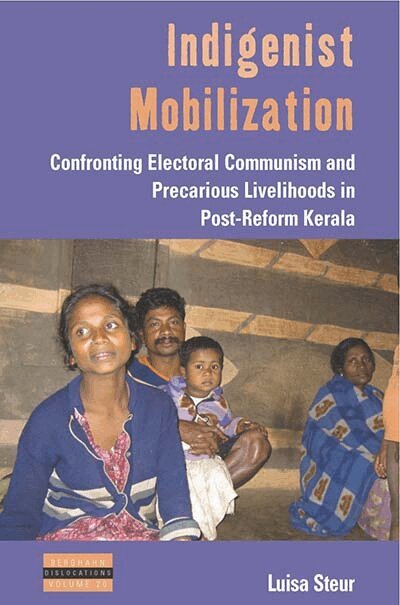
    Indigenist Mobilization

    Confronting Electoral Communism and Precarious Livelihoods in Post-Reform Kerala

    AvLuisa Steur

    E-bok
    Engelska, 2017

    Del i serien Dislocations

    290 kr

    Läs direkt i Bokus Reader – eller ladda ned till din enhet

    Fler format och utgåvor

    Inbunden

    1 861 kr

    Beskrivning

    In Kerala, political activists with a background in Communism are now instead asserting political demands on the basis of indigenous identity. Why did a notion of indigenous belonging come to replace the discourse of class in subaltern struggles? Indigenist Mobilization answers this question through a detailed ethnographic study of the dynamics between the Communist party and indigenist activists, and the subtle ways in which global capitalist restructuring leads to a resonance of indigenist visions in the changing everyday working lives of subaltern groups in Kerala.

    Produktinformation

    • Utgivningsdatum:2017-05-01
    • Språk:Engelska
    • Antal sidor:302
    • Filformat:EPUB
    • Kopieringsskydd:LCP
    • ISBN:9781785333835
    • Förlag:Berghahn Books
    • Serie:Dislocations

    Utforska kategorier

    • Etnicitet inom Samhälle och politik
    • Antropologi inom Samhälle och politik
    • Politik och statsskick inom Samhälle och politik

    Mer om författaren

    Luisa Steur is Assistant Professor at the Department of Anthropology, University of Amsterdam. She is also Lead Editor of Focaal-Journal of Global and Historical Anthropology. Extending her work on indigenism in Kerala, she is now engaged in comparative research on racial inequality and anti-racist activism in Cuba.

    Recensioner i media

    “The ethnographic material incorporated in the book is vast… But the richness of the material presented precisely offers the book its authority— the multiple conjunctures that led to the rise of indigeneity are detailed with great effort. For young researchers using ethnography as a method, the work could present an example of navigating positionality issues determined by one’s social location through the sheer detail of the evidences collected and the sensitivity with which they are presented… The book is perhaps most important for the theoretical insights it provides.” • Dialectical Anthropology“This book is recommended reading for those who work with issues of land governance, resource politics, social mobilisation and identity and citizenship, and to students and general readers eager to get an impression of what anthropology at its rigorous best looks like.” • The Asia Pacific Journal of Anthropology“Indigenist Mobilization ably shows that indigeneity is not an inevitable let alone natural or essential approach to identity and action but one that, as anthropology has become adept at describing, is built by specific actors in specific circumstances for specific purposes. This lesson is crucial for the discipline as well as for policymakers who must deal with the demands of newly-energized ‘indigenous’ groups.” • Anthropology Review Database“This is a wonderfully written piece that will raise some eyebrows and generate some wonderful debates. The critique of indigenist “identity” politics has been sorely needed for a long time, and this work helps us assess that context in a more robust and critical fashion without falling into a lackluster, celebratory mode of championing indigenous politics on a pure level of ‘identity’ and ‘rights’.” • Ananthakrishnan Aiyer, University of Michigan“A summation of outstanding research, and based on ethical, committed, and egalitarian fieldwork, this book has an enormously important contribution to make to a number of fields, including South Asian Politics, Ethnography and History, Social Movement Analysis, International Studies and Environmental Studies.” • Kavita Philip, UC Irvine

    Innehållsförteckning

    • List of FiguresMapsAcknowledgements
PART I: INTRODUCTIONIntroduction: Research and Activism in, on, and Beyond a Capitalist World SystemPART II: ADIVASINESS AND ITS DISCONTENTSChapter 1. The “Tribe” in World TimeChapter 2. The importance of Being AdivasiPART III: CONTENTION AND CONFLICT AT THE END OF A REFORMIST CYCLEChapter 3. Electoral Communism and Its CriticsChapter 4. Widening Circles of Political DisidentificationPART IV: CONDITIONING INDIGENISM: THE "KERALA MODEL" IN CRISISChapter 5. Salaried but Subaltern: On the Vulnerability of Social MobilityChapter 6. Adivasi Labor: Of Workers without WorkPART V: CONCLUSIONChapter 7. The (Dis)Placements of ClassGlossaryBibliographyIndex