• Fri frakt över 249 kr
  • •
  • Snabba leveranser
  • •
  • Billiga böcker
Kundservice

Du är på sajten för privatpersoner.

Företag, bibliotek eller offentlig verksamhet?

Du handlar på classic.bokus.com, där alla dina funktioner finns intakta.
Till classic.bokus.com
Bokus logotyp. Gå till startsidan.
  • Erbjudanden
  • Nyheter
  • Student
  • Topplistor
  • Barn & ungdom
  • Bokus Play
  • E-böcker
  • Pocketböcker
  • Spel & pussel

10% rabatt på allt med kod NYSTART10 →

Sidfot

Mina sidor

    Hjälp

    • Kundservice
    • Vanliga frågor och svar
    • Frakt och leverans
    • Retur vid ångerrätt
    • Reklamera vara
    • Betalning
    • Köpvillkor
    • Allmänna villkor
    • Information om webbplatsens tillgänglighet

    Om Bokus

    • Om oss
    • Pressrum
    • För studenter
    • För företag
    • För bibliotek och offentlig verksamhet
    • För leverantörer
    • Hållbarhet

    Populärt

    • Aktuella erbjudanden
    • Presentkort
    • Studentlitteratur
    • Nya böcker
    • Topplistor
    • Signerade böcker
    • Engelska böcker

    Inspiration

    • Boktips
    • BookTok
    • Populära bokserier
    • Barnbokskaraktärer
    • Populära författare
    Logotyp för Bokus
    Följ oss på Facebook (extern länk)Följ oss på Instagram (extern länk)Följ oss på YouTube (extern länk)Följ oss på TikTok (extern länk)
    bokus @ CookiesAnpassa cookiesIntegritetspolicyKöpvillkor
    Till Citymail hemsida (extern länk)Till Budbee hemsida (extern länk)Till Postnord hemsida (extern länk)Till Schenker hemsida (extern länk)Till Early Bird hemsida (extern länk)Till Walleys hemsida (extern länk)
    1. Ekonomi och Ledarskap
    2. Nationalekonomi
    3. Ekonomisk politik

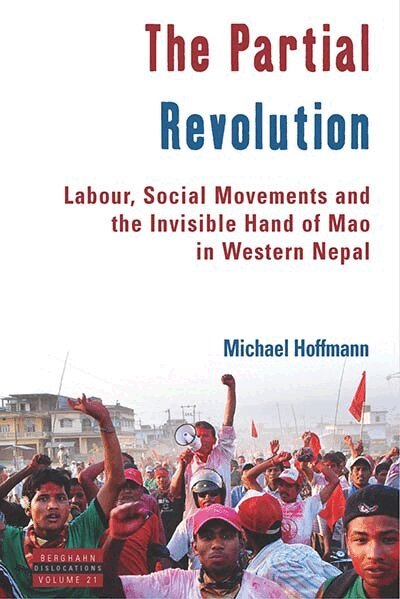
    Partial Revolution

    Labour, Social Movements and the Invisible Hand of Mao in Western Nepal

    AvMichael Hoffmann

    Inbunden, Engelska, 2018

    Del 21 i serien Dislocations

    1 861 kr

    Beställningsvara. Skickas inom 5-8 vardagar. Fri frakt över 249 kr.

    Fler format och utgåvor

    E-bok

    315 kr

    Häftad

    382 kr

    Beskrivning

    Located in the far-western Tarai region of Nepal, Kailali has been the site of dynamic social and political change in recent history. The Partial Revolution examines Kailali in the aftermath of Nepal’s Maoist insurgency, critically examining the ways in which revolutionary political mobilization changes social relations—often unexpectedly clashing with the movement’s ideological goals. Focusing primarily on the end of Kailali’s feudal system of bonded labor, Hoffmann explores the connection between politics, labor, and Mao’s legacy, documenting the impact of changing political contexts on labor relations among former debt-bonded laborers.

    Produktinformation

    • Utgivningsdatum:2018-01-29
    • Mått:152 x 229 x 17 mm
    • Vikt:493 g
    • Format:Inbunden
    • Språk:Engelska
    • Serie:Dislocations
    • Antal sidor:232
    • Förlag:Berghahn Books
    • ISBN:9781785337802

    Utforska kategorier

    • Ekonomisk politik inom Ekonomi och Ledarskap
    • Marxism och kommunism inom Samhälle och politik

    Mer om författaren

    Michael Hoffmann is a Senior Research Fellow at Humboldt University in Berlin. Previously, he worked as a post-doc fellow at the Institute for Cultural and Social Anthropology in Cologne and the Max Planck Institute for Social Anthropology in Halle Germany. He received his PhD in Anthropology from the London School of Economics and Political Sciences in 2012.

    Recensioner i media

    “…a novel contribution to the literature on political mobilization in post-conflict Nepal. It is unusual in that it is an ethnography of the Terai region, as well as of collective mobilization in urban areas, and of labour politics and trade unions in Nepal, which will make it of interest to a broad range of scholars working in these fields.” • Journal of the Royal Anthropological Institute“By shifting the focus from the impact of the revolution to the transformations caused by contemporary capitalist formations, The Partial Revolution brilliantly demonstrates one of the main contradictions of Nepali society. In their fight against the ‘old order’, Maoists predominantly focused on what they categorised as ‘feudal’ exploitation, while overlooking the inequalities that were the consequence of capitalist restructuring in the region. The Partial Revolution therefore makes a considerable contribution to the field which is currently examining the intersection between social movements, politico-economic developments and labour relations in Nepal.” • European Bulletin of Himalayan Research“Hoffman’s book is an enlightening work and deserves to be read by those with interests in revolutionary movements and labour conditions in Nepal.” • Social Anthropology“The Partial Revolution is an essential read because it provides a rich ethnographic account of the lives of people who continue to be marginalized. Hoffmann humanizes the freed Kamaiyas and helps readers visualize them in their settlements, at the brick kiln factories, and gain a deeper understanding of their aspirations… The book is a valuable contribution to the study of labor in South Asia and deserves a wider readership.” • Eurasian Geography and Economics“With this book, Hoffmann makes an important contribution to the ethnography of Maoism in Nepal, as well as providing much needed ethnographic insight into an area of western Nepal which has received relatively little scholarly attention, yet remains at the center of recent political upheavals.” • Sara Shneiderman, University of British Columbia

    Innehållsförteckning

    • List of IllustrationsAcknowledgementsNote on TransliterationIntroduction: The Maoist Victory RallyPART I: POLITICS IN THE TOWNChapter 1. Urban Festivals and Post-Conflict PatronageChapter 2. The Occupation of Symbolic Space in TownChapter 3. Learning to Protest: The Freed Kamaiya MovementChapter 4. Maoists and Labour Unions in TownPART II: LABOUR RELATIONS IN A BRICK FACTORY IN THE HINTERLANDChapter 5. Red Salute at Work in a Brick FactoryChapter 6. The Revolutionary Legacy and Debt BondageConclusion: The Partial RevolutionAppendixGlossaryBibliographyIndex