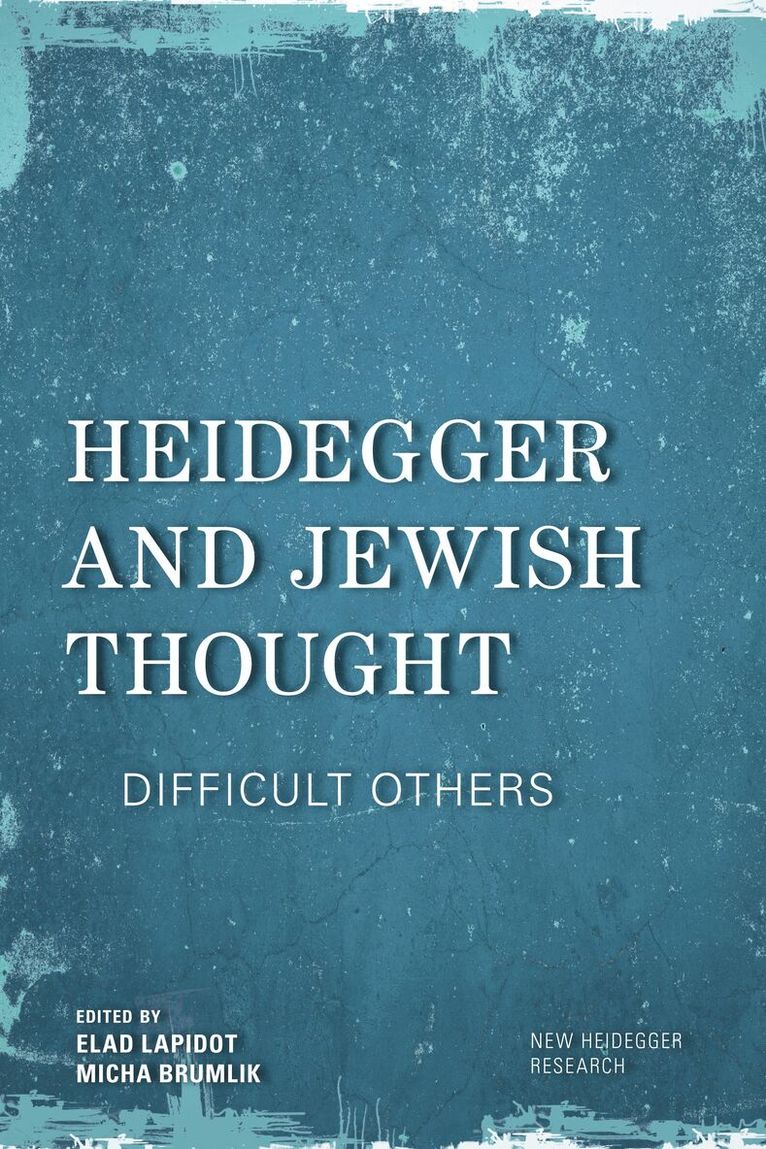
Häftad, Engelska, 2017
Heidegger and Jewish Thought
Difficult Others
Av Elad Lapidot, Micha Brumlik
Del i serien New Heidegger Research
711 kr
Beställningsvara. Skickas inom 10-15 vardagar. Fri frakt över 249 kr.
Beskrivning
Produktinformation
- Utgivningsdatum: 2017-11-15
- Mått: 153 x 229 x 20 mm
- Vikt: 440 g
- Format: Häftad
- Språk: Engelska
- Serie: New Heidegger Research
- Antal sidor: 322
- Förlag: Bloomsbury Publishing PLC
- ISBN: 9781786604729
Utforska kategorier
Mer om författaren
Micha Brumlik is professor emeritus at the Goethe University of Frankfurt am Main and senior professor at the Center for Jewish Studies Berlin-Brandenburg.Elad Lapidot is a lecturer and researcher at the Freie Universitat Berlin and the Center for Jewish Studies Berlin-Brandenburg. He is the author of Etre sans mot dire (2010).
Recensioner i media
. . . . this volume as a whole lives up to its own standard of being an “intervention” in the spirit of polemos. By assembling a wide array of approaches, it inter-venes in the most literal sense: It comes between dominant discursive positions that, while masquerading as neutral analyses of the ideological implications of Heidegger’s thinking, too often are deeply factional in character. Without attempting to mediate between or reconcile said positions, let alone Heidegger and the Jewish intellectual tradition, it attests to the possibility of productive dialogical dispute between modes of thought generally deemed incompatible. In doing so, it opens up the space for alternative ways of accessing the complex relation between these modes that go beyond collecting evidence for or against Heidegger’s anti-Semitism.
Betyg & recensioner
0 recensioner
Inga recensioner tillgängliga.