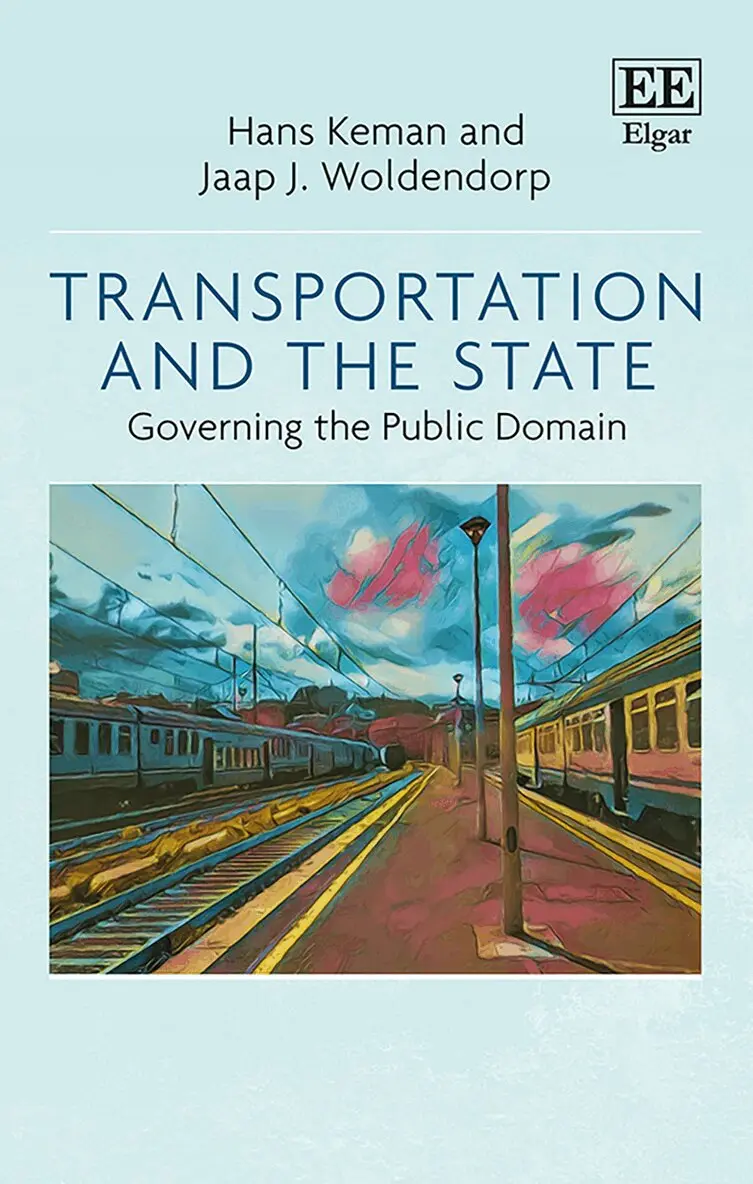
Inbunden, Engelska, 2020
Transportation and the State
Governing the Public Domain
Av Hans Keman, Jaap J. Woldendorp
1912 kr
Beställningsvara. Skickas inom 7-10 vardagar. Fri frakt över 249 kr.
Beskrivning
Produktinformation
- Utgivningsdatum: 2020-10-06
- Mått: 156 x 234 x undefined mm
- Format: Inbunden
- Språk: Engelska
- Förlag: Edward Elgar Publishing Ltd
- ISBN: 9781788112949
Utforska kategorier
Mer om författaren
Hans Keman, Professor Emeritus of Political Science and Jaap J. Woldendorp, Formerly Associate Professor, Vrije Universiteit Amsterdam, the Netherlands
Recensioner i media
'This unique and impressive study constitutes a major contribution to the comparative and historical analysis of nation-states on democratization and economic development. The original findings are based on excellent theoretical reflections and persuasive empirical analysis that provides a compelling examination of the sustainable role of the state on the implementation of the railway systems in eight countries. This book is to be commended both for what it says and for what it suggests. One would therefore like to see this book in the hands of many political scientists, economists, and historians.'--Ferdinand Müller-Rommel, Leuphana Universität Lüneburg, Germany'Hans Keman and Jaap Woldendorp's wonderful book journeys through four countries-Australia, Belgium, Italy, the Netherlands-to show the surprising ways in which state rulers and railway barons have used trains and railways to mould state and society. They show convincingly that the contemporary (nation) state has its organizational and institutional roots in the 19th century. A highly readable and deeply original take on the origins of the modern state. A must-read.'--Liesbet Hooghe, University of North Carolina at Chapel Hill, US and European University Institute, Italy'In their well composed book, Keman and Woldendorp present a strong argument for the key role of the state in developing the public domain. They analyse painstakingly how modern railway systems emerged in a set of Western democracies on the basis of state--society interactions. As infrastructure is essential to economic and social welfare, the state, they show convincingly, has been the focus of policy-making and implementation resulting in the penetration of the railway everywhere. Drawing upon different models and the comparative method, this study is a major achievement in historical institutional enquiry.'--Jan-Erik Lane, University of Geneva, Switzerland and the Public Policy Institute in Belgrade, Serbia
Betyg & recensioner
0 recensioner
Inga recensioner tillgängliga.