• Fri frakt över 249 kr
  • •
  • Snabba leveranser
  • •
  • Billiga böcker
Kundservice

Du är på sajten för privatpersoner.

Företag, bibliotek eller offentlig verksamhet?

Du handlar på classic.bokus.com, där alla dina funktioner finns intakta.
Till classic.bokus.com
Bokus logotyp. Gå till startsidan.
  • Erbjudanden
  • Student
  • Topplistor
  • Barn & ungdom
  • Bokus Play
  • E-böcker
  • Ljudböcker
  • Pocketböcker
  • Spel och pussel

Pocketfynda! Hundratals böcker för 49 kr/st →

Sidfot

Mina sidor

    Hjälp

    • Kundservice
    • Vanliga frågor och svar
    • Frakt och leverans
    • Retur vid ångerrätt
    • Reklamera vara
    • Betalning
    • Köpvillkor
    • Allmänna villkor
    • Information om webbplatsens tillgänglighet

    Om Bokus

    • Om oss
    • Pressrum
    • För studenter
    • För företag
    • För bibliotek och offentlig verksamhet
    • För leverantörer
    • Hållbarhet

    Populärt

    • Aktuella erbjudanden
    • Presentkort
    • Studentlitteratur
    • Nya böcker
    • Topplistor
    • Signerade böcker
    • Engelska böcker

    Inspiration

    • Boktips
    • BookTok
    • Barnbokskaraktärer
    • Populära författare
    Logotyp för Bokus
    Följ oss på Facebook (extern länk)Följ oss på Instagram (extern länk)Följ oss på YouTube (extern länk)Följ oss på TikTok (extern länk)
    bokus @ CookiesAnpassa cookiesIntegritetspolicyKöpvillkor
    Till Citymail hemsida (extern länk)Till Budbee hemsida (extern länk)Till Postnord hemsida (extern länk)Till Schenker hemsida (extern länk)Till Early Bird hemsida (extern länk)Till Walleys hemsida (extern länk)
    1. Samhälle och politik
    2. Politik och statsskick
    3. Politiska ideologier och rörelser
    4. Nationalism

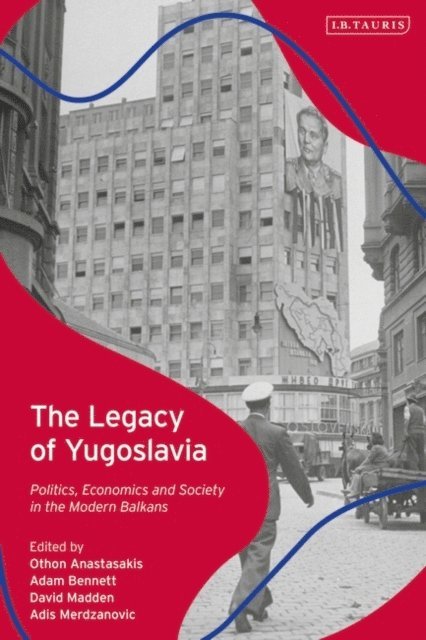
    Legacy of Yugoslavia

    Politics, Economics and Society in the Modern Balkans

    AvOthon Anastasakis,Adam Bennett

    E-bok
    Engelska, 2020

    483 kr

    Läs direkt i Bokus Reader – eller ladda ned till din enhet

    Beskrivning

    What are the consequences of Yugoslavia's existence – and breakup – for the present? This book reflects on this very question, identifying and analysing the political legacies left behind by Yugoslavia through the prism of continuities and ruptures between the past and present of the area. After the collapse of Yugoslavia, it's former states adopted a nation-building process which opted to eradicate the past as such an approach seemed more convenient for the new national projects. The new states adopted new institutions, new market-oriented economic paradigms and new national symbols. Yugoslavia existed for 70 years and to consider the current political situation in post-Yugoslav states such as Slovenia, Croatia, Bosnia and Herzegovina, Serbia, Montenegro, North Macedonia, and Kosovo without taking into account the legacy and remnants of Yugoslavia is to discount a vital part of their political history.This volume takes a multi-disciplinary and multi-faceted approach to examining the legacy of Yugoslavia, covering politics, society, international relations and economics. Focusing on distinctive features of Yugoslavia including worker self-management, the combination of liberalism and communism and the Cold War policy of Non-Alignment, The Legacy of Yugoslavia places Yugoslavia in historical perspective and connects the region's past with its contemporary political situation.

    Produktinformation

    • Utgivningsdatum:2020-06-25
    • Språk:Engelska
    • Antal sidor:240
    • Filformat:EPUB
    • Kopieringsskydd:LCP
    • ISBN:9781788317979
    • Förlag:Bloomsbury Publishing PLC

    Utforska kategorier

    • Nationalism inom Samhälle och politik
    • Internationella relationer inom Samhälle och politik

    Mer om författaren

    Adam Bennett is Deputy Director of the Political Economy of Financial Markets (PEFM) program and an Associate of SEESOX at the European Studies Centre, UK. He also lectures (on a part-time external basis) at Cardiff University. Prior to joining St. Antony's College, Bennett worked for the International Monetary Fund (IMF), from which he retired in 2011.Adis Merdzanovic is a postdoctoral Junior Research Fellow at South East European Studies at Oxford (SEESOX) at the European Studies Centre of St Antony's College, University of Oxford, UK.David Madden is the Chair of the SEESOX Steering Committee and Distinguished Friend of St Antony's College, University of Oxford, UK. A member of the UK Diplomatic Service for 34 years, hehas extensive experience of working in and with countries and places on the brink of break-up, those seriously divided, and those where regional tensions run high. He was successively British High Commissioner in Cyprus, and Ambassador in Athens before retiring in 2004.Othon Anastasakis is the Director of South East European Studies at Oxford (SEESOX) and Senior Research Fellow at St Antony's College, UK. He is also an Adjunct Professor at Simon Fraser University in Vancouver, Canada. He is the Principal Investigator of the SEESOX Greek Diaspora Project.

    Recensioner i media

    As the successor states enter their fourth decade, it is tempting to dismiss the legacies of the four decades of a single Yugoslavia that preceded them. This welcome volume addresses the continuing connections of the one with the many, from the strengths and weakness of the former Yugoslavia to its continuities and discontinuities in the seven successor states. Drawn from a recent Oxford conference, its editors have assembled nine instructive chapters primarily from regional scholars. They cover a range of relevant subjects that would daunt any single author. The political chapters examine continuing ambiguities in the role of liberal ideology, civil society and a once common popular culture. Chapters on international affairs consider the legacies of non-alignment, territorial disputes and relations with Russia and Turkey. The final chapters move from two critical appraisals of the Yugoslav economic model that debate its recent relevance to the EU's market model and to a third surveying the struggles over its adoption in business practice and public opinion.

    Innehållsförteckning

    • Introduction (Othon Anastasakis, Adam Bennett, David Madden, Adis Merdzanovic)Part I. Politics and Society1. Adis Merdzanovic (St Antony's College, Oxford): Liberalism in Yugoslavia: before and after the disintegration2. Denisa Kostovicova (LSE), Adam Fagan (Queen Mary University, London), and Ivor Sokolic´ (LSE):Civil society in post-Yugoslav space: The test of discontinuity and democratisation.3. Catherine Baker (Hull University):Music, media and culture one generation after Yugoslavia: do we still need “nostalgia”?Part II: International Affairs4. Ljubica Spaskovska (Exeter University): Transformations of global citizenship in the former Yugoslavia: The legacies of Yugoslav non-aligned multilateralism5. James Ker-Lindsay (LSE):Between a Borderless Yugoslavia and a Europe without Borders: The Legacy of Territorial Disputes in the Western Balkans6. Othon Anastasakis (St Antony's College, Oxford):Parallel trajectories and legacies of the past: Russia and Turkey in the Western BalkansPart III: Economics7. Adam Bennett (St Antony's College, Oxford):Macroeconomic Stability and Enterprise Self-Management in Yugoslavia: An Impossible Marriage8. Milica Uvalic (University of Perugia): What happened to the Yugoslav economic model?9. Jakov Milatovic and Peter Sanfey (European Bank for Reconstruction and Development, EBRD): Are Yugoslav successor states on the path to sustainable market economies?Conclusion (Othon Anastasakis, Adis Merdzanovic, Adam Bennett and David Madden)Index