• Fri frakt över 249 kr
  • •
  • Snabba leveranser
  • •
  • Billiga böcker
Kundservice

Du är på sajten för privatpersoner.

Företag, bibliotek eller offentlig verksamhet?

Du handlar på classic.bokus.com, där alla dina funktioner finns intakta.
Till classic.bokus.com
Bokus logotyp. Gå till startsidan.
  • Erbjudanden
  • Nyheter
  • Student
  • Topplistor
  • Barn & ungdom
  • Bokus Play
  • E-böcker
  • Pocketböcker
  • Spel & pussel

10% rabatt på allt med kod: NYSTART10 →

Sidfot

Mina sidor

    Hjälp

    • Kundservice
    • Vanliga frågor och svar
    • Frakt och leverans
    • Retur vid ångerrätt
    • Reklamera vara
    • Betalning
    • Köpvillkor
    • Allmänna villkor
    • Information om webbplatsens tillgänglighet

    Om Bokus

    • Om oss
    • Pressrum
    • För studenter
    • För företag
    • För bibliotek och offentlig verksamhet
    • För leverantörer
    • Hållbarhet

    Populärt

    • Aktuella erbjudanden
    • Presentkort
    • Studentlitteratur
    • Nya böcker
    • Topplistor
    • Signerade böcker
    • Engelska böcker

    Inspiration

    • Boktips
    • BookTok
    • Populära bokserier
    • Barnbokskaraktärer
    • Populära författare
    Logotyp för Bokus
    Följ oss på Facebook (extern länk)Följ oss på Instagram (extern länk)Följ oss på YouTube (extern länk)Följ oss på TikTok (extern länk)
    bokus @ CookiesAnpassa cookiesIntegritetspolicyKöpvillkor
    Till Citymail hemsida (extern länk)Till Budbee hemsida (extern länk)Till Postnord hemsida (extern länk)Till Schenker hemsida (extern länk)Till Early Bird hemsida (extern länk)Till Walleys hemsida (extern länk)
    1. Historia och arkeologi
    2. Arkeologi
    3. Arkeologiska perioder och områden

    Planning in the Early Medieval Landscape

    AvJohn Blair,Stephen Rippon

    Inbunden, Engelska, 2020

    Del i serien Exeter Studies in Medieval Europe

    2 081 kr

    Beställningsvara. Skickas inom 5-8 vardagar. Fri frakt över 249 kr.

    Fler format och utgåvor

    Häftad

    630 kr

    Beskrivning

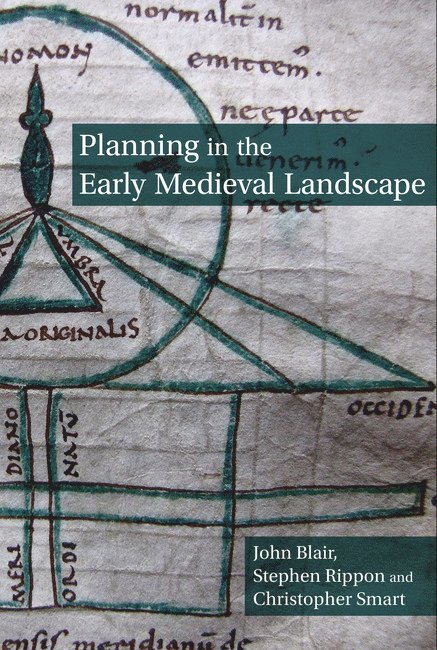
    The extent to which Anglo-Saxon society was capable of large-scale transformations of the landscape is hotly disputed. This interdisciplinary book – embracing archaeological and historical sources – explores this important period in our landscape history and the extent to which buildings, settlements and field systems were laid out using sophisticated surveying techniques. In particular, recent research has found new and unexpected evidence for the construction of building complexes and settlements on geometrically precise grids, suggesting a revival of the techniques of the Roman land-surveyors (Agrimensores). Two units of measurement appear to have been used: the ‘short perch’ of 15 feet in central and eastern England, where most cases occur, and the ‘long perch’ of 18 feet at the small number of examples identified in Wessex. This technically advanced planning is evident during two periods: c.600–800, when it may have been a mostly monastic practice, and c.940–1020, when it appears to have been revived in a monastic context but then spread to a wider range of lay settlements.Planning in the Early Medieval Landscape is a completely new perspective on how villages and other settlement were formed. It combines map and field evidence with manuscript treatises on land-surveying to show that the methods described in the treatises were not just theoretical, but were put into practice. In doing so it reveals a major aspect of previously unrecognised early medieval technology.

    Produktinformation

    • Utgivningsdatum:2020-06-17
    • Mått:163 x 239 x undefined mm
    • Format:Inbunden
    • Språk:Engelska
    • Serie:Exeter Studies in Medieval Europe
    • Antal sidor:368
    • Förlag:Liverpool University Press
    • ISBN:9781789621167

    Utforska kategorier

    • Arkeologiska perioder och områden inom Historia och arkeologi
    • Medeltiden inom Historia och arkeologi

    Mer om författaren

    John Blair is Fellow and Praelector in History at The Queen’s College, Oxford, and Professor of Medieval History and Archaeology at the University of Oxford. His interests centre on the landscape, society and settlement of Anglo-Saxon England, especially its built environment, with an emphasis on archaeological evidence. In 2013 he gave the James Ford Lectures in British History at Oxford University. His many books include The Church in Anglo-Saxon Society (OUP 2015) and Building Anglo-Saxon England (Princeton UP 2018). Stephen Rippon is Professor of Landscape Archaeology at the University of Exeter. He has served as President of the Medieval Settlement Research Group and Treasurer of the Society for Medieval Archaeology. His many books include Kingdom, Civitas, and County: The Evolution of Territory in the English Landscape (OUP 2018); The Fields of Britannia, with C. Smart and B. Pears (OUP 2015) and Beyond the Medieval Village: The Diversification of Landscape Character in Southern Britain (OUP 2nd edition 2014).Chris Smart is a Research Associate in Archaeology at the University of Exeter. He is a landscape archaeologist who specialises in the heritage of Roman and medieval Britain, and the use of GIS in ‘big data’ research. He is the editor of Industry and the Making of a Rural Landscape: the Regional Context of Iron and Pottery Production at Churchill’s Farm, Hemyock, Devon (BAR 2018).

    Recensioner i media

    ‘I would strongly recommend this book to everyone interested in medieval settlement... the authors here offer a thesis which many readers may find compelling and will provide widespread inspiration to look at known sites in a new light.’ Carenza Lewis, Medieval Settlement Research

    Innehållsförteckning

    • 1. Introduction2. Early medieval settlements and field systems3. Identifying planning in the early medieval landscape4. Planning technologies in post-Roman Europe and their impact on English practice5. Higher-status settlements in England, c.600-10506. Rural settlements in England, c.600-10507. ConclusionsAppendix A: Perches, post-holes and gridsAppendix B: Anglo-Saxon grids and the designing of buildings, with special reference to churches and the square root of twoAppendix C: Catalogue of Grid-Planned SitesBibliography