• Fri frakt över 249 kr
  • •
  • Snabba leveranser
  • •
  • Billiga böcker
Kundservice

Du är på sajten för privatpersoner.

Företag, bibliotek eller offentlig verksamhet?

Du handlar på classic.bokus.com, där alla dina funktioner finns intakta.
Till classic.bokus.com
Bokus logotyp. Gå till startsidan.
  • Erbjudanden
  • Nyheter
  • Student
  • Topplistor
  • Barn & ungdom
  • Bokus Play
  • E-böcker
  • Pocketböcker
  • Spel & pussel

10% rabatt på allt med kod: NYSTART10 →

Sidfot

Mina sidor

    Hjälp

    • Kundservice
    • Vanliga frågor och svar
    • Frakt och leverans
    • Retur vid ångerrätt
    • Reklamera vara
    • Betalning
    • Köpvillkor
    • Allmänna villkor
    • Information om webbplatsens tillgänglighet

    Om Bokus

    • Om oss
    • Pressrum
    • För studenter
    • För företag
    • För bibliotek och offentlig verksamhet
    • För leverantörer
    • Hållbarhet

    Populärt

    • Aktuella erbjudanden
    • Presentkort
    • Studentlitteratur
    • Nya böcker
    • Topplistor
    • Signerade böcker
    • Engelska böcker

    Inspiration

    • Boktips
    • BookTok
    • Populära bokserier
    • Barnbokskaraktärer
    • Populära författare
    Logotyp för Bokus
    Följ oss på Facebook (extern länk)Följ oss på Instagram (extern länk)Följ oss på YouTube (extern länk)Följ oss på TikTok (extern länk)
    bokus @ CookiesAnpassa cookiesIntegritetspolicyKöpvillkor
    Till Citymail hemsida (extern länk)Till Budbee hemsida (extern länk)Till Postnord hemsida (extern länk)Till Schenker hemsida (extern länk)Till Early Bird hemsida (extern länk)Till Walleys hemsida (extern länk)
    1. Samhälle och politik
    2. Samhälle och kultur
    3. Kultur och medier
    4. Kulturvetenskap

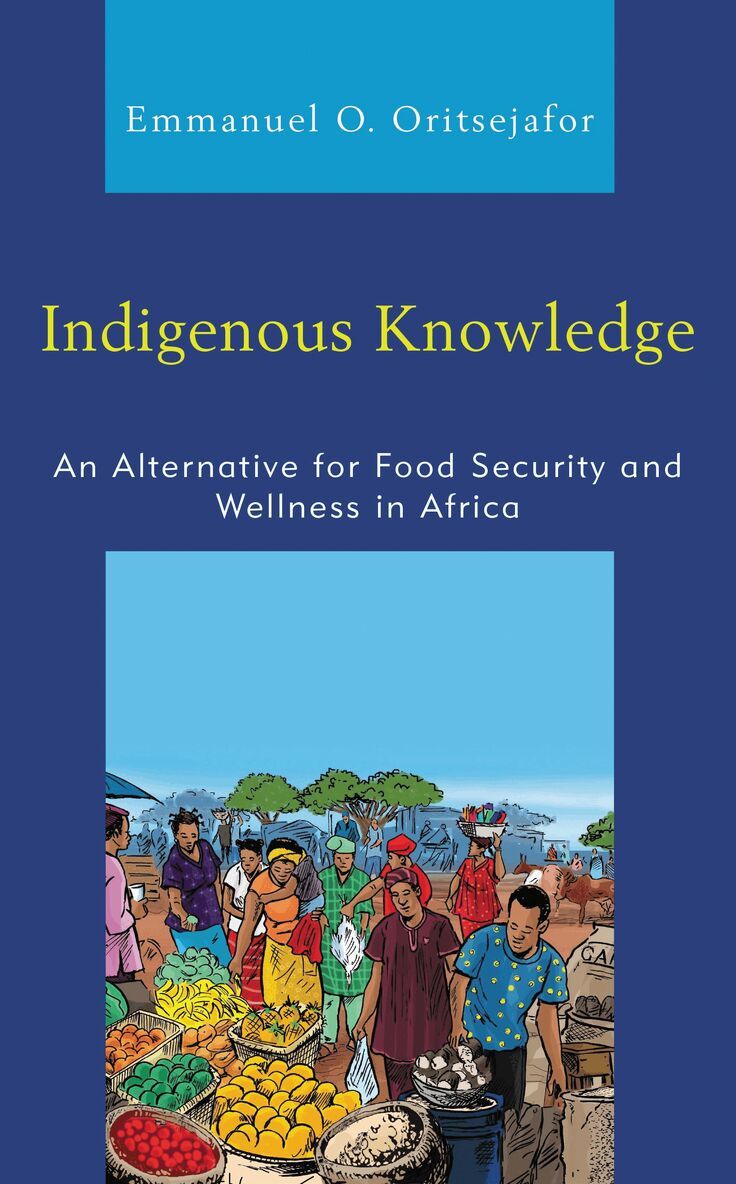
    Indigenous Knowledge

    An Alternative for Food Security and Wellness in Africa

    AvEmmanuel O. Oritsejafor

    Häftad, Engelska, 2024

    451 kr

    Beställningsvara. Skickas inom 10-15 vardagar. Fri frakt över 249 kr.

    Fler format och utgåvor

    Inbunden

    1 188 kr

    Beskrivning

    In Indigenous Knowledge: An Alternative for Food Security and Wellness in Africa, Emmanuel O. Oritsejafor argues that Indigenous Knowledge (IK) needs to play a central role in addressing food insecurity because IK methods result in sustainable agricultural practices which improve wellness. The application of IK in global communities demonstrates why it is an invaluable development alternative. For instance, Native Indians in the America’s have survived over several generations using IK for agriculture and wellness purposes. Oristejafor establishes the severity and breadth of food insecurity on the continent of Africa and critiques the western-led development model which has proven to be inadequate in solving Africa's food security needs. In this regard, Oritsejafor suggests that indigenous knowledge(IK) should serve as one of the central models for addressing food security because it takes into account consideration for the specificities of local conditions and relies on the knowledge and the environment of African communities. Contrarily, he posits that the reliance on modern technologies have not been able to halve hunger and poverty in Africa.

    Produktinformation

    • Utgivningsdatum:2024-03-22
    • Mått:151 x 227 x 14 mm
    • Vikt:290 g
    • Format:Häftad
    • Språk:Engelska
    • Antal sidor:194
    • Förlag:Bloomsbury Publishing Plc
    • ISBN:9781793615107

    Utforska kategorier

    • Kulturvetenskap inom Samhälle och politik
    • Industrier och branscher inom Ekonomi och Ledarskap
    • Politik och statsskick inom Samhälle och politik

    Mer om författaren

    Emmanuel O. Oritsejafor is professor of political science at North Carolina Central University.

    Recensioner i media

    “Finally, we have ‘the’ book that explains why more than sixty years of projects from the World Bank, the IMF, and USAID have failed to overcome global hunger and malnutrition. Emmanuel Oritsejafor doesn’t just show where modern science has failed Africa, he offers a solution by showing how Indigenous Knowledge actually provides many scientific principles that can complement Western technologies that address food security and wellness. Oritsejafor also shows the shortcomings of corporate food management regimes and land tenure systems, as well as how integrating women more fully into the wellness sectors of African economies can help overcome food insecurities. His analysis of Indigenous Knowledge borrows from African sources as well as South Asian, Native American, and the Aboriginals of Australia.”

    Innehållsförteckning

    • PrefaceAcknowledgmentsIntroductionChapter 1: Theoretical IssuesChapter 2: Development StrategiesChapter 3: Traditional Food Regimes and Food Security in AfricaChapter 4: Food Security in War Torn Countries: The case of Liberia and Democratic Republic of Congo (DRC)Chapter 5: Indigenous Knowledge (IK)and Agro-Eco-systems: The Case of Nigeria and GhanaChapter 6: Alternative Energy Chapter 7: The COVID-19 Pandemic and Indigenous Knowledge - A Case StudyChapter 8: Land Tenure and the Role of Women in Economic Development in AfricaChapter 9: The Way ForwardReferences