• Fri frakt över 249 kr
  • •
  • Snabba leveranser
  • •
  • Billiga böcker
Kundservice

Du är på sajten för privatpersoner.

Företag, bibliotek eller offentlig verksamhet?

Du handlar på classic.bokus.com, där alla dina funktioner finns intakta.
Till classic.bokus.com
Bokus logotyp. Gå till startsidan.
  • Erbjudanden
  • Nyheter
  • Student
  • Topplistor
  • Barn & ungdom
  • Bokus Play
  • E-böcker
  • Pocketböcker
  • Spel & pussel

10% rabatt på allt med kod NYSTART10 →

Sidfot

Mina sidor

    Hjälp

    • Kundservice
    • Vanliga frågor och svar
    • Frakt och leverans
    • Retur vid ångerrätt
    • Reklamera vara
    • Betalning
    • Köpvillkor
    • Allmänna villkor
    • Information om webbplatsens tillgänglighet

    Om Bokus

    • Om oss
    • Pressrum
    • För studenter
    • För företag
    • För bibliotek och offentlig verksamhet
    • För leverantörer
    • Hållbarhet

    Populärt

    • Aktuella erbjudanden
    • Presentkort
    • Studentlitteratur
    • Nya böcker
    • Topplistor
    • Signerade böcker
    • Engelska böcker

    Inspiration

    • Boktips
    • BookTok
    • Populära bokserier
    • Barnbokskaraktärer
    • Populära författare
    Logotyp för Bokus
    Följ oss på Facebook (extern länk)Följ oss på Instagram (extern länk)Följ oss på YouTube (extern länk)Följ oss på TikTok (extern länk)
    bokus @ CookiesAnpassa cookiesIntegritetspolicyKöpvillkor
    Till Citymail hemsida (extern länk)Till Budbee hemsida (extern länk)Till Postnord hemsida (extern länk)Till Schenker hemsida (extern länk)Till Early Bird hemsida (extern länk)Till Walleys hemsida (extern länk)
    1. Psykologi och pedagogik
    2. Psykologi
    3. Psykologiska teorier och skolor
    4. Freudiansk psykologi

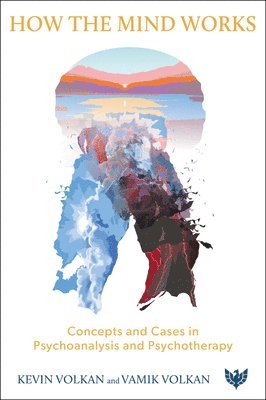
    How the Mind Works

    Concepts and Cases in Psychoanalysis and Psychotherapy

    AvKevin Volkan,Vamık Volkan

    Häftad, Engelska, 2023

    470 kr

    Beställningsvara. Skickas inom 5-8 vardagar. Fri frakt över 249 kr.

    Beskrivning

    There is a great deal of confusion about psychoanalysis and psychoanalytic psychotherapy, even among practitioners of these methods. One reason is the sheer volume of psychoanalytic psychotherapies currently practised around the world; some very similar, others widely divergent. To help allay this confusion, Kevin Volkan and Vamık Volkan present what lies at the heart of psychoanalysis and demonstrate the different ways this core can manifest in practice.The authors’ aim is to improve psychoanalytic psychotherapists’ professional identities as well as their approaches to patients. The wide-ranging subjects discussed include therapeutic principles; key psychoanalytic concepts; psychotherapeutic identity; the clinician’s office; making formulations and interpretations; psychosocial development; individual and large-group identity; trauma and transgenerational transmission; dreams and unconscious fantasies; therapeutic play; personality organisations; cultural considerations; and psychoanalysis in organisations and groups.Volkan and Volkan draw upon their decades of experience of psychoanalysis, biculturalism, and supervision of colleagues in various countries and cultures to create an exceptional textbook to explain psychoanalytic theory clearly. They present compelling case examples to illustrate technical issues that never lose sight of psychoanalysis and psychoanalytic psychotherapy as living professions that continue to develop. This is a must-read for all who want to learn more about psychoanalytic practice and theory.

    Produktinformation

    • Utgivningsdatum:2023-07-27
    • Mått:152 x 229 x 17 mm
    • Vikt:452 g
    • Format:Häftad
    • Språk:Engelska
    • Antal sidor:270
    • Förlag:Karnac Books
    • ISBN:9781800131996

    Utforska kategorier

    • Freudiansk psykologi inom Psykologi och pedagogik
    • Psykoterapi som behandlingsmetod inom Medicin

    Mer om författaren

    Kevin Volkan, EdD, PhD, MPH is a founding faculty member and Professor of Psychology at California State University Channel Islands, where he researches and teaches courses on psychopathology and atypical behaviors, personality theory, as well as Nazi Germany, and Eastern philosophy. Dr. Volkan also currently serves on the Graduate Medical Education faculty for the Community Memorial Hospital System in Ventura, CA, where he teaches and conducts research with medical residents, and as an adjunct faculty member for California Lutheran University’s clinical psychology doctorate program.He holds doctorates in clinical and quantitative psychology, is a graduate of the Harvard School of Public Health, and a former Harvard Medical School faculty member and administrator. Dr. Volkan is considered to be an expert on extreme psychopathologies and has testified before the United States Senate on pathological and dangerous fetishes. He has made numerous appearances on television, radio, and podcasts as a psychological expert.Dr. Volkan’s clinical training and experience is in psychoanalytic psychotherapy, though he also has experience using a wide variety of other modalities in clinical practice. He has practised clinical psychology as a staff psychologist in a state hospital and in private practice. Dr. Volkan’s clients included a diverse population of people representing a wide variety of socioeconomic strata and psychological distress. He has worked with people suffering from drug addiction, neuroses, and personality disorders as well individuals suffering from autism, organic brain injury, and schizophrenia. Dr. Volkan was awarded the Sustained Superior Accomplishment Award from the State of California for his clinical work. His current practice is centered around psychodynamic embodied dreamwork.Dr. Volkan is the author of Dancing Among the Maenads: The Psychology of Compulsive Drug Use, which is one of the few psychoanalytic works examining drug addiction. He has also published a number of papers on psychopathology as well as on psychoanalysis and culture. His current publications include works on delusional misidentification syndromes, hoarding, narcissism, and demonic possession.Vamık Volkan, MD, DFLAPA, received his medical education at the School of Medicine, University of Ankara, Turkey. He is an emeritus professor of psychiatry at the University of Virginia, Charlottesville and an emeritus training and supervising analyst at the Washington Psychoanalytic Institute, Washington, DC. In 1987, Dr Volkan established the Center for the Study of Mind and Human Interaction (CSMHI) at the School of Medicine, University of Virginia. CSMHI applied a growing theoretical and field-proven base of knowledge to issues such as ethnic tension, racism, large-group identity, terrorism, societal trauma, immigration, mourning, transgenerational transmissions, leader–follower relationships, and other aspects of national and international conflict. A year after his 2002 retirement, Dr Volkan became the Senior Erik Erikson Scholar at the Erikson Institute of the Austen Riggs Center, Stockbridge, Massachusetts and he spent three to six months there each year for ten years.In 2006, he was Fulbright/Sigmund Freud-Privatstiftung Visiting Scholar of Psychoanalysis in Vienna, Austria. Dr Volkan holds honorary doctorate degrees from Kuopio University (now called the University of Eastern Finland), Finland; from Ankara University, Turkey; and the Eastern European Psychoanalytic Institute, Russia. He was a former president of the Turkish-American Neuropsychiatric Society, the International Society of Political Psychology, the Virginia Psychoanalytic Society, and the American College of Psychoanalysts. Among many the awards he received are the Nevitt Sanford Award, Elise M. Hayman Award, L. Bryce Boyer Award, Margaret Mahler Literature Prize, Hans H. Strupp Award, the American College of Psychoanalysts’ Distinguished Officer Award for 2014, and the Mary S. Sigourney Award for 2015. He received the Sigmund Freud Award given by the city of Vienna, Austria in collaboration with the World Council of Psychotherapy. He also was honoured on several occasions by being nominated for the Nobel Peace Prize with letters of support from twenty-seven countries. Dr Volkan is the author, co-author, editor, or co-editor of more than fifty psychoanalytic and psychopolitical books, including Enemies on the Couch: A Psychopolitical Journey through War and Peace. Currently Dr Volkan is the president emeritus of the International Dialogue Initiative (IDI), which he established in 2007. He continues to lecture nationally and internationally.

    Recensioner i media

    ‘Kevin and Vamik Volkan’s new book, How the Mind Works: Concepts and Cases in Psychoanalysis and Psychotherapy, is a significant and welcome addition to the literature. It brings both depth and reach, presenting varied new perspectives without jettisoning important elements of classical approaches. Of particular value is the authors’ ability to span inner and outer, psyche and culture, unconscious fantasy and reality, intrapsychic with small and large group processes, and transgenerational traumatic elements with individual and cultural dimensions of the here and now. The authors see psychoanalysis as an ever-evolving “living profession,” and they have resisted the temptation to dogmatize while not throwing out the baby with the bathwater. This is a rich and worthwhile book.’

    Innehållsförteckning

    • About the authorsAbout this bookChapter 1Psychoanalysis and psychoanalytic psychotherapy: five therapeutic principlesChapter 2Id, ego, and superegoChapter 3Psychotherapeutic identity, confidentiality, and psychotherapist disclosureChapter 4Neutrality, transference, countertransference, counterresponsesChapter 5The psychoanalytic clinician’s officeChapter 6Developmental levelsChapter 7Defense mechanismsChapter 8ResistancesChapter 9Making formulations, interpretations, and working throughChapter 10The separation–individuation level and psychosocial developmentChapter 11Individual identity and large-group identityChapter 12Traumas and transgenerational transmissionsChapter 13Two case stories illustrating transgenerational transmissionsChapter 14Dreams and unconscious fantasiesChapter 15Therapeutic playChapter 16Personality organizationsChapter 17A story of a psychoanalysis illustrating psychoanalytic terms and conceptsChapter 18Two brief psychoanalytic psychotherapy casesChapter 19A psychotherapy case with cultural considerationsChapter 20Psychoanalytic ideas related to organizations and groupsChapter 21Concepts related to psychoanalytic group psychotherapyCodaReferencesIndex