• Fri frakt över 249 kr
  • •
  • Snabba leveranser
  • •
  • Billiga böcker
Kundservice

Du är på sajten för privatpersoner.

Företag, bibliotek eller offentlig verksamhet?

Du handlar på classic.bokus.com, där alla dina funktioner finns intakta.
Till classic.bokus.com
Bokus logotyp. Gå till startsidan.
  • Erbjudanden
  • Nyheter
  • Student
  • Topplistor
  • Barn & ungdom
  • Bokus Play
  • E-böcker
  • Pocketböcker
  • Spel & pussel

10% rabatt på allt med kod: NYSTART10 →

Sidfot

Mina sidor

    Hjälp

    • Kundservice
    • Vanliga frågor och svar
    • Frakt och leverans
    • Retur vid ångerrätt
    • Reklamera vara
    • Betalning
    • Köpvillkor
    • Allmänna villkor
    • Information om webbplatsens tillgänglighet

    Om Bokus

    • Om oss
    • Pressrum
    • För studenter
    • För företag
    • För bibliotek och offentlig verksamhet
    • För leverantörer
    • Hållbarhet

    Populärt

    • Aktuella erbjudanden
    • Presentkort
    • Studentlitteratur
    • Nya böcker
    • Topplistor
    • Signerade böcker
    • Engelska böcker

    Inspiration

    • Boktips
    • BookTok
    • Populära bokserier
    • Barnbokskaraktärer
    • Populära författare
    Logotyp för Bokus
    Följ oss på Facebook (extern länk)Följ oss på Instagram (extern länk)Följ oss på YouTube (extern länk)Följ oss på TikTok (extern länk)
    bokus @ CookiesAnpassa cookiesIntegritetspolicyKöpvillkor
    Till Citymail hemsida (extern länk)Till Budbee hemsida (extern länk)Till Postnord hemsida (extern länk)Till Schenker hemsida (extern länk)Till Early Bird hemsida (extern länk)Till Walleys hemsida (extern länk)
    1. Samhälle och politik
    2. Samhälle och kultur
    3. Kultur och medier
    4. Referensverk och tvärvetenskap

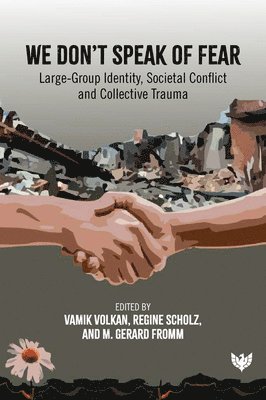
    We Don’t Speak of Fear

    Large-Group Identity, Societal Conflict and Collective Trauma

    AvVamık Volkan,Regine Scholz

    Häftad, Engelska, 2023

    Del i serien Phoenix Publishing House

    423 kr

    Skickas . Fri frakt över 249 kr.

    Beskrivning

    With contributions from Lord John Alderdice, Deniz Arıboğan, Abdülkadir Cevik, Senem B. Çevik, Coline Covington, Robi Friedman, David Fromm, M. Gerard Fromm, Hiba Husseini, Aleksandr V. Obolonski, Ford Rowan, Regine Scholz, Edward R. Shapiro, Vamık D. VolkanThe International Dialogue Initiative (IDI) is a private, international, multidisciplinary group comprised of psychoanalysts, academics, diplomats, and other professionals who bring a psychologically informed perspective to the study and amelioration of societal conflict. It aims to provide a reflective space to enable an understanding of how the emotional and historical background of hostile relations – often related to trauma – is being experienced in the present. By doing so, antagonists can overcome resistances to dialogue and facilitate the discovery of peaceful solutions to intergroup problems. This book brings together key members of the IDI to present the theory and practice of the important work they do. At its heart, the book holds the idea that, while traumatic experiences may happen to an individual or a family, they also affect society and large-group identity over long periods of time. In that way, trauma plays out between generations and between countries.The book is divided into three parts: theory, application, and methodology. Trauma is the key thread running throughout and the distinguished contributors investigate healing, dehumanisation, memory, the pandemic, war, terrorism, identity, culture, the law, justice, and religion, among many other fascinating topics. The authors bring in case studies from all over the world, including the United States, Northern Ireland, Russia, Israel, Turkey, Germany, Egypt, and Palestine. To make sense of these, they draw on a wide range of approaches: group relations theory, group analytic theory, psychoanalysis, large-group psychology, psychodynamic theory, psychology, economics, sociology, political science, history, journalism, and the law, to name but a few. This must-read book brings theory to vivid life and brings hope that our fractured world can learn to heal.

    Produktinformation

    • Utgivningsdatum:2023-04-04
    • Mått:152 x 229 x 19 mm
    • Vikt:528 g
    • Format:Häftad
    • Språk:Engelska
    • Serie:Phoenix Publishing House
    • Antal sidor:320
    • Förlag:Karnac Books
    • ISBN:9781912691098

    Utforska kategorier

    • Referensverk och tvärvetenskap inom Samhälle och politik
    • Socialpsykologi och gruppsykologi inom Psykologi och pedagogik
    • Statsvetenskap och politisk teori inom Samhälle och politik

    Mer om författaren

    Vamık Volkan, MD, DFLAPA, received his medical education at the School of Medicine, University of Ankara, Turkey. He is an emeritus professor of psychiatry at the University of Virginia, Charlottesville and an emeritus training and supervising analyst at the Washington Psychoanalytic Institute, Washington, DC. In 1987, Dr Volkan established the Center for the Study of Mind and Human Interaction (CSMHI) at the School of Medicine, University of Virginia. CSMHI applied a growing theoretical and field-proven base of knowledge to issues such as ethnic tension, racism, large-group identity, terrorism, societal trauma, immigration, mourning, transgenerational transmissions, leader–follower relationships, and other aspects of national and international conflict. A year after his 2002 retirement, Dr Volkan became the Senior Erik Erikson Scholar at the Erikson Institute of the Austen Riggs Center, Stockbridge, Massachusetts and he spent three to six months there each year for ten years.In 2006, he was Fulbright/Sigmund Freud-Privatstiftung Visiting Scholar of Psychoanalysis in Vienna, Austria. Dr Volkan holds honorary doctorate degrees from Kuopio University (now called the University of Eastern Finland), Finland; from Ankara University, Turkey; and the Eastern European Psychoanalytic Institute, Russia. He was a former president of the Turkish-American Neuropsychiatric Society, the International Society of Political Psychology, the Virginia Psychoanalytic Society, and the American College of Psychoanalysts. Among many the awards he received are the Nevitt Sanford Award, Elise M. Hayman Award, L. Bryce Boyer Award, Margaret Mahler Literature Prize, Hans H. Strupp Award, the American College of Psychoanalysts’ Distinguished Officer Award for 2014, and the Mary S. Sigourney Award for 2015. He received the Sigmund Freud Award given by the city of Vienna, Austria in collaboration with the World Council of Psychotherapy. He also was honoured on several occasions by being nominated for the Nobel Peace Prize with letters of support from twenty-seven countries. Dr Volkan is the author, co-author, editor, or co-editor of more than fifty psychoanalytic and psychopolitical books, including Enemies on the Couch: A Psychopolitical Journey through War and Peace. Currently Dr Volkan is the president emeritus of the International Dialogue Initiative (IDI), which he established in 2007. He continues to lecture nationally and internationally.Regine Scholz, Dr. Phil., is training director and Fellow of the International Dialogue Initiative, and a group analyst. Since 1987, she has worked in private practice, specializing in individual and collective trauma. As board member (2010-2017) of the Group Analytic Society International (GASI) she organized its international summer schools (Belgrade 2013, Prague 2015, Athens 2016). She also is the co-organizer of five conferences so far on the heritage of Auschwitz, “Voices after Auschwitz”. A founding member of the German Society for Group Analysis and Group Psychotherapy (D3G), Dr. Scholz is a supervisor and training analyst of D3G and member of the editorial board of the journal Group Analysis.M. Gerard Fromm, PhD, is a distinguished faculty member of the Erikson Institute of the Austen Riggs Center and a fellow of the American Board and Academy of Psychoanalysis. He was the first Evelyn Stefansson Nef Director of the Erikson Institute, and directed the therapeutic community program at Riggs for many years before that. Dr Fromm has taught at, and consulted to, a number of psychoanalytic institutes across the country and has served on the faculties of the Yale Child Study Center and Harvard Medical School. He is president of the International Dialogue Initiative, an interdisciplinary group that studies the psychodynamics of societal conflict. He is also a past president of the International Society for the Psychoanalytic Study of Organizations and of the Center for the Study of Groups and Social Systems in Boston. Dr Fromm has directed or served on the staff of group relations conferences in the United States, Canada, Europe, and Israel. In addition to an independent practice of clinical and organisational consulting, he is also a partner in College Health and Counseling Services Consulting. Dr Fromm has presented and published widely, including the edited volumes Lost in Transmission: Studies of Trauma across Generations; A Spirit That Impels: Play, Creativity and Psychoanalysis; and (with Bruce L. Smith) The Facilitating Environment: Clinical Applications of Winnicott’s Theory. He is also the author of a book of clinical papers called Taking the Transference, Reaching toward Dreams: Clinical Studies in the Intermediate Area.

    Recensioner i media

    ‘In We Don’t Speak of Fear, Vamık Volkan, Regine Scholz, and M. Gerard Fromm, with the benefit of their combined experience in conducting IDI conferences (a few of which I have attended and greatly appreciated), have carefully selected articles from well-recognized experts and brought to the field of psychoanalysis an excellent book. It should be considered a must-read for everyone interested in large-group identity, trauma, and global conflict.’

    Innehållsförteckning

    • Permissions / AcknowledgementsAbout the editors and contributorsIntroductionM. Gerard FrommPart I: Theory1. Massive traumas, their societal and political consequences and collective healing Vamık D. Volkan2. Dehumanization—the defense that makes evil, cruelty and murder possible: a psychoanalytic exploration Lord John Alderdice 3. When time becomes an illusion: collective trauma and memory Regine Scholz4. We don’t speak of fear: large group identity and chosen trauma M. Gerard Fromm5. Braving the new: the struggle from loss to agency Coline Covington6. Two facets of the pandemic: stigmatization and the psychopolitics of heroization Deniz ArıboğanPart II: Application7. American identity Edward R. Shapiro8. A study of ethnopolitical conflicts in Russia and other post-Soviet countries Aleksandr V. Obolonski9. The German “Welcoming Culture”: some thoughts about its psychodynamics Regine Scholz10. Identities in flux in a globalized world Abdülkadir Cevik11. Cultural exchanges between Turkey and Israel: set for resetSenem B. Çevik12. Multiple layers of laws and legal structures: a challenge to rendering justice and a source of identity crisis Hiba Husseini 13. Religious identity and shared trauma: the First Crusade Ford Rowan14. IDI thinking in one Georgetown lawyer working in one small pocket of the legal communityDavid FrommPart III: Methodology15. International conflict is within individuals: a reflection Edward R. Shapiro16. The Sandwich Model: applying the power of small and large groups to conflict resolution Robi Friedman17. Traveling through time: a group intervention in Northern Ireland M. Gerard FrommIndex