Vamik Volkan - Böcker
Visar alla böcker från författaren Vamik Volkan. Handla med fri frakt och snabb leverans.
12 produkter
12 produkter
1 793 kr
Skickas inom 3-6 vardagar
Despite an abundance of literature on Richard Nixon, the man behind the most spectacular crash-and-burn career of modern political history has remained an enigma. What lay behind his obsessive hunger for power and control, his paranoid attacks against enemies real and perceived, his refusal to accept defeat? Why did a man who had achieved so much feel so unfulfilled even at the height of his power? And what drove the president responsible for such triumphs as the opening of relations with China to the depths of the most devastating political scandal in American history? Richard Nixon: A Psychobiography is the first thoroughgoing psychological portrait of the 37th president, drawing upon telling interviews with Nixon intimates, published and archived materials, while employing a rigorous psychoanalytic methodology. Tracing the development of Nixon's complex psyche, the authors provide new insight not only into his unconscious motivations but also into the way they influenced his political actions, whether shrewd or disastrous.The authors explore Nixon's difficult upbringing-his mean-spirited, abusive father and often-absent mother; episodic physical trauma and mental deprivation; the tragic deaths of his two brothers; his rejection by the first woman he hoped to marry; and the long pursuit of his eventual wife, Pat. Nixon emerges as a narcissistic man with an extraordinary sense of purpose, yet one who suffered from inner conflicts and self-destructive tendencies. His desire to heal difficult political conflicts and his need to punish himself continually were attempts to reconcile the crippling contradiction between a grandiose self image and an impoverished private sense of worth. Projecting his own devalued self image onto others, attempting to control and destroy them, Nixon surrendered to the excessive suspiciousness that would eventually lead to his downfall.Here are the three faces of Nixon's complex psyche-the grandiose persona, which manifested itself in bold policy moves like "The New Federalism" and the China initiative; the peacemaker, whose desire to heal internal conflicts can be seen in the policies of detente and the "Southern" desegregation strategy; and the paranoid degraded self, which struck out against those who had humiliated him and was responsible for the bombing of Cambodia and the Watergate break-in. This probing analysis makes intelligible the moments in Nixon's presidency that have provoked much speculation but few answers, from his attempt to talk to Vietnam war protesters during a pre-dawn visit to the Lincoln Memorial to his keeping of the White House tapes. A more nuanced, more humanized Nixon emerges in a book that also provides compelling evidence that the politics of a nation is subject to the unconscious needs, fears, and fantasies of its leaders.
613 kr
Skickas inom 3-6 vardagar
Despite an abundance of literature on Richard Nixon, the man behind the most spectacular crash-and-burn career of modern political history has remained an enigma. What lay behind his obsessive hunger for power and control, his paranoid attacks against enemies real and perceived, his refusal to accept defeat? Why did a man who had achieved so much feel so unfulfilled even at the height of his power? And what drove the president responsible for such triumphs as the opening of relations with China to the depths of the most devastating political scandal in American history? Richard Nixon: A Psychobiography is the first thoroughgoing psychological portrait of the 37th president, drawing upon telling interviews with Nixon intimates, published and archived materials, while employing a rigorous psychoanalytic methodology. Tracing the development of Nixon's complex psyche, the authors provide new insight not only into his unconscious motivations but also into the way they influenced his political actions, whether shrewd or disastrous.The authors explore Nixon's difficult upbringing-his mean-spirited, abusive father and often-absent mother; episodic physical trauma and mental deprivation; the tragic deaths of his two brothers; his rejection by the first woman he hoped to marry; and the long pursuit of his eventual wife, Pat. Nixon emerges as a narcissistic man with an extraordinary sense of purpose, yet one who suffered from inner conflicts and self-destructive tendencies. His desire to heal difficult political conflicts and his need to punish himself continually were attempts to reconcile the crippling contradiction between a grandiose self image and an impoverished private sense of worth. Projecting his own devalued self image onto others, attempting to control and destroy them, Nixon surrendered to the excessive suspiciousness that would eventually lead to his downfall.Here are the three faces of Nixon's complex psyche-the grandiose persona, which manifested itself in bold policy moves like "The New Federalism" and the China initiative; the peacemaker, whose desire to heal internal conflicts can be seen in the policies of detente and the "Southern" desegregation strategy; and the paranoid degraded self, which struck out against those who had humiliated him and was responsible for the bombing of Cambodia and the Watergate break-in. This probing analysis makes intelligible the moments in Nixon's presidency that have provoked much speculation but few answers, from his attempt to talk to Vietnam war protesters during a pre-dawn visit to the Lincoln Memorial to his keeping of the White House tapes. A more nuanced, more humanized Nixon emerges in a book that also provides compelling evidence that the politics of a nation is subject to the unconscious needs, fears, and fantasies of its leaders.
243 kr
Skickas inom 3-6 vardagar
372 kr
Skickas inom 5-8 vardagar
Kevin Volkan and Vamık Volkan present a comprehensive study of schizophrenia using a psychoanalytic lens on the existing interdisciplinary research. Over the last seventy years, mainstream research on the causes, prevalence, and treatment of schizophrenia has greatly diverged from psychoanalytic thinking. However, the emergence of the field of neuropsychoanalysis brings hope that psychoanalytic metapsychology and clinical theory may once again provide valuable insight into understanding schizophrenia.Psychoanalytic treatment may not be appropriate for many sufferers but psychoanalysis does provide insight to inform and improve treatment. It can also illuminate what aspects of schizophrenia are common across cultures, where they present unique characteristics, and just how cultural variations occur. For any future improvement in understanding and treating schizophrenia, the cultural underpinnings and expressions of schizophrenic illness need to be made clear.For clinicians in the field, the authors’ aim is to deepen insight and promote the use of psychotherapy and integrated treatments, while increasing sensitivity to cultural variations in schizophrenic disease. Accordingly, this book is divided into four sections. The first gives a brief overview and outline of the mainstream understanding of schizophrenia. The second drills down to focus on general psychoanalytic ideas about schizophrenia, culminating with a focus on problems with early object relations. The third looks at how psychoanalytic treatment can be successful in some cases. The fourth and final part discusses how views of the disorder and the disorder itself are affected by culture.The authors hope to generate insight and understanding of schizophrenic disorders which could lead to new approaches to treating and possibly preventing schizophrenia. It is a must-read for all clinicians and trainees working in the field and presents interesting ideas to anyone with an interest in the subject.
385 kr
Skickas inom 5-8 vardagar
There is a great deal of confusion about psychoanalysis and psychoanalytic psychotherapy, even among practitioners of these methods. One reason is the sheer volume of psychoanalytic psychotherapies currently practised around the world; some very similar, others widely divergent. To help allay this confusion, Kevin Volkan and Vamık Volkan present what lies at the heart of psychoanalysis and demonstrate the different ways this core can manifest in practice.The authors’ aim is to improve psychoanalytic psychotherapists’ professional identities as well as their approaches to patients. The wide-ranging subjects discussed include therapeutic principles; key psychoanalytic concepts; psychotherapeutic identity; the clinician’s office; making formulations and interpretations; psychosocial development; individual and large-group identity; trauma and transgenerational transmission; dreams and unconscious fantasies; therapeutic play; personality organisations; cultural considerations; and psychoanalysis in organisations and groups.Volkan and Volkan draw upon their decades of experience of psychoanalysis, biculturalism, and supervision of colleagues in various countries and cultures to create an exceptional textbook to explain psychoanalytic theory clearly. They present compelling case examples to illustrate technical issues that never lose sight of psychoanalysis and psychoanalytic psychotherapy as living professions that continue to develop. This is a must-read for all who want to learn more about psychoanalytic practice and theory.
Linking Objects and Linking Phenomena
A Study of the Forms, Symptoms, Metapsychology, and Therapy of Complicated Mourning
Häftad, Engelska, 2025
446 kr
Tillfälligt slut
Vamık Volkan brings a breadth of theory, academic rigor, and clinical study to the subject of ‘complicated mourning.’ He focuses on the, at times, bizarre ways in which bereaved persons maintain contact with the dead by means of inanimate objects or psychic phenomena invested with magical powers, which he calls ‘linking objects’ and ‘linking phenomena.’ For these individuals, their mourning reproduces the same ambivalence that characterized their lifetime relationships with the deceased and they simultaneously long for and dread a return from the grave. The linking object or phenomenon enables the mourner to maintain the illusion of external control over the dead person and extends the mourning process indefinitely.Volkan carefully distinguishes this ‘established pathological mourning’ from neurotic depression and normal mourning. Grief in itself is not a mental disorder and he provides original contributions to our understanding of grieving, from both a phenomenological and metapsychological point of view. Volkan introduces his clinical research, describes helpful exercises and psychotherapeutic techniques, and offers examples of a revolutionary brief psychotherapy called ‘re-grief therapy.’ Continuing case studies bring the rich theory to life, including illuminating clinical illustrations of the ‘replacement child,’ and demonstrate the effectiveness of psychoanalytic treatment. On the theoretical side, Volkan compares linking objects with transitional objects, fetishes, talismans, and inanimate objects considered magical by psychotics.Linking Objects and Linking Phenomena is a seminal work on the subject of mourning which decades on from its original publication continues to give practicing clinicians, academics, and trainees much to ponder, assimilate, and put to technical, theoretical, and practical use.
294 kr
Skickas inom 5-8 vardagar
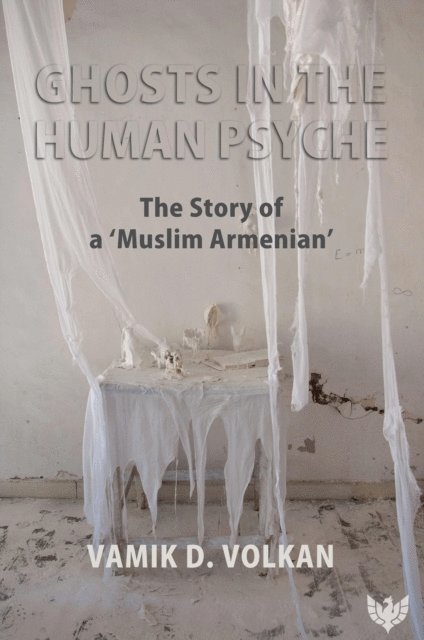
Vamık Volkan examines the impact of past and present historical events, cultural elements, political movements and their mental images on the psyche of individuals. Beginning with the history of the debates concerning the relevance of external events to the human psyche, Volkan moves on to look at the spread of psychoanalysis worldwide and the need to become familiar with the cultural, historical, and political issues when working abroad. The remaining chapters follow the story of a successful businessman who calls himself a 'Muslim Armenian'. His psychological journey clearly illustrates how ghosts from the past can remain alive and active in our lives, and how a clear understanding of his people’s history and culture allowed the analyst to understand some important causes of his symptoms and personality characteristics.By presenting a total case report, Volkan illustrates the methods applied to improve the analysand’s psychological health. By presenting a case from the viewpoint of a psychoanalytic supervisor, including the supervisor’s reactions to the individual being analysed, he has exposed another rich topic to consideration. With this book, Vamık Volkan has given us much to reflect upon.
We Don’t Speak of Fear
Large-Group Identity, Societal Conflict and Collective Trauma
Häftad, Engelska, 2023
388 kr
Skickas inom 5-8 vardagar
With contributions from Lord John Alderdice, Deniz Arıboğan, Abdülkadir Cevik, Senem B. Çevik, Coline Covington, Robi Friedman, David Fromm, M. Gerard Fromm, Hiba Husseini, Aleksandr V. Obolonski, Ford Rowan, Regine Scholz, Edward R. Shapiro, Vamık D. VolkanThe International Dialogue Initiative (IDI) is a private, international, multidisciplinary group comprised of psychoanalysts, academics, diplomats, and other professionals who bring a psychologically informed perspective to the study and amelioration of societal conflict. It aims to provide a reflective space to enable an understanding of how the emotional and historical background of hostile relations – often related to trauma – is being experienced in the present. By doing so, antagonists can overcome resistances to dialogue and facilitate the discovery of peaceful solutions to intergroup problems. This book brings together key members of the IDI to present the theory and practice of the important work they do. At its heart, the book holds the idea that, while traumatic experiences may happen to an individual or a family, they also affect society and large-group identity over long periods of time. In that way, trauma plays out between generations and between countries.The book is divided into three parts: theory, application, and methodology. Trauma is the key thread running throughout and the distinguished contributors investigate healing, dehumanisation, memory, the pandemic, war, terrorism, identity, culture, the law, justice, and religion, among many other fascinating topics. The authors bring in case studies from all over the world, including the United States, Northern Ireland, Russia, Israel, Turkey, Germany, Egypt, and Palestine. To make sense of these, they draw on a wide range of approaches: group relations theory, group analytic theory, psychoanalysis, large-group psychology, psychodynamic theory, psychology, economics, sociology, political science, history, journalism, and the law, to name but a few. This must-read book brings theory to vivid life and brings hope that our fractured world can learn to heal.
270 kr
Skickas inom 5-8 vardagar
Vamık D. Volkan recounts the story of Judy, a woman attempting to solve her early life deprivations through non-chemical addiction. He provides an understanding of the psychology behind such an addiction and also illustrates pertinent therapeutic concepts and issues which arose in Judy’s case. These include built-in transference, twinning, interpretation, dreams, hoarding, acting out, and therapeutic play. By paying attention to such things, it is possible to gain a greater understanding of the internal worlds of patients with preoedipal deprivations, conflicts, and fixations.For this case, Dr Volkan undertook the role of supervisor to an analyst in training. The topics of the psychoanalytic supervisor–supervisee relationship and the supervisor’s emotional reactions toward the patient, whom the supervisor never meets, are rather ignored in the psychoanalytic literature. This book gives an open and frank overview of the relationship, reporting not only what was said but also what lay behind the words.Written in Dr Volkan’s characteristically accessible style, this book will be enjoyed equally by those under supervision as those providing it, and provides an excellent overview of work with addiction.
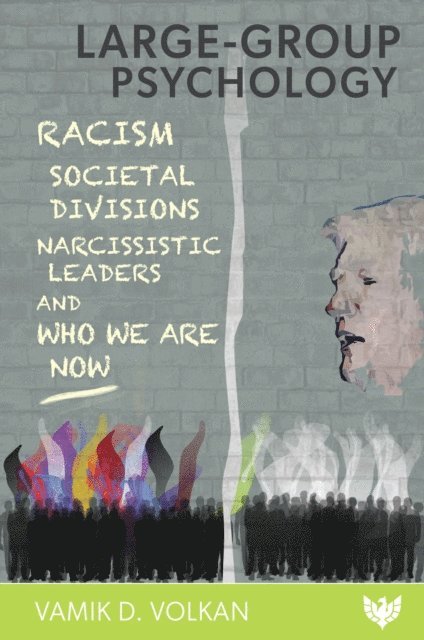
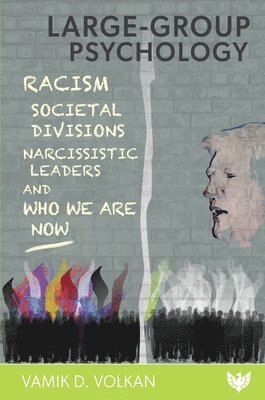
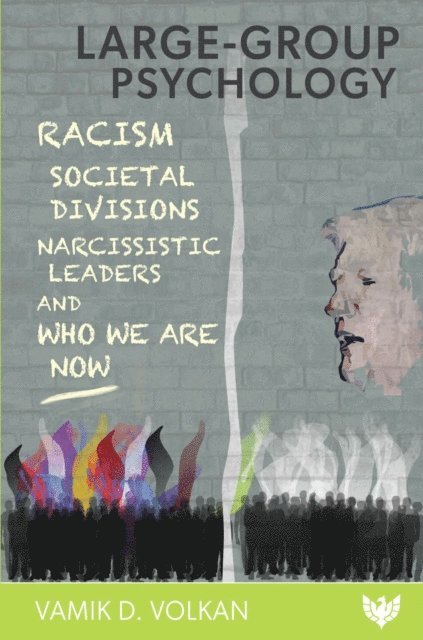
Large-Group Psychology
Racism, Societal Divisions, Narcissistic Leaders and Who We Are Now
Häftad, Engelska, 2020
286 kr
Skickas
2021 Gradiva Award WinnerFollowing the deadly 2017 white supremacist rally in Charlottesville, Virginia, numerous recent, and fatal, attacks on mosques, churches, and synagogues occurring worldwide, and increasing totalitarianism and paranoia spreading through many countries, Dr Vamık Volkan could no longer ignore the urge to write a new book about large-group problems. In many countries, people are asking the metaphorical question “Who are we now?” and coming up with seemingly opposite answers. This book looks into the reasons why this is happening.With a summary of Sigmund Freud’s ideas about large groups – which focus on the individual – Dr Volkan builds on this base to explain what large-group psychology is in its own right and applies it to present-day society. How it develops in adulthood, the psychology of decision-making and political leader/follower relationships, political propaganda, and exaggerated narcissism in leaders are all examined.We are all members of at least one large group. Looking into large-group identity provides background data for investigating the spread of racism, authoritarian regimes, malignant political propaganda, wall building, and interferences with democratic processes and human rights issues.Large-Group Psychology: Racism, Societal Divisions, Narcissistic Leaders and Who We Are Now is the perfect book for those questioning what is happening in society today and why.
719 kr
Skickas inom 10-15 vardagar
Das interdisziplinäre Lehrbuch zum Sozialen Trauma schließt eine Lücke zwischen klinischen und sozialwissenschaftlichen Traumatheorien und bietet Grundlagen für die universitäre Lehre sowie einen Überblick für alle, die sich mit Opfern sozialer Gewalt befassen. International führende Expert*innen skizzieren konzeptionelle Ansätze, Behandlungsmethoden und Forschungsstrategien zum Verständnis sozialer Traumatisierungen (kollektive Gewalt, Verfolgung, Folter und Zwangsmigration) in einem breiteren Spektrum von Ansätzen, das sowohl die Klinische Psychologie als auch die Psychiatrie, Sozialpsychologie, Entwicklungspsychologie, Kulturwissenschaften, Politologie, Recht, spezifische Forschungsmethodiken, Ethik und Didaktik umfasst. Das Buch, das aus einem zehnjährigen interdisziplinären und internationalen Dialog hervorgegangen ist, bietet somit eine nützliche Referenz.
Perchè La Guerra in Ucraina Ed in Europa? Psicoanalisi, Trauma E Resilienza
Frenis Zero
Häftad, Italienska, 2024
424 kr
Skickas inom 5-8 vardagar