• Fri frakt över 249 kr
  • •
  • Snabba leveranser
  • •
  • Billiga böcker
Kundservice

Du är på sajten för privatpersoner.

Företag, bibliotek eller offentlig verksamhet?

Du handlar på classic.bokus.com, där alla dina funktioner finns intakta.
Till classic.bokus.com
Bokus logotyp. Gå till startsidan.
  • Erbjudanden
  • Nyheter
  • Student
  • Topplistor
  • Barn & ungdom
  • Bokus Play
  • E-böcker
  • Pocketböcker
  • Spel & pussel

10% rabatt på allt med kod NYSTART10 →

Sidfot

Mina sidor

    Hjälp

    • Kundservice
    • Vanliga frågor och svar
    • Frakt och leverans
    • Retur vid ångerrätt
    • Reklamera vara
    • Betalning
    • Köpvillkor
    • Allmänna villkor
    • Information om webbplatsens tillgänglighet

    Om Bokus

    • Om oss
    • Pressrum
    • För studenter
    • För företag
    • För bibliotek och offentlig verksamhet
    • För leverantörer
    • Hållbarhet

    Populärt

    • Aktuella erbjudanden
    • Presentkort
    • Studentlitteratur
    • Nya böcker
    • Topplistor
    • Signerade böcker
    • Engelska böcker

    Inspiration

    • Boktips
    • BookTok
    • Populära bokserier
    • Barnbokskaraktärer
    • Populära författare
    Logotyp för Bokus
    Följ oss på Facebook (extern länk)Följ oss på Instagram (extern länk)Följ oss på YouTube (extern länk)Följ oss på TikTok (extern länk)
    bokus @ CookiesAnpassa cookiesIntegritetspolicyKöpvillkor
    Till Citymail hemsida (extern länk)Till Budbee hemsida (extern länk)Till Postnord hemsida (extern länk)Till Schenker hemsida (extern länk)Till Early Bird hemsida (extern länk)Till Walleys hemsida (extern länk)
    1. Psykologi och pedagogik
    2. Psykologi
    3. Psykologiska teorier och skolor
    4. Freudiansk psykologi

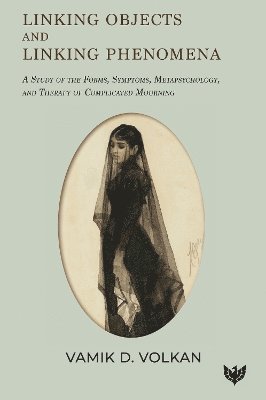
    Linking Objects and Linking Phenomena

    A Study of the Forms, Symptoms, Metapsychology, and Therapy of Complicated Mourning

    AvVamık Volkan

    Häftad, Engelska, 2025

    470 kr

    Tillfälligt slut

    Beskrivning

    Vamık Volkan brings a breadth of theory, academic rigor, and clinical study to the subject of ‘complicated mourning.’ He focuses on the, at times, bizarre ways in which bereaved persons maintain contact with the dead by means of inanimate objects or psychic phenomena invested with magical powers, which he calls ‘linking objects’ and ‘linking phenomena.’ For these individuals, their mourning reproduces the same ambivalence that characterized their lifetime relationships with the deceased and they simultaneously long for and dread a return from the grave. The linking object or phenomenon enables the mourner to maintain the illusion of external control over the dead person and extends the mourning process indefinitely.Volkan carefully distinguishes this ‘established pathological mourning’ from neurotic depression and normal mourning. Grief in itself is not a mental disorder and he provides original contributions to our understanding of grieving, from both a phenomenological and metapsychological point of view. Volkan introduces his clinical research, describes helpful exercises and psychotherapeutic techniques, and offers examples of a revolutionary brief psychotherapy called ‘re-grief therapy.’ Continuing case studies bring the rich theory to life, including illuminating clinical illustrations of the ‘replacement child,’ and demonstrate the effectiveness of psychoanalytic treatment. On the theoretical side, Volkan compares linking objects with transitional objects, fetishes, talismans, and inanimate objects considered magical by psychotics.Linking Objects and Linking Phenomena is a seminal work on the subject of mourning which decades on from its original publication continues to give practicing clinicians, academics, and trainees much to ponder, assimilate, and put to technical, theoretical, and practical use.

    Produktinformation

    • Utgivningsdatum:2025-07-31
    • Mått:152 x 229 x 18 mm
    • Vikt:512 g
    • Format:Häftad
    • Språk:Engelska
    • Antal sidor:348
    • Upplaga:2
    • Förlag:Karnac Books
    • ISBN:9781800134096

    Utforska kategorier

    • Freudiansk psykologi inom Psykologi och pedagogik
    • Psykoterapi som behandlingsmetod inom Medicin
    • Sorghantering inom Hälsa och familj

    Mer om författaren

    Vamık Volkan, MD, DFLAPA, received his medical education at the School of Medicine, University of Ankara, Turkey. He is an emeritus professor of psychiatry at the University of Virginia, Charlottesville and an emeritus training and supervising analyst at the Washington Psychoanalytic Institute, Washington, DC. In 1987, Dr Volkan established the Center for the Study of Mind and Human Interaction (CSMHI) at the School of Medicine, University of Virginia. CSMHI applied a growing theoretical and field-proven base of knowledge to issues such as ethnic tension, racism, large-group identity, terrorism, societal trauma, immigration, mourning, transgenerational transmissions, leader–follower relationships, and other aspects of national and international conflict. A year after his 2002 retirement, Dr Volkan became the Senior Erik Erikson Scholar at the Erikson Institute of the Austen Riggs Center, Stockbridge, Massachusetts and he spent three to six months there each year for ten years.In 2006, he was Fulbright/Sigmund Freud-Privatstiftung Visiting Scholar of Psychoanalysis in Vienna, Austria. Dr Volkan holds honorary doctorate degrees from Kuopio University (now called the University of Eastern Finland), Finland; from Ankara University, Turkey; and the Eastern European Psychoanalytic Institute, Russia. He was a former president of the Turkish-American Neuropsychiatric Society, the International Society of Political Psychology, the Virginia Psychoanalytic Society, and the American College of Psychoanalysts. Among many the awards he received are the Nevitt Sanford Award, Elise M. Hayman Award, L. Bryce Boyer Award, Margaret Mahler Literature Prize, Hans H. Strupp Award, the American College of Psychoanalysts’ Distinguished Officer Award for 2014, and the Mary S. Sigourney Award for 2015. He received the Sigmund Freud Award given by the city of Vienna, Austria in collaboration with the World Council of Psychotherapy. He also was honoured on several occasions by being nominated for the Nobel Peace Prize with letters of support from twenty-seven countries. Dr Volkan is the author, co-author, editor, or co-editor of more than fifty psychoanalytic and psychopolitical books, including Enemies on the Couch: A Psychopolitical Journey through War and Peace. Currently Dr Volkan is the president emeritus of the International Dialogue Initiative (IDI), which he established in 2007. He continues to lecture nationally and internationally.

    Recensioner i media

    ‘Linking Objects and Linking Phenomena is a classic of the clinical psychoanalytic literature on pathological mourning. Vamık Volkan’s diagnostic distinctions and grief therapy innovations have helped innumerable patients over the years. But why now reissue this book? Could it be that, with so many losses all around us – and so many efforts to compensate for them in destructive ways – there are truths in this book to be re-learned and developed for our time? In his later work with groups in conflict, Volkan describes “chosen trauma” – the way that historical trauma shapes large-group identity toward future disaster – as an “infection of the mourning process.” Is it time now to look again at the dynamics of pathological mourning, writ large in our current era, and to mine this book for insights that might help both our patients and our communities?’

    Innehållsförteckning

    • Preface to the reissueAcknowledgmentsAbout the authorForeword by Harold F. Searles, M.D. Introduction: The evolution of research into complicated mourning Part I: Phenomenological and theoretical findingsUncomplicated mourningComplications in the initial stage of the mourning processComplications in the work of mourning: Reactive depressionComplications in the work of mourning: Established pathological mourningAn example of the linking object: Othello’s handkerchief  Part II: TreatmentPsychoanalytic psychotherapy of established pathological mourningThe daughters of GoodbarRe-grief therapyThree more examples of re-grief therapy A yellow spot in the bottom of a coffee cup Part III: Living linking objects and related psychological statesChildren’s reactions to death: “Negative” outcome – the case of the stone swanChildren’s reactions to death: “Positive” outcome – the case of “Immortal Atatürk”A living linking object: The case of the Night of the Living Dead Part IV: CodaMagical inanimate objects ReferencesName indexSubject index