Beställningsvara. Skickas inom 5-8 vardagar. Fri frakt över 249 kr.
Beskrivning
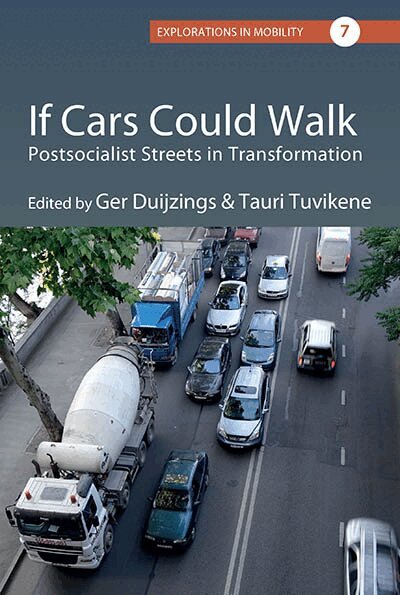
Addressing the transformation of street life in postsocialist cities against the backdrop of the explosive rise of car-mobility in the last 25 years, If Cars Could Walk consists of ethnographic case studies documenting changes in these cities as former socialist modes of mobility are replaced by a culture of privately owned cars.
Ger Duijzings is Professor of Social Anthropology at the Universität Regensburg. He has done extensive research on the conflicts in the former Yugoslavia and is currently studying urban transformations in post-socialist cities. His publications include Global Villages: Rural and Urban Transformations in Contemporary Bulgaria (Anthem, 2013) and, along with Ben Campkin, the co-edited volume Engaged Urbanism: Cities and Methodologies (I.B. Tauris, 2016).
Recensioner i media
“One of the greatest merits of this book is its inspiring and productive combination of different scientific fields—critical mobility studies, urbanism, postsocialist research. The result, along with other interesting findings, is an important and innovative vision of postsocialism.” • Technology and Culture“When, some fifteen years ago, I started writing about automobility in socialist societies, little could I have imagined that the postsocialist countries of Europe would inspire a profusion of young scholars to examine their specific mobilities. If Cars Could Walk conveys all the excitement and even frisson of a pioneering venture.” • Lewis H. Siegelbaum, Michigan State University“This book is an important addition to urban mobility studies and it surely will enrich our understanding of the transformations of street connectivity in the countries of Eastern Europe.” • Elena Trubina, University of North Carolina at Chapel Hill
Innehållsförteckning
IntroductionGer Duijzings and Tauri TuvikeneChapter 1. Seven Imaginary Images of the Transition of GDR Streets, 1989–1995Kurt MöserChapter 2. Liberated or Lawless? Social Life on Prishtina’s Postwar StreetsRita Gagica and Ger DuijzingsChapter 3. ‘Changing Everything Fast’? Young Men in the Streets of TbilisiCostanza CurroChapter 4. Coproducing the Car and the Stratified Street: Automobility and Space in RussiaJeremy MorrisChapter 5. Bucharest’s Centura: Encircling a City in TransformationGer DuijzingsChapter 6. Pedestrianizing Moscow: Disparities Between the Centre and the Inner PeripherySabina Maslova and Tauri TuvikeneChapter 7. Between Non-place and Public Space: Life at a Postsocialist (Trolley)Bus StopAndrey VozyanovChapter 8. Where the Streets Have No Name: Toponymic Changes, Wayfinding and Tashkent’s System of OrientiryNikolaos OlmaChapter 9. No Future Without a Motorway Exit: Roadside Communities in Postsocialist Poland – the case of TorzymAgata StaniszConclusionGer Duijzings and Tauri TuvikenePostscriptsNo Alternative to the Car; Or: What Remained of Socialism after 1989/91?Luminita GatejelPeriodization, Postsocialism and the Directionally ChallengedJoshua Hotaka Roth‘Where is the Postsocialism Here?’Peter Norton