• Fri frakt över 249 kr
  • •
  • Snabba leveranser
  • •
  • Billiga böcker
Kundservice

Du är på sajten för privatpersoner.

Företag, bibliotek eller offentlig verksamhet?

Du handlar på classic.bokus.com, där alla dina funktioner finns intakta.
Till classic.bokus.com
Bokus logotyp. Gå till startsidan.
  • Erbjudanden
  • Nyheter
  • Student
  • Topplistor
  • Barn & ungdom
  • Bokus Play
  • E-böcker
  • Pocketböcker
  • Spel & pussel

10% rabatt på allt med kod: NYSTART10 →

Sidfot

Mina sidor

    Hjälp

    • Kundservice
    • Vanliga frågor och svar
    • Frakt och leverans
    • Retur vid ångerrätt
    • Reklamera vara
    • Betalning
    • Köpvillkor
    • Allmänna villkor
    • Information om webbplatsens tillgänglighet

    Om Bokus

    • Om oss
    • Pressrum
    • För studenter
    • För företag
    • För bibliotek och offentlig verksamhet
    • För leverantörer
    • Hållbarhet

    Populärt

    • Aktuella erbjudanden
    • Presentkort
    • Studentlitteratur
    • Nya böcker
    • Topplistor
    • Signerade böcker
    • Engelska böcker

    Inspiration

    • Boktips
    • BookTok
    • Populära bokserier
    • Barnbokskaraktärer
    • Populära författare
    Logotyp för Bokus
    Följ oss på Facebook (extern länk)Följ oss på Instagram (extern länk)Följ oss på YouTube (extern länk)Följ oss på TikTok (extern länk)
    bokus @ CookiesAnpassa cookiesIntegritetspolicyKöpvillkor
    Till Citymail hemsida (extern länk)Till Budbee hemsida (extern länk)Till Postnord hemsida (extern länk)Till Schenker hemsida (extern länk)Till Early Bird hemsida (extern länk)Till Walleys hemsida (extern länk)
    1. Historia och arkeologi
    2. Historia
    3. Europas historia

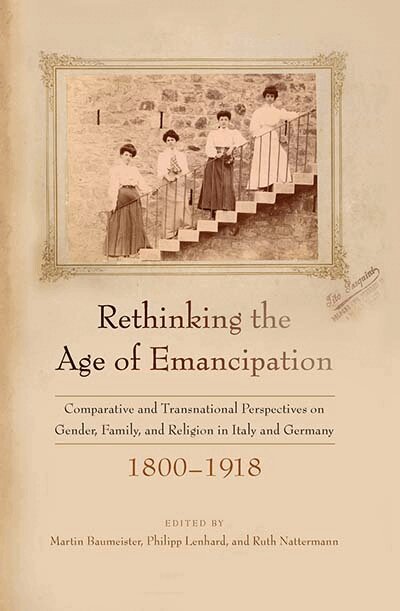
    Rethinking the Age of Emancipation

    Comparative and Transnational Perspectives on Gender, Family, and Religion in Italy and Germany, 1800–1918

    AvMartin Baumeister,Philipp Lenhard

    Häftad, Engelska, 2025

    638 kr

    Beställningsvara. Skickas inom 3-6 vardagar. Fri frakt över 249 kr.

    Beskrivning

    Since the end of the nineteenth century, traditional historiography has emphasized the similarities between Italy and Germany as “late nations”, including the parallel roles of “great men” such as Bismarck and Cavour. Rethinking the Age of Emancipation aims at a critical reassessment of the development of these two “late” nations from a new and transnational perspective. Essays by an international and interdisciplinary group of scholars examine the discursive relationships among nationalism, war, and emancipation as well as the ambiguous roles of historical protagonists with competing national, political, and religious loyalties.

    Produktinformation

    • Utgivningsdatum:2025-09-01
    • Mått:152 x 229 x 26 mm
    • Vikt:630 g
    • Format:Häftad
    • Språk:Engelska
    • Antal sidor:444
    • Förlag:Berghahn Books
    • ISBN:9781836950752

    Utforska kategorier

    • Europas historia inom Historia och arkeologi
    • Religion: allmänt inom Filosofi och religion
    • Genusvetenskap inom Samhälle och politik

    Mer om författaren

    Martin Baumeister is Director of the German Historical Institute in Rome.

    Recensioner i media

    “The volume should interest scholars of the nineteenth- and early-twentieth centuries, while its engaging individual chapters could easily be assigned to undergraduate or graduate students.” • The English Historical Review“For many reasons, [this] is an exciting and groundbreaking book… [Its] three editors are all highly qualified to comment on the present state of affairs in histography regarding the family, the nation, and Jewish and gender history. They write with urgency and clarity… By integrating the comparative histories of Italy and Germany with the transnational, as well as the Jewish and feminist histories of Italy and Germany, the book shows very clearly how both these perspectives are significant and necessary, offering insights into the way individuals and families in both nation states considered how gender and identity formed a major part of their shared experiences.” • Australian Journal of Jewish Studies“The greatest achievement of this edited volume is that it doesn’t aim to define emancipation but to understand both the ‘woman’ and ‘Jewish question’ within the ideology of nationalism. The articles also provide new conceptual frameworks such as compared and integrated history, transnational, and entangled histories (Amerigo Caruso), and a variety of yet unexplored historical sources, such as ego documents. Scholars interested in the intersection of the cultural turn and nationalism studies might find this volume of prime interest as well.” • KULT_Online“With a genuinely transnational perspective, this volume avoids the pitfalls of a simple juxtaposition of parallel stories, German and Italian, entrenched in the narrative tradition of national history. It presents an original standpoint on gender as well as Jewish studies.” • Asher Salah, Hebrew University of Jerusalem

    Innehållsförteckning

    • List of IllustrationsAcknowledgmentsIntroductionMartin Baumeister, Philipp Lenhard, Ruth NattermannSection 1: Concepts and PerspectivesChapter 1. Nineteenth-Century Italy and Germany beyond National HistoryAmerigo CarusoChapter 2. Rethinking Nation and FamilyIlaria PorcianiSection 2: Family and NationChapter 3. The Morenos between Family and Nation: Notes on the History of a Bourgeois Mediterranean Jewish family (1850–1912)Marcella SimoniChapter 4. Portrait of a “Political Lady”: Family Ties and National Activism around 1848 in the Italian and German StatesGiulia FrontoniChapter 5. Emancipation, Religious Affiliation, and Family Status around 1900Angelika SchaserSection 3: Religion and EducationChapter 6. The Legacy of Adam and Eve: Morality and Gender in Jewish “Catechisms” in Nineteenth-Century GermanyPhilipp LenhardChapter 7. The Transformation of Jewish Education in Nineteenth-Century Italy: The Meaning of “Catechisms”Silvia GuettaChapter 8. Religion and Nation: Catholic and Protestant Female Education and Cultural Models in Germany (1871–1914)Sylvia SchrautChapter 9. Women for the Homeland: Comparing Catholic and Protestant Female Education in Italy (1848–1908)Liviana GazzettaSection 4: Politics of Women’s EmancipationChapter 10. Denomination Matters: Strategies of Self-Designation of the German Women’s MovementAnne-Laure BriatteChapter 11. German and Italian Advocates for Women’s Emancipation at the International Congress for Women’s Achievements and Women’s Endeavors in Berlin (1896)Magdalena GehringSection 5: Patriotism and GenderChapter 12. Historian Between Two Fatherlands: Robert Davidsohn and World War IMartin BaumeisterChapter 13. Between Motherhood and Patriotic Duty: Marital Correspondence as a Key Source for the Understanding of French-Jewish Women’s Perspectives on World War IMarie-Christin LuxSection 6: War and ViolenceChapter 14. "An Expression of Horror and Sadness"? (Non)Communication of War Violence Against Civilians in Ego Documents (Austria-Hungary)Christa HämmerleChapter 15. Hunger, Rape, Escape: The Many Aspects of Violence against Women and Children in the Territories of the Italian FrontNadia Maria FilippiniSection 7: War Experience and MemoryChapter 16. The Construction of the Enemy in Two Jewish Writers: Carolina Coen Luzzatto and Enrica Barzilai GentilliTullia CatalanChapter 17. Heroic Fathers, Patriotic Mothers, Fallen Sons: National Belonging and Political Positioning in Italian-Jewish Families’ Versions of World War IRuth NattermannChapter 18. The Commemoration of Jewish Soldiers in AustriaGerald LamprechtIndex